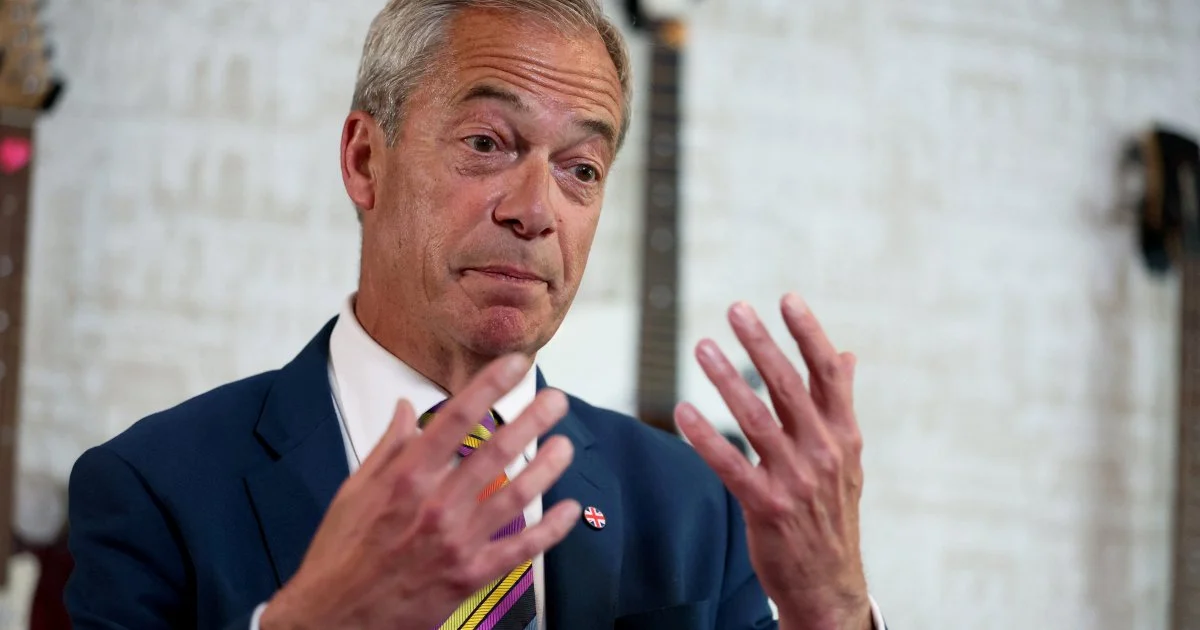
Nigel Farage, the influential hard-right British politician who has shaped UK politics through the Leave.EU campaign and founding of the Brexit Party, now faces intensified scrutiny over his financial arrangements and gift declarations. A newspaper investigation has revealed that a man with a criminal conviction for fraud allegedly bankrolled security operations and staff costs on Farage's behalf prior to his election to Parliament, prompting fresh questions about whether such support should have been formally declared to Westminster authorities.
The allegations strike at a sensitive point in Farage's career trajectory. His rise to prominence over the past decade has positioned him as a significant force in British politics, yet his tenure has been marked by periodic controversy around transparency and financial disclosures. The latest accusations suggest a pattern of potential non-compliance with parliamentary rules requiring elected representatives to account for all gifts and financial benefits beyond modest thresholds. Such regulations exist to maintain public confidence in democratic institutions and prevent undisclosed influence from compromising political independence.
The identity of the fraudster and the precise nature of the assistance provided remain focal points of the investigation. That an individual with a criminal record would have sufficient financial resources and motivation to support Farage's political infrastructure raises questions not only about disclosure obligations but also about the judgment involved in accepting such backing. In British political culture, associations with convicted criminals—particularly those convicted of dishonesty offences—carry significant reputational consequences and invite scrutiny of a politician's vetting processes and decision-making.
Parliamentary rules on gift declaration have become increasingly important as public expectations around political transparency have evolved. Members of Parliament are required to register any gifts, benefits, or services received that exceed nominal values, with the Register of Members' Financial Interests serving as the primary accountability mechanism. These disclosures are meant to be comprehensive and timely, yet enforcement has varied in rigour depending on the circumstances and the bodies investigating breaches. The standards are particularly stringent for activities occurring before formal election, when politicians are establishing their operations but potentially less subject to public scrutiny.
Farage's political journey has involved navigating numerous controversies, many relating to funding and financial transparency. His previous roles—including leadership of UKIP and later the Brexit Party—occurred during periods when public and media interest in political finance was intensifying. The emergence of new allegations suggests either that previous disclosures were incomplete or that new information about historical arrangements has come to light. Either scenario presents challenges for his current political positioning and credibility.
For Malaysian and Southeast Asian observers, the Farage case illuminates broader governance challenges that transcend borders. The difficulty of maintaining robust transparency standards in political funding, the tension between campaign efficiency and disclosure requirements, and the consequences of insufficient oversight during a politician's rise all reflect universal tensions in democratic systems. Malaysia itself has grappled with comparable questions regarding political financing, particularly during election cycles and in relation to party funding structures. The comparative experience of Westminster's attempts to regulate and enforce gift declarations offers lessons about both the possibilities and limitations of formal accountability mechanisms.
The investigation also highlights how investigative journalism plays a crucial role in exposing potential regulatory failures. When official oversight mechanisms prove insufficient or move slowly, media scrutiny can force the pace of inquiry and compel politicians to address allegations more rapidly than internal processes might otherwise require. This dynamic between journalism and institutional accountability represents a key feature of functional democracies, regardless of geography. In regions where media freedom and investigative capacity vary, such checks on political behaviour become even more consequential.
Farage's response to these allegations will shape how the broader narrative develops. Whether he contests the claims, provides explanations, voluntarily amends disclosures, or faces formal investigation from parliamentary authorities will determine the scope and severity of reputational damage. The political and legal consequences could range from minimal to substantial, depending on the threshold at which Parliament and the public judge the conduct to represent a breach of standards warranting formal sanction. His current prominence in British politics ensures that any resolution will attract sustained attention.
The timing of the allegations is noteworthy, coinciding with contemporary political developments in the UK and renewed debate about the funding, regulation, and ethical standards of political activity. These conversations occur against a backdrop of broader public cynicism about political integrity, making incidents involving non-disclosure or questionable financial arrangements particularly potent in shaping electoral dynamics and public trust. For Farage specifically, the allegations compound previous controversies and reinforce narratives about his relationship with transparency principles.
Broader implications extend to how democracies strengthen financial transparency frameworks and enforcement mechanisms to prevent such situations from recurring. The case underscores that formal rules, however clearly written, require consistent application and adequate resourcing to achieve genuine accountability. Whether Westminster possesses sufficient capacity to investigate these allegations thoroughly and transparently will itself become part of the story, shaping public confidence in parliamentary institutions. For observers internationally, including in Malaysia, the case offers a window into how established democracies respond when their own accountability systems face scrutiny and potential shortcomings.

