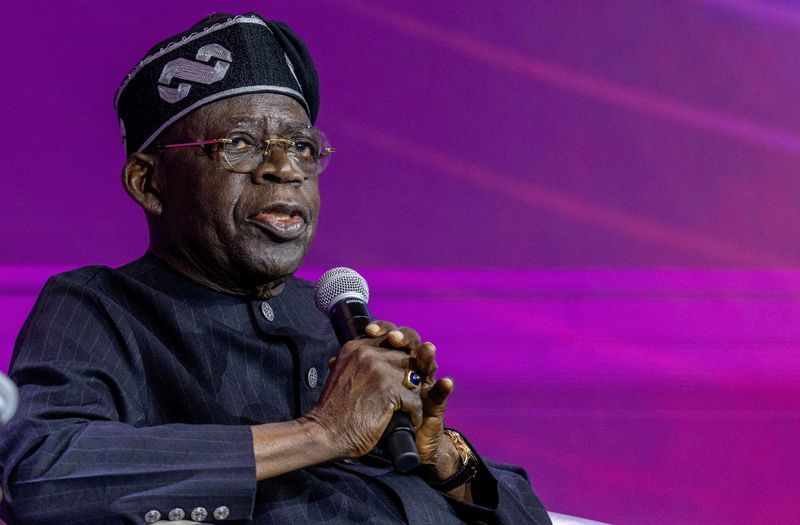
Nigeria's competition authority has opened a formal probe into major global technology companies following allegations that they have engaged in anti-competitive behaviour and improperly exploited journalistic content without compensation. The inquiry, initiated at the direction of President Bola Tinubu through the Federal Competition and Consumer Protection Commission, targets Meta, Alphabet, X and generative artificial intelligence platforms operating within Nigeria's borders. The move comes after the Nigerian Press Organisation, an umbrella body representing newspaper proprietors, journalist unions, broadcasters and digital publishers, lodged a comprehensive complaint detailing years of grievances against these digital behemoths.
The scope of the investigation extends well beyond simple copyright infringement concerns. The FCCPC has indicated it will scrutinise allegations of market dominance and anti-competitive practices more broadly, examining how these platforms control the distribution of news and the monetisation streams that once flowed primarily to traditional media outlets. Central to the inquiry is the question of whether the companies have unlawfully extracted or commercially exploited copyrighted news and broadcast content, a practice that has become increasingly contentious as digital intermediaries have grown wealthier while news organisations have seen advertising revenue collapse. Additionally, regulators will examine whether journalistic material has been used to train generative artificial intelligence systems without proper authorisation or compensation, an emerging frontier of concern for media organisations worldwide.
The investigation signals Nigeria's determination to exercise regulatory authority over multinational technology firms, a goal that many developing nations have struggled to achieve effectively. The FCCPC has emphasised that the inquiry represents a preliminary examination of complaints rather than a presumption of wrongdoing, and that all parties involved will have opportunities to present their positions before any conclusions are reached. This procedural fairness represents an important principle, particularly given the resources and legal capacity that major tech companies can deploy in regulatory proceedings. Nevertheless, the opening of such an investigation marks a significant shift in how African governments are approaching the relationship between established media interests and digital platforms.
The investigation arrives at a moment when competition authorities around the world are grappling with fundamentally similar questions about technology companies' relationship with news publishers. In South Africa, the continent's other major economy, the competition regulator successfully concluded an inquiry last year that extracted substantial concessions from Google and YouTube, including a media support package valued at 688 million rand, equivalent to approximately $42 million. This precedent demonstrates that African competition authorities can achieve tangible outcomes when they approach digital platforms with rigorous investigation and regulatory determination. The South African case suggests a potential roadmap for how Nigeria might structure its own negotiations with these firms should the investigation uncover evidence of wrongdoing.
International precedents abound beyond Africa's borders. France imposed a €500 million fine against Google in 2021 specifically addressing the company's failure to properly negotiate with news publishers and breaches related to the use of publisher content by artificial intelligence systems. Australia and Canada have both established legislative frameworks that require technology platforms to enter into bargaining arrangements with news organisations, creating statutory obligations that have resulted in formal payment agreements between major tech companies and local media. These international examples provide both a template for potential regulatory action and evidence that governments can successfully impose meaningful requirements on these firms, even when the companies are vastly larger than individual nations' economies.
For Malaysia and other Southeast Asian nations, the Nigerian investigation carries significant implications. The region has witnessed similar consolidation of news distribution power within a handful of technology platforms, with corresponding hollowing out of local news operations. Malaysian media organisations have long grappled with declining advertising revenues and competition for audience attention from platforms that were never required to invest in journalism. If Nigeria successfully demonstrates that competition regulators can compel technology companies to negotiate fairly with publishers, it could embolden other governments in the region to pursue similar regulatory paths. Conversely, if the investigation proves ineffective or if the technology companies successfully resist through legal or political means, it may signal to other nations that such regulatory approaches are unlikely to succeed.
The emergence of generative artificial intelligence as a tool for content creation has intensified these tensions significantly. News organisations increasingly worry that their content is being harvested to train large language models without compensation, effectively transferring their intellectual property and investigative work into proprietary systems operated by the technology giants. This concern transcends traditional copyright disputes because it involves the appropriation not merely of individual articles but of patterns, styles and accumulated knowledge that represent the collective investment of journalism organisations. The Nigerian investigation's specific focus on this dimension suggests that local media groups have articulated these concerns effectively to regulators, framing the AI training issue not merely as copyright theft but as a structural appropriation of journalistic labour.
The timing of Nigeria's action reflects broader political currents within the country. President Tinubu's administration has taken a more assertive stance toward regulating both domestic and international businesses, and the technology sector represents a natural focal point for such regulatory attention given both the scale of these companies' operations and their visibility to consumers and policymakers. By directing the FCCPC to investigate, the president has signalled that technology companies will not receive automatic deference in Nigeria's regulatory environment. This approach aligns with broader international trends toward stricter oversight of digital platforms, though it also carries risks of unintended consequences if regulations are poorly designed or if they provoke technology companies to reduce investment or services in Nigeria.
The investigation's trajectory will likely be closely watched across Africa and the developing world. Success in extracting meaningful commitments from technology companies could establish Nigeria as a leader in digital regulation and provide a model for other nations. It could also reshape the economics of news distribution in a region where technology companies have enjoyed largely unregulated dominance. However, the companies involved possess substantial resources and experience in regulatory proceedings, and they may contest the investigation's findings vigorously. The months ahead will reveal whether Nigerian regulators can navigate these complexities and emerge with outcomes that genuinely benefit local news organisations while maintaining appropriate due process and avoiding regulatory capture.

