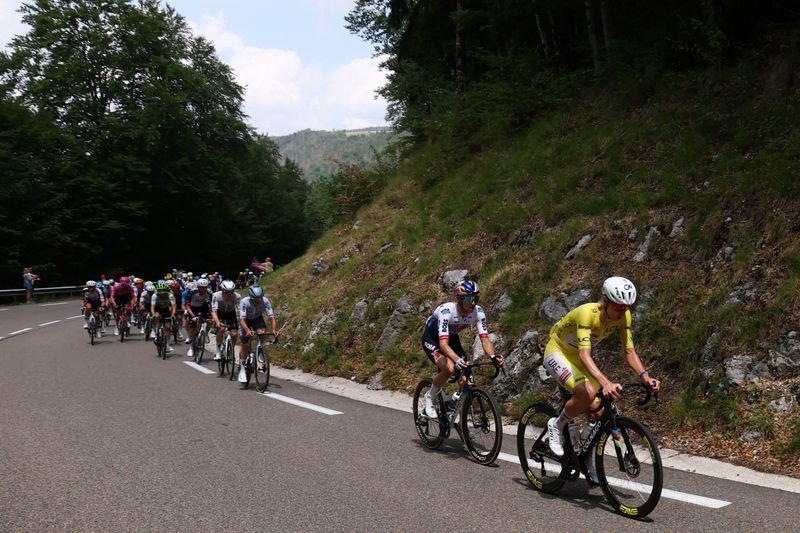
Jonathan Vaughters, the chief executive of Cannondale-EF and a former professional cyclist, has entered the contentious debate surrounding pre-dawn doping controls at this year's Tour de France by defending the controversial testing regime. Speaking on social media, Vaughters suggested that early-morning examinations could have fundamentally altered the trajectory of cycling had they been implemented decades earlier when the sport was ravaged by systematic doping schemes.
The controversy erupted after multiple elite riders, including race leader Tadej Pogacar and defending champion Jonas Vingegaard, underwent unannounced doping tests in the early hours of Sunday ahead of the 15th mountain stage. These surprise dawn inspections, conducted before competitors had completed their sleep cycles, drew sharp criticism from affected riders and raised questions about the practical fairness of such measures during an event demanding extreme physical endurance and recovery.
Vaughters' intervention carries considerable weight given his unusual position as a reformed participant in cycling's darkest period. During his professional career spanning the late 1990s and early 2000s, he competed alongside Lance Armstrong on the U.S. Postal Service team, ultimately admitting to performance-enhancing drug use himself. His experience as both a doper and later as a crusader for clean sport offers him credibility that few others possess when evaluating anti-doping strategies.
Specifically, Vaughters argued that testing at 2 a.m. represents one of the most effective deterrents against the micro-dosing of peptide-based substances including EPO and human growth hormone, as well as testosterone administered in carefully calibrated amounts. He contended that had such rigorous testing protocols existed in 2001, the widespread cheating that characterised his era would have been immediately exposed, potentially preventing a quarter-century of scandal that undermined the sport's credibility and integrity.
The practical implications of Vaughters' observation reflect a genuine technical problem that has long troubled anti-doping authorities. Sophisticated cheaters have historically exploited the predictability of daytime-only testing by micro-dosing substances that leave the bloodstream within hours, making detection nearly impossible when tests occur only during standard working hours. This biochemical reality has created an ongoing arms race between authorities seeking to catch sophisticated dopers and athletes attempting to evade detection through precise pharmacological timing.
However, the immediate fallout from Sunday's tests demonstrates the genuine tension between anti-doping effectiveness and athlete welfare. Vingegaard reported losing approximately 40 minutes of sleep following his 2 a.m. inspection, a loss that proved particularly costly given that he subsequently suffered a career-threatening crash during the gruelling mountain stage later that day, resulting in a fractured collarbone. Pogacar managed only four hours of total sleep after being tested at 5 a.m., while stage winner Remco Evenepoel described the entire practice as inhuman, reflecting widespread frustration among the peloton.
The International Testing Agency, which coordinates doping controls for the Union Cycliste Internationale, acknowledged the disruption caused by night-time testing whilst defending its necessity. The agency stated that while it recognises the potential impact on riders' rest and recovery, effective anti-doping work occasionally demands testing outside normal daytime hours under limited and justified circumstances. This position reflects the uncomfortable reality that perfect athlete welfare and perfectly effective anti-doping measures may sometimes conflict.
Vaughters' historical perspective adds crucial context to this contemporary debate. When the U.S. Anti-Doping Agency investigation into Armstrong concluded in 2012, it documented what it characterised as the most sophisticated doping program professional sports had ever witnessed. Armstrong's subsequent stripping of seven Tour de France titles represented the sport's nadir, yet the underlying problem—that existing tests had failed to catch systematic cheating for years—suggested that testing methodology needed fundamental revision.
The founder of Cannondale-EF deliberately positioned his team as an advocate for clean racing in explicit contrast to cycling's tainted past. By publicly supporting rigorous anti-doping measures, Vaughters reinforces that positioning whilst also offering a pragmatic argument grounded in personal experience. His assertion that comprehensive night-time testing would have changed everything assumes considerable credibility precisely because he participated in the very era he now evaluates retrospectively.
For Southeast Asian cycling enthusiasts and those following the sport's development across the region, Vaughters' intervention speaks to broader questions about whether sporting integrity requires tolerating temporary inconvenience for athletes. The tension between protecting athlete welfare and ensuring genuine competition lies at the heart of modern sport governance, with particular resonance in developing nations where cycling infrastructure and professional opportunities are expanding.
The controversy also illustrates how professional cycling, perhaps more than any other major sport, remains haunted by its historical association with systematic doping. Unlike football or athletics, where individual scandals have occurred, cycling's entire competitive structure during a crucial developmental period became compromised by pervasive cheating. Any discussion of testing methodology therefore inevitably invokes this troubled history.
Looking forward, the debate between Vaughters and the affected riders reflects sport's perpetual challenge of balancing deterrence against competitor welfare. While his argument about what might have been in 2001 carries logical force, the practical consequences for contemporary athletes like Vingegaard and Pogacar cannot be dismissed. Finding this balance remains one of professional cycling's most pressing governance challenges as it attempts to build genuine credibility whilst protecting the competitors who now race under suspicion earned by their predecessors.

