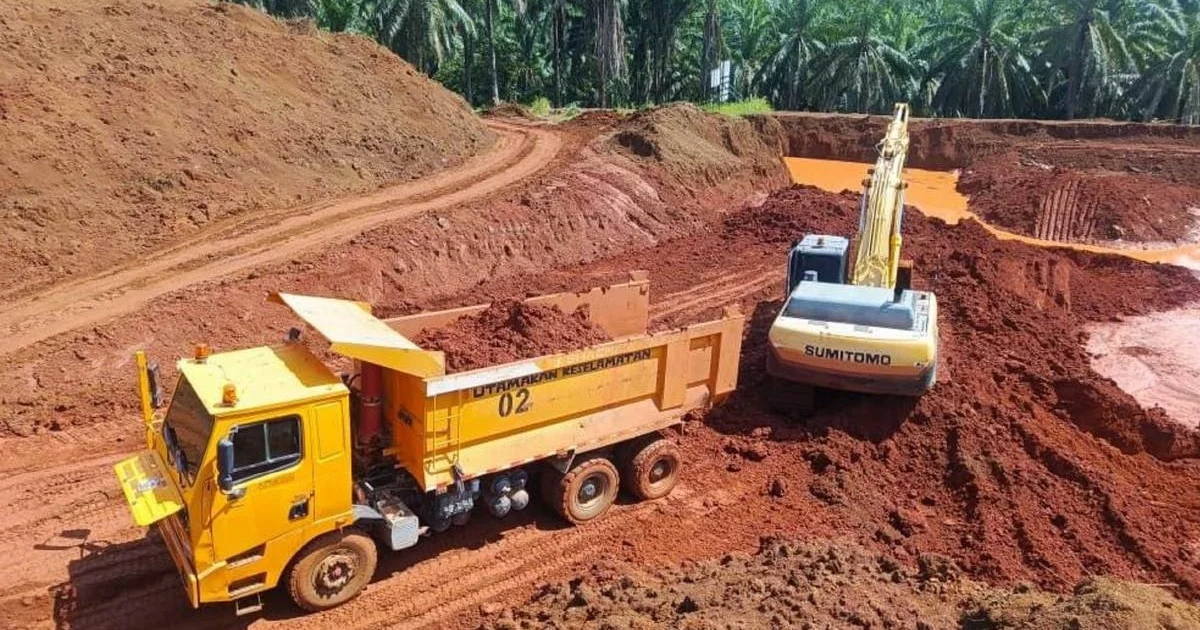
Authorities have broken up an extensive illegal bauxite mining operation near Kuantan, leading to the arrests of nine suspects and the recovery of assets estimated at RM3.75 million. The enforcement action took place at a site located within a Felda plantation in the Bukit Goh area, highlighting ongoing challenges with unauthorized mining activities that have plagued Peninsular Malaysia's resource-rich eastern coast.
The operation resulted in the seizure of approximately 10,000 tonnes of bauxite-bearing soil that had been extracted from the site, along with an assortment of heavy machinery and commercial vehicles used in the mining and transport of ore. The combined value of all confiscated equipment and materials underscores the substantial scale of the illicit operation, which would have generated considerable profits had it continued undetected.
This enforcement action reflects intensified efforts by Malaysian authorities to combat illegal mineral extraction, a persistent problem that has drawn international attention and generated concerns about environmental degradation and loss of government revenue. Bauxite mining, in particular, has become a focal point for regulatory scrutiny following years of rapid, largely uncontrolled extraction that peaked in 2015 before facing stricter oversight.
The Bukit Goh area, situated within Kuantan district in Pahang, has previously been associated with mining activities. The fact that illegal operators were willing to set up operations on Felda land—state-controlled agricultural land held in trust for settlers—suggests a pattern of encroachment by criminal syndicates willing to exploit regulatory gaps or enforcement lapses. Such incursions affect not only the integrity of Felda schemes but also the livelihoods of farmers and settlers who depend on these lands.
The seizure of heavy machinery and transport vehicles indicates a well-established operational structure rather than ad hoc small-scale mining. Operators of illegal mines typically invest in significant capital equipment to maximize extraction rates, which makes such operations difficult to sustain without some form of coordination or protection. The scale of the equipment haul suggests this was a professionally run enterprise with regular extraction and distribution networks.
The nine arrests will likely proceed through Malaysia's legal system under mining regulations and environmental protection laws. Depending on the charges levied, penalties could range from substantial fines to imprisonment. However, law enforcement agencies acknowledge that dismantling individual operations, while necessary, requires sustained effort across multiple enforcement agencies to address the underlying drivers of illegal mining: limited economic opportunities in rural areas, high commodity prices, and complex supply chains that obscure the origins of minerals.
For Malaysian readers in mineral-rich states like Pahang, Terengganu, and Perak, such raids represent a double-edged enforcement challenge. While controlling illegal mining protects the environment and preserves government revenue, some rural communities view informal mining as an income source during economic downturns. This tension underscores the need for comprehensive approaches that combine enforcement with alternative livelihood development in resource-dependent regions.
The environmental implications of bauxite mining are substantial. Extraction removes topsoil and vegetation, creating barren landscapes vulnerable to erosion and water contamination. The 10,000 tonnes of bauxite-bearing soil seized in this operation represents material that would have further degraded the plantation's agricultural potential had processing continued. Illegal mining also typically bypasses environmental impact assessments and restoration requirements mandated for licensed operations.
Regionally, illegal mining remains a concern across Southeast Asia, where porous borders and weak enforcement in some jurisdictions create opportunities for syndicates to exploit resources across countries. Malaysia's position as a developed economy with stronger regulatory capacity positions it differently, but coordinated illegal mining networks sometimes operate across the Malaysia-Thailand border region, complicating enforcement efforts that require bilateral cooperation.
The recovery of RM3.75 million in assets represents significant disruption to criminal operations, though the actual profit lost to operators may exceed this figure, as the market value of unprocessed bauxite differs from the value of seized equipment. Nevertheless, such enforcement actions serve as deterrents and demonstrate government commitment to resource regulation, particularly important given Malaysia's reputation as a jurisdiction committed to environmental governance and sustainable development principles.
Moving forward, the effectiveness of anti-illegal mining efforts will depend on sustained inter-agency coordination between the Mineral and Geoscience Department, police, environmental agencies, and Felda authorities. Intelligence gathering on supply chains and end-buyers of illicit bauxite can help disrupt markets that incentivize illegal extraction. The arrest of nine individuals provides leads that investigators may pursue to identify higher-level organizers and distribution networks operating across the country.

