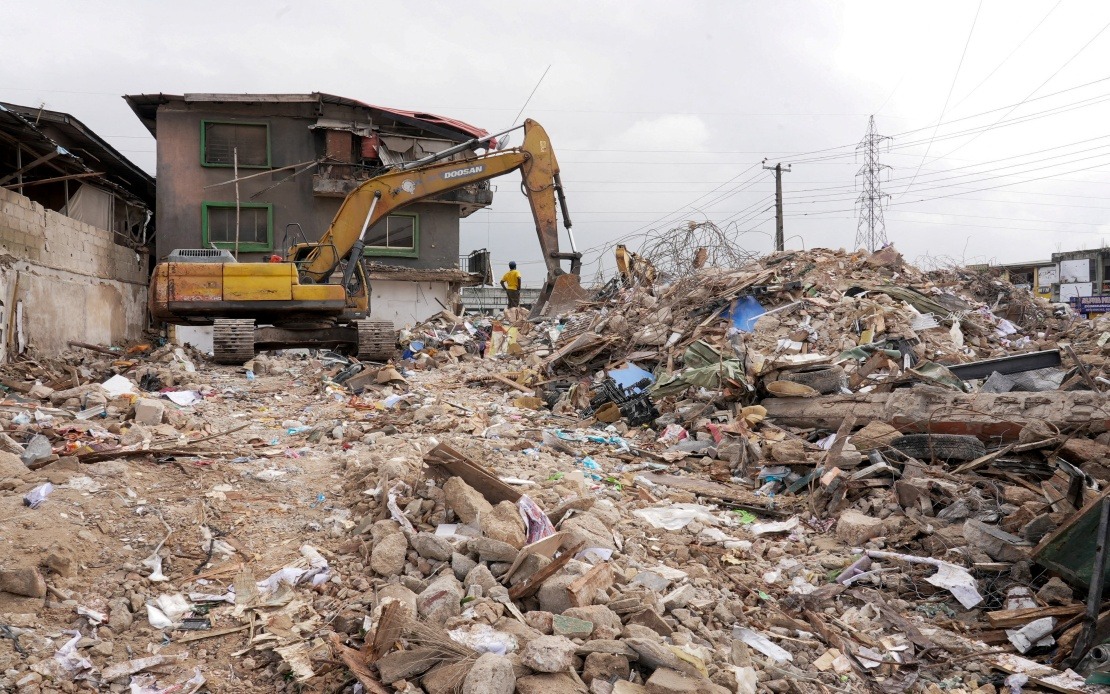
Nine deaths and 27 rescues marked the conclusion of emergency operations at a collapsed shopping complex in Alakija, a developing area along Lagos's bustling Lagos-Badagry Expressway in southwestern Nigeria. The building, comprising three stories, gave way on Thursday morning, triggering an immediate multi-agency response that continued through the night and into Friday morning.
Lagos State Emergency Management Agency officials confirmed that all individuals trapped beneath the debris had been retrieved by early Friday, though the recovery effort underscored the harrowing reality of structural failures in Nigeria's most populous city. Olufemi Oke-Osanyintolu, the agency's permanent secretary, explained that rescue personnel maintained round-the-clock operations to systematically locate and extract survivors from beneath the fallen concrete and rubble.
The 27 people pulled alive from the wreckage sustained injuries of varying severity. Medical teams transported them to hospitals across the Lagos metropolitan area for treatment and observation. Initial assessments suggested that many of those caught in the collapse were commercial operators and their customers who had begun daily transactions when the structure failed, though neighbouring residents were also among those trapped.
The rescue effort mobilised substantial resources and expertise. Notably, the China Civil Engineering Construction Corporation, which operates a railway development project in the vicinity, deployed personnel and equipment to assist state emergency services and federal rescue teams. This collaboration demonstrated the urgency with which authorities approached the emergency response and the interconnected nature of major infrastructure projects in Lagos.
The precise cause of the structural failure remains undetermined, with investigators having initiated a formal inquiry into the collapse. Authorities have not yet released preliminary findings regarding whether construction defects, poor maintenance, environmental factors, or other variables contributed to the building's failure. Questions about the structure's construction timeline, approval certifications, and recent modifications are likely to feature prominently in the investigation.
Building collapses represent an recurring tragedy across Nigeria, with a pattern suggesting systemic vulnerabilities in the construction sector. Engineering specialists and urban development analysts frequently point to a convergence of factors that elevate risk: many structures suffer from age-related deterioration without adequate maintenance or reinforcement; enforcement of building codes remains inconsistent and sometimes compromised by corruption; and the use of substandard or counterfeit construction materials persists due to cost pressures and inadequate quality control mechanisms.
For Malaysia and the Southeast Asian region, Nigeria's building safety challenges offer instructive parallels and contrasts. While Malaysia maintains more stringent building regulations and inspection regimes, emerging urban areas in parts of Southeast Asia face comparable pressures—rapid urbanisation, cost-cutting pressures, and sometimes insufficient oversight of construction standards. The Lagos incident serves as a cautionary reminder about the consequences of regulatory gaps.
The incident also raises questions about Alakija's status as a rapidly developing satellite town. Areas experiencing swift urbanisation often attract investment and population migration but simultaneously struggle with infrastructure readiness and regulatory capacity. Property developers and investors move quickly, sometimes ahead of comprehensive building inspection and planning authority capacity, creating environments where corner-cutting becomes attractive.
Nigeria's federal and state authorities have repeatedly acknowledged the building collapse problem and have attempted reforms, including stricter enforcement campaigns and enhanced inspection protocols. However, resource constraints, competing priorities, and the sheer scale of the built environment challenge implementation. The Lagos State government, facing pressure from developmental demands and safety concerns, has announced periodic crackdowns on illegal structures and non-compliant construction sites.
The rescue operation's success in extracting 27 survivors reflects competent emergency response capabilities and the value of inter-agency coordination. However, the nine fatalities underscore that emergency response, however well-executed, cannot substitute for preventing structural failures through robust building standards and rigorous oversight. Prevention through proper regulation, certification, and enforcement remains far more effective and humane than post-collapse rescue operations.
Stakeholders across Nigeria's construction sector—from architects and engineers to property developers and regulatory agencies—face mounting pressure to address the underlying causes of collapses rather than merely responding to crises. International construction standards and best practices exist; the challenge lies in consistent implementation within Nigeria's specific economic and institutional context. The incident in Alakija will likely motivate renewed discussions about enforcement mechanisms, professional accountability, and the balance between development speed and safety assurance.

