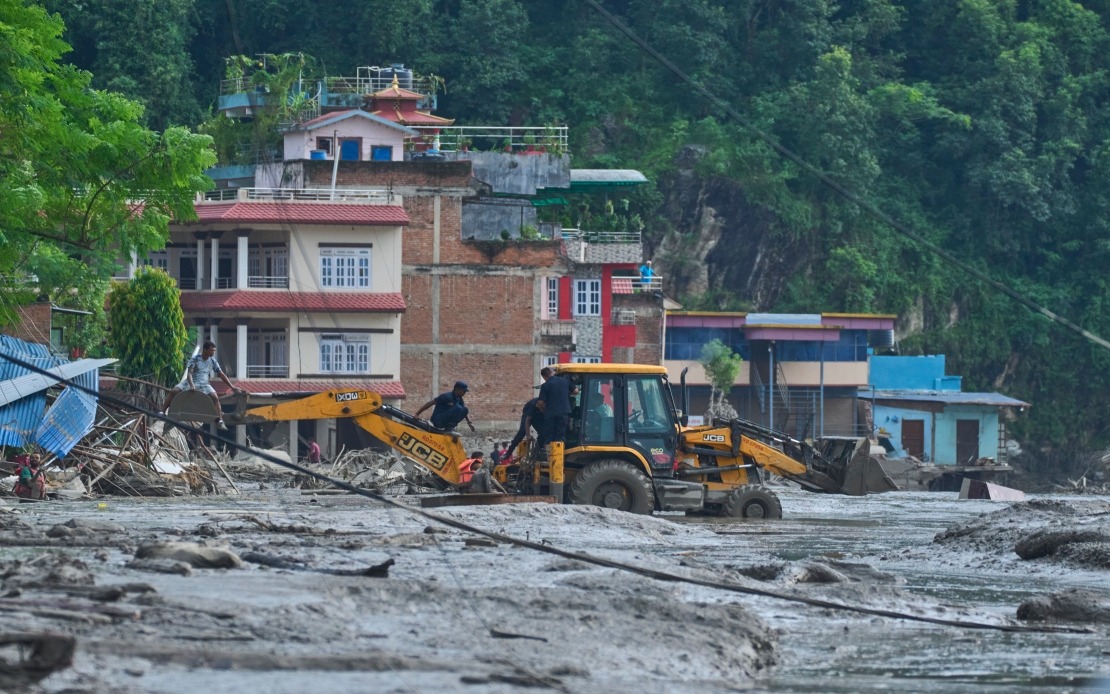
A catastrophic flooding event in Nepal's Rasuwa district has left nine South Korean workers unaccounted for, prompting an urgent coordinated response from the Seoul government and private sector organisations involved in hydropower construction projects in the affected region. The disappearances occurred on Wednesday when flash flooding swept through the Nepal-Tibet border area, where multiple international companies maintain active construction operations. South Korea's foreign ministry confirmed the incident and immediately commenced mobilisation of resources to locate and assist the missing personnel.
The nine missing individuals comprise six employees from Doosan Enerbility Co., a major plant construction and engineering firm, and three workers from Korea South-East Power Co., a state-controlled power generation enterprise. Both organisations were collaborating on hydropower plant development when the deluge inundated the work site. The immediate vicinity of the project area experienced a sudden surge in water levels that caught workers and nearby communities off guard, illustrating the unpredictability and destructive capacity of monsoon-related weather systems affecting the Himalayan region.
Beyond the missing nine, the situation has placed additional South Korean nationals in vulnerable positions. A separate group of ten Doosan employees who were initially trapped in the flooded zone have since been confirmed alive, though they remained dependent on rescue operations to reach safe locations. Approximately two hundred foreign workers from the hydropower construction project had already evacuated the immediate disaster zone, reducing but not eliminating the risk to foreign nationals in Nepal.
Recognising the gravity of the emergency, South Korea's government has mobilised an inter-agency rapid response team scheduled to arrive in Kathmandu on Thursday. The contingent includes representatives from the foreign ministry, national police services, and fire and rescue authorities. This deployment reflects standard protocol for managing large-scale crises affecting Korean citizens abroad and demonstrates Seoul's commitment to direct government engagement in search and rescue coordination with Nepalese authorities.
President Lee Jae Myung has personally directed all government agencies to exhaust available resources in locating the missing workers. Foreign Minister Cho Hyun convened an emergency response meeting and outlined the government's multi-faceted approach during the immediate aftermath of the disaster. Beyond search and rescue operations, Seoul's strategy encompasses simultaneous support for the affected families, ensuring the security of remaining South Korean personnel in Nepal, and preventing additional casualties through coordinated warning systems and evacuation protocols.
Diplomatic engagement has emerged as a critical dimension of the response. Foreign Minister Cho indicated that direct communication would occur with Nepal's foreign minister to formalise cooperation frameworks and ensure that South Korean rescue teams receive full access and logistical support from local authorities. Such coordination is essential in mountainous terrain where rescue operations depend heavily on local knowledge, infrastructure, and government facilitation. The cross-border nature of the flooding, which affected areas near the Tibet region, adds geopolitical complexity to the response effort.
Doosan Enerbility and Korea South-East Power have complemented government actions by establishing their own emergency response structures. Both organisations are preparing and deploying field teams directly to the accident site to provide real-time assessment, logistical support, and company-specific resources that may facilitate faster location and extraction of personnel. This parallel private sector mobilisation accelerates response capacity and reflects corporate responsibility frameworks increasingly expected from major enterprises managing workers in high-risk environments.
The disaster's broader context involves the catastrophic scale of the flooding event itself. Foreign media reports indicate that more than 160 people have been confirmed dead across the affected region, with hundreds of additional persons unaccounted for. The concentration of casualties among foreign nationals reflects the presence of multiple international construction and tourism activities in Nepal, a country increasingly attractive to South Asian and global investment in energy infrastructure development. The vulnerability of foreign workers suggests inadequate disaster preparedness infrastructure and warning systems in the affected region.
For Malaysia and other Southeast Asian nations, this incident carries significant implications. Regional hydropower projects, particularly those involving South Korean construction firms and state enterprises, operate under comparable environmental risk profiles. Nepal's geographical proximity to major weather systems generating monsoon flooding creates seasonal hazards that extend beyond Nepal's borders. Malaysian companies and workers engaged in similar construction activities throughout Asia should reassess disaster preparedness protocols and ensure that emergency response frameworks match international standards. The incident underscores the necessity for regional cooperation in early warning systems and cross-border emergency management.
The crisis also highlights the growing interdependence of South and Southeast Asian economies through major infrastructure development. South Korean firms have become principal players in the hydropower sector across the Himalayan and broader Asian region, with substantial implications for employment and knowledge transfer. However, this economic integration creates obligations for comprehensive safety and emergency management systems that protect both local and international workers. The incident may prompt policy discussions within South Korean corporate governance regarding risk assessment, insurance protocols, and mandatory safety training for personnel deployed to high-hazard environments.
Government-level coordination between Seoul and Kathmandu will likely shape immediate rescue operations and medium-term development of bilateral disaster management frameworks. Nepal, despite its rich hydropower potential, faces chronic challenges in infrastructure resilience and emergency response capacity. South Korea's technical expertise and resources can contribute to strengthening these systems, potentially benefiting not only Korean personnel but broader development outcomes in Nepal. Regional organisations including ASEAN, while not directly involved, maintain interests in promoting collective resilience standards that protect workers and communities throughout Asia.
The unfolding situation demonstrates how natural disasters transcend national borders and create urgent imperatives for coordinated international response. As rescue efforts continue in the coming days, the South Korean government's multi-level engagement will provide a case study in crisis management protocols. The experience will inform future risk assessments for Korean enterprises considering hydropower and other infrastructure projects in high-hazard zones. For regional stakeholders, the incident reinforces the necessity for proactive investment in disaster preparedness infrastructure, early warning systems, and cross-border emergency management protocols that can meaningfully reduce casualties and accelerate rescue operations when catastrophic events occur.

