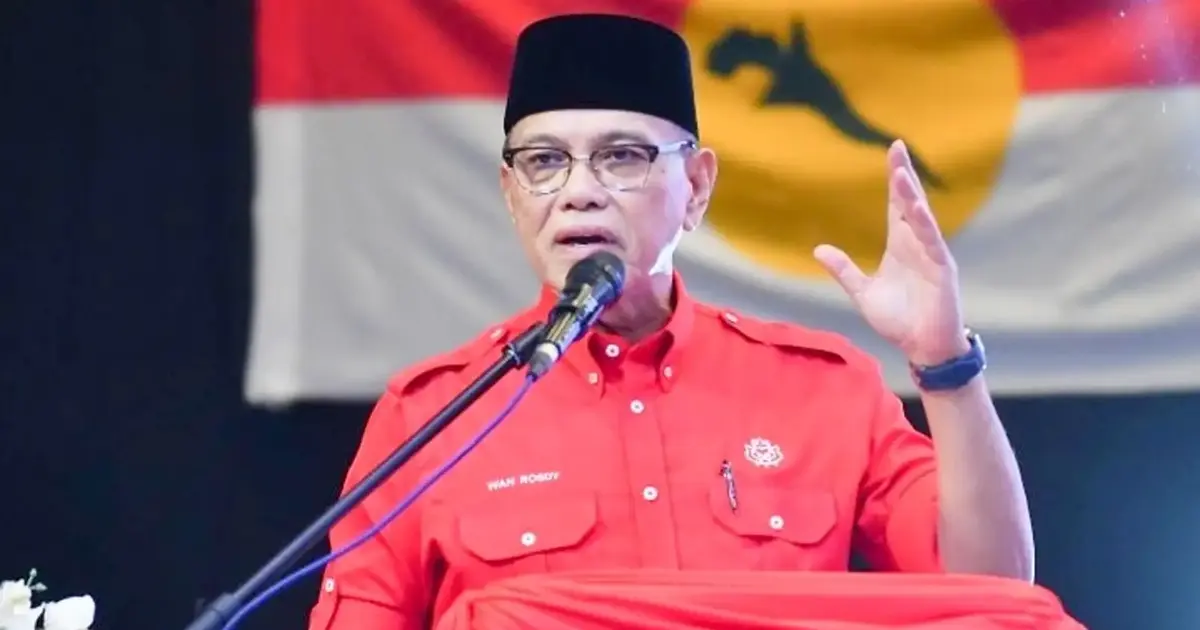
Umno's second-ranking official has dampened speculation about a formal alliance between Barisan Nasional and Perikatan Nasional ahead of the next general election, signalling that both coalitions remain focused on their immediate political priorities rather than engineering a merger or coordination pact. Wan Rosdy Wan Ismail, the party's vice-president, told journalists that substantive discussions on a BN-PN cooperation framework have not commenced, underscoring the fluid state of Malaysian coalition politics as the country enters a new electoral cycle.
The statement arrives at a critical juncture for federal-level opposition politics. Since the 2023 general election, the relationship between Malaysia's two major non-Pakatan opposition blocs has oscillated between cautious engagement and public distance. Umno, anchoring Barisan Nasional, and Perikatan Nasional—led by former Prime Minister Muhyiddin Yassin—have competed fiercely for Malay-Muslim votes while occasionally coordinating on select issues in parliament. The absence of formal pre-election negotiations suggests both coalitions are still calculating their respective strengths and mapping out independent campaign strategies.
Wan Rosdy's comments reflect a pragmatic sequencing of political priorities. He emphasised that Negeri Sembilan's recent transition to a new state government has become the focal point for party operations and strategic thinking at present. This newly constituted administration requires stabilisation, policy coherence, and demonstrable governance performance to build public confidence. For Umno, which has invested significantly in reclaiming lost ground in Negeri Sembilan through state-level politics, the period ahead will test its ability to deliver economic and social outcomes that resonate with voters who have grown weary of political instability.
The timing of such statements carries weight in Malaysia's political ecology. General Election 16, widely anticipated to occur in 2028, lies roughly three years ahead. Coalition-building for major elections typically crystallises within twelve to eighteen months of polling day, allowing parties to campaign jointly, coordinate candidate selection, and construct unified policy platforms. Wan Rosdy's assertion that no talks have begun suggests either that both BN and PN remain convinced they can win independently, or that the preconditions for merger discussions—a shared understanding of mutual benefit and complementary territorial strengths—have not yet solidified.
Historically, Malaysian coalition politics has been marked by rapid realignments driven by electoral mathematics and personality clashes. The 2023 election produced a complex parliament in which Pakatan Rakyat governs federally with external support from Gabungan Parti Sarawak while managing internal tensions. Meanwhile, BN and PN jockey for opposition leadership and prepare for 2028. A formal BN-PN pact could theoretically concentrate opposition firepower, yet it might also alienate voters fatigued by political consolidation games and hungry for fresh alternatives.
For Negeri Sembilan specifically, the state government's composition and performance metrics will directly influence how both coalitions position themselves. If the administration proves effective and delivers visible improvements in infrastructure, education, and healthcare, it will strengthen the incumbent coalition's hand. Conversely, missteps or governance failures could provide opening for opposition resurgence. Wan Rosdy's focus on stabilisation rather than election posturing suggests Umno recognises this reality and is prioritising substance over strategic positioning in the short term.
The Malaysian electorate has grown increasingly sophisticated and fragmented. Rural and urban voters, younger and older demographics, and different ethnic communities now display distinct voting preferences that complicate traditional coalition mathematics. A BN-PN cooperation framework would need to address these fractures convincingly, explaining to voters how such an alliance serves broader national interests beyond elite power-sharing arrangements. Without clear articulation of such a vision, any announced pact risks appearing as opportunistic manoeuvrings rather than a coherent political project.
Regionally, the status of BN-PN relations carries implications for Southeast Asian politics. Malaysia's coalitional fluidity influences broader patterns of intra-Asean competition and cooperation. A stronger, unified opposition that can credibly challenge Pakatan's electoral dominance might encourage different policy approaches on issues ranging from regional trade to foreign relations. Conversely, fragmentation and internal jockeying weaken Malaysia's institutional coherence during a period of significant geopolitical adjustment.
Wan Rosdy's stance also reflects awareness that premature coalition announcements can provoke internal party backlash and voter scepticism. Umno's grassroots remain diverse in their preferences, with some members viewing Perikatan Nasional as a competitor for their traditional support base rather than a natural ally. Any leadership decision to formally merge electoral strategies would require careful groundwork and consensus-building within party structures before public declaration. The absence of such groundwork, evident in Wan Rosdy's comments, suggests these conversations have not yet reached maturity.
Looking ahead, the timing of BN-PN cooperation talks will become a key indicator of coalition confidence and electoral strategy. Early moves might signal weakness and desperation; delayed moves risk losing organisational momentum. For Malaysian observers and regional watchers, tracking when and how these discussions materialise will offer crucial insight into opposition assessments of their own strengths and Pakatan's vulnerabilities. For now, Wan Rosdy's emphasis on consolidating Negeri Sembilan governance suggests both coalitions believe they have runway to operate independently before electoral alliances become necessary.

