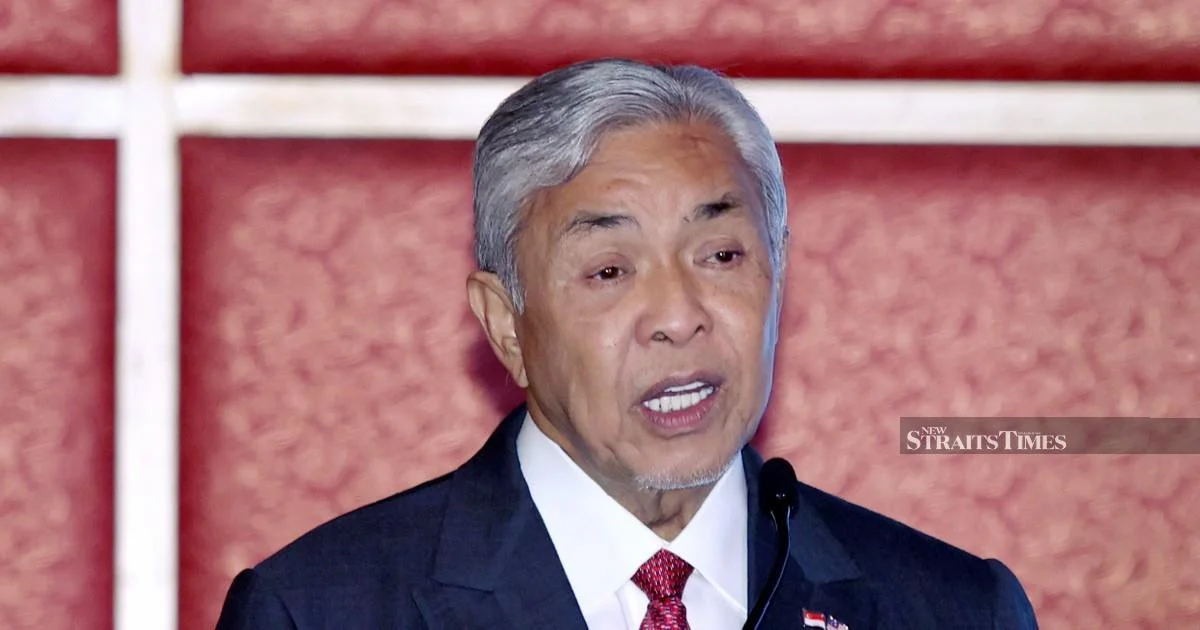
Umno president Datuk Seri Dr Ahmad Zahid Hamidi has moved to quash speculation about backroom arrangements with Pas over seat allocations in the Negri Sembilan state election, stating plainly that no formal accord currently exists between the two major Malay-majority parties. The statement comes as both Umno and Pas position themselves strategically ahead of what observers view as a critical electoral contest that could reshape the political landscape in the state and influence broader coalition dynamics in Malaysia.
Zahid's clarification addresses mounting rumours within party circles and among political analysts that the two parties had struck a preliminary understanding on how to divide constituencies for the upcoming poll. Such speculation has intensified given the historically fractious relationship between Umno and Pas, which have oscillated between periods of cooperation and outright competition depending on prevailing political winds. The Umno leader's comments suggest that discussions may indeed be ongoing, but any agreement remains far from finalised and either party retains flexibility in its approach.
The denial carries particular significance given that both parties have vested interests in Negri Sembilan. Umno, as the traditional dominant force in Malaysian politics, has traditionally performed well in the state, though its electoral machinery has faced challenges in recent years. Pas, meanwhile, has been steadily expanding its presence in formerly Umno-held strongholds, leveraging religious messaging and grassroots organising to broaden its appeal beyond its traditional base. The competition between them reflects the broader realignment occurring across Malaysian politics as established power structures face renewed pressure from energised opposition movements and shifting voter preferences.
Negri Sembilan holds particular symbolic value in the current political moment. As a state with a significant Malay-Muslim majority population, performance there offers crucial indicators about the depth of support each party commands among its core constituency. Victory or defeat in Negri Sembilan could reverberate through Umno and Pas calculations for future federal-level contests, making the stakes considerably higher than a routine state election. Both parties are acutely aware that voters are watching how effectively they can deliver on development promises and economic improvements.
The absence of a pre-agreed seat arrangement, if accurate, suggests that both Umno and Pas prefer to maintain maximum flexibility as they assess their respective electoral strength. This tactical posture allows either party to contest vigorously wherever it perceives genuine prospects, without being locked into predetermined compromises that might constrain them if circumstances shift. Zahid's statement thus signals that Umno intends to be a full participant in the electoral contest, not merely a supporting player in a jointly-negotiated campaign.
Political observers in Malaysia have long recognised that public denials of negotiations do not necessarily reflect the full reality of behind-the-scenes discussions. Politicians routinely maintain public distance from potential coalition partners while substantive talks proceed quietly. Zahid's clarification may therefore be best understood as a negotiating tactic rather than a categorical rejection of future partnership possibilities. The distinction between "no agreement" and "no ongoing talks" remains strategically important, as it allows room for developments that might later be presented to party members and the broader public as tactical adjustments rather than policy reversals.
The timing of Zahid's statement also warrants attention. By reaffirming Umno's independence in seat allocation decisions, he reinforces his authority within the party at a moment when internal cohesion matters significantly. Umno has grappled in recent years with factionalism and declining electoral performance, making it essential for the party president to demonstrate that he maintains control over major strategic decisions. Signalling that Umno will not be constrained by agreements with other parties appeals to Umno grassroots members who view their party as Malaysia's natural governing force and chafe at perceived compromises.
For Malaysian voters and observers monitoring coalition dynamics, Zahid's comments highlight the fluid and contingent nature of pre-election positioning. Political alliances that appeared settled can rapidly shift based on electoral calculations, internal party developments, or unexpected external events. The Malaysian electorate has become increasingly accustomed to parties announcing partnerships, then dissolving them, or alternatively maintaining cold distance publicly whilst cooperating tacitly at state or parliamentary levels. This complexity reflects both the fragmentation of the Malaysian party system and the sophisticated political calculations that major parties now undertake when approaching electoral contests.
The Negri Sembilan situation also illustrates how state-level elections increasingly serve as proving grounds for national political alignments. Success in state contests can provide momentum and legitimacy for parties seeking to expand their influence nationally, whilst failure can expose vulnerabilities that competitors are quick to exploit. Both Umno and Pas comprehend these dynamics fully, which explains why neither party is content to be a junior partner in predetermined arrangements when genuine competitive advantages might be available through independent positioning.
Looking forward, Zahid's insistence on Umno's freedom of action regarding seat contests suggests that the party intends to contest the Negri Sembilan election as a major force with maximum strategic options preserved. Whether this positioning ultimately translates into formal agreements with other parties, parallel campaigns, or even tactical competition against Pas remains to be determined. What seems clear is that Umno under Zahid's leadership refuses to accept a secondary status, even if some degree of eventual coordination with Pas or other Malay-majority partners might serve broader political calculations.

