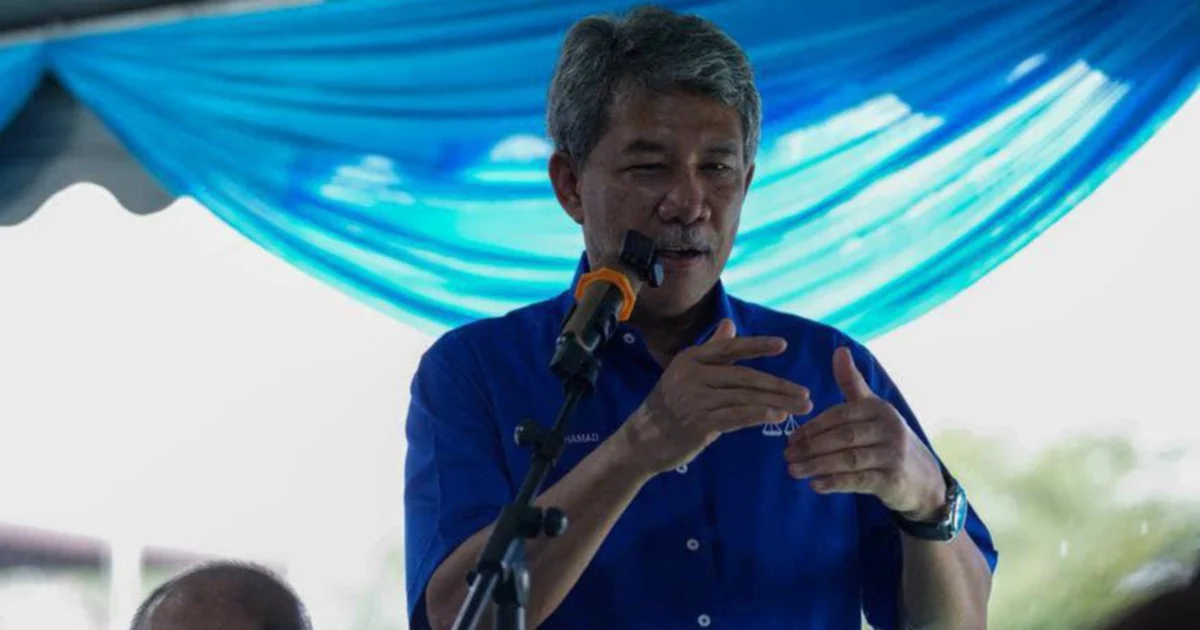
A prominent Barisan Nasional figure has sharply rebuked Pakatan Harapan leaders for continuing to peddle narratives that connect the upcoming Johor state election to potential moves aimed at freeing imprisoned former prime minister Datuk Seri Najib Razak, speaking publicly in Tebrau to make clear that no electoral mandate gives any menteri besar the constitutional or legal authority to reverse judicial decisions.
The assertion represents an escalation in campaign rhetoric as both coalitions intensify their competition for voter support in the southern state, one of Malaysia's traditional BN strongholds. The accusation suggests that PH strategists are attempting to mobilise voters by framing the election as a referendum on whether Johor voters wish to install a government capable of exercising clemency or executive intervention on behalf of the former leader, who was convicted in 2023 for abuse of power and sentenced to 12 years in prison.
The charge carries particular weight given the documented history of executive intervention in high-profile cases. Malaysia's system grants the Yang di-Pertuan Agong authority to grant pardons and royal prerogatives of mercy under Articles 42 and 44 of the Federal Constitution, while state rulers retain equivalent powers at the state level. These constitutional provisions have occasionally intersected with political interests, creating public perception that electoral outcomes might influence such decisions.
Packatan Harapan's alleged emphasis on this theme appears designed to activate concerns among voters who view Najib's imprisonment as symbolising accountability for financial mismanagement during his tenure. For supporters of stronger rule of law, such messaging threatens to undermine the independence of Malaysia's judiciary and reinforce the perception that political outcomes depend on which coalition wields executive authority rather than impartial legal processes.
For Malaysian observers, the debate reflects deeper anxieties about institutional integrity. Johor remains economically significant and politically consequential, as a state that provides crucial parliamentary seats and reflects broader sentiment in the Klang Valley and southern regions. Whether the electorate votes primarily on state governance issues—healthcare, infrastructure, and economic development—or allows national narratives about executive clemency to influence their choice will carry implications beyond Johor's borders.
The statement also implicitly underscores the constraints within which state governments operate. While a menteri besar commands executive authority over state affairs, the power to free a person convicted in federal court and imprisoned in federal custody lies entirely outside state jurisdiction. This fundamental constitutional reality makes the suggestion that electoral victory somehow translates into authority over Najib's status legally and constitutionally baseless, yet the fact that opposition leaders felt compelled to repeat such claims suggests they recognise it resonates with certain voter demographics.
The timing of the exchange carries strategic importance for both coalitions. As campaigns intensify, BN seeks to occupy the moral high ground by positioning itself as custodian of institutional stability and rule of law, while potentially portraying PH as willing to weaponise electoral competition to serve narrow interests. Conversely, PH appears to be testing whether mobilisation around Najib's case—whether framed as accountability or as a cautionary tale about judicial independence under BN governance—provides sufficient momentum to overcome BN's structural advantages in the state.
For voters in Johor, the exchange presents a test of priorities. The state faces genuine development challenges, including infrastructure investment, job creation in non-traditional sectors, and social cohesion across its diverse communities. Whether electoral debate centres on these substantive governance questions or devolves into arguments about federal-level judicial matters will partly determine whether the election outcome reflects public choice on bread-and-butter issues or serves as a proxy for broader national anxieties.
The dispute also illuminates how Malaysia's political landscape remains intertwined with the outcome of Najib's legal cases. Even as he serves his sentence, the possibility of executive intervention—whether through federal royal prerogatives or state-level clemency—retains sufficient political salience that it becomes a factor in state-level electoral competition. This persistent linkage between national legal outcomes and local electoral politics underscores how incompletely the Malaysian political system has resolved questions about the balance between executive discretion and judicial independence.
For Southeast Asia's broader governance picture, Malaysia's experience offers cautionary lessons. When electoral outcomes are perceived as potentially influencing legal proceedings or executive clemency decisions, voter behaviour shifts away from purely local considerations. This dynamic can erode the quality of governance if state elections become less about state-level competence and more about national-level political struggles. Johor voters must ultimately decide whether their ballot should be cast based on state-level governance records and promises, or whether national narratives should dominate their decision-making calculus.

