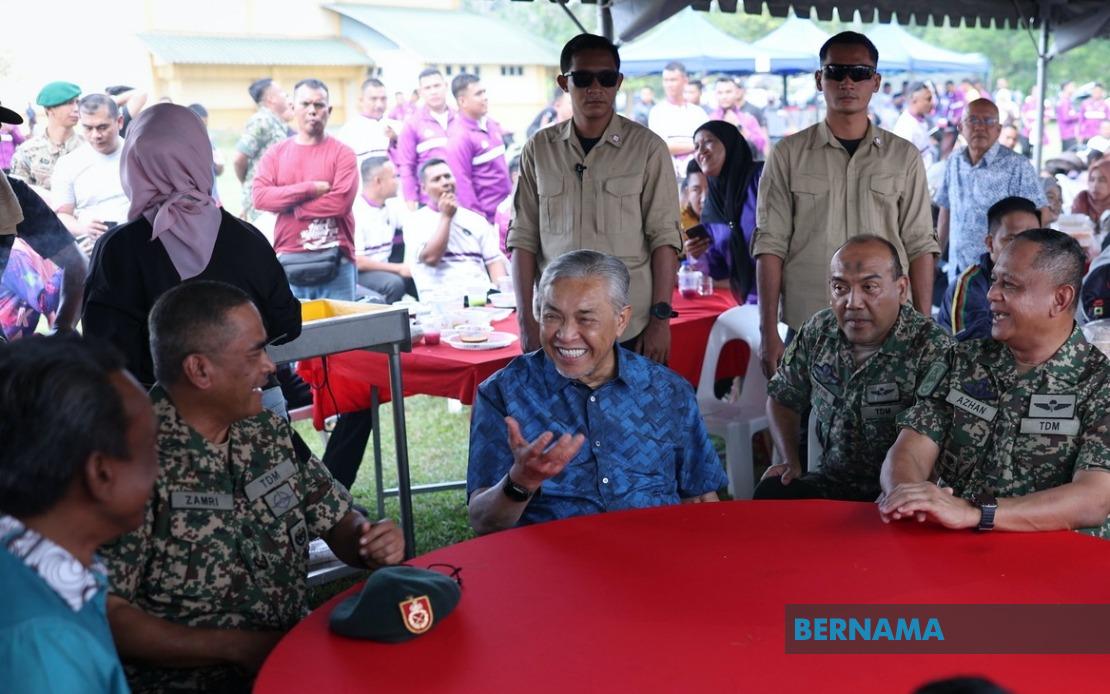
Deputy Prime Minister Datuk Seri Dr Ahmad Zahid Hamidi has drawn a clear line on accountability, stating unequivocally that legal consequences will apply to anyone implicated in wrongdoing uncovered by the Royal Commission of Inquiry into Lembaga Tabung Haji, regardless of their status or position. Speaking at a military family carnival in Tampin, Ahmad Zahid, who serves as both Barisan Nasional chairman and UMNO president, underscored the government's commitment to ensuring the RCI findings are disclosed openly and that appropriate action follows the established legal framework.
The Deputy Prime Minister's remarks come as anticipation builds over the release of a report that has long been withheld from public view. Ahmad Zahid emphasised that transparency in presenting the RCI's conclusions is essential, and that if investigations uncover any instances of abuse of authority, procedural irregularities, criminal breaches of trust, or other improper conduct, the machinery of justice will be activated accordingly. He outlined the sequential process that would follow: formal police reports can be lodged, commercial crime investigations initiated, and other legal avenues pursued to hold individuals accountable within the established judicial system.
The timing of Ahmad Zahid's statement is particularly significant given that Negeri Sembilan is preparing for a state election scheduled for August 1, with early voting commencing on Tuesday. The release of the RCI report has become intertwined with political calculations, as some observers have questioned whether revelations could influence voter sentiment during the campaign. However, Ahmad Zahid dismissed concerns that the report's disclosure would sway electoral outcomes, expressing confidence in the political maturity of Negeri Sembilan voters. He suggested that residents of the state possess sufficient judgment to evaluate candidates and coalitions on their merits, independent of any institutional controversies that might surface.
Prime Minister Datuk Seri Anwar Ibrahim had previously signalled his administration's readiness to table the RCI report for Cabinet consideration, voicing optimism that ministers would approve its public release. Anwar, who also holds the Finance Ministry portfolio, provided context for the historical reluctance to publicise the report, explaining that earlier administrations had been concerned about potential damage to public confidence in Tabung Haji. The government's previous caution reflected worries that disclosure of problematic findings could undermine trust in an institution that manages savings and investment funds for millions of Malaysian Muslims engaged in pilgrimage and financial planning.
The calculus has shifted, according to Anwar's assessment. He characterised the current situation as markedly different from earlier periods, noting that Tabung Haji has undergone substantial strengthening measures and achieved recognition on the international stage. These improvements, he suggested, provide a sufficiently robust foundation that the institution can withstand public scrutiny of historical problems without being destabilised. This framing attempts to position transparency not as an admission of continued institutional weakness but rather as a sign of genuine reform and restored integrity.
The Tabung Haji controversy has simmered in Malaysian politics for years, with persistent questions about governance lapses and financial irregularities during previous management periods. The institution, which manages hajj savings accounts and pilgrimage-related services for over 8 million Malaysians, carries profound symbolic importance in the country's Islamic financial landscape. Any major institutional scandal inevitably attracts scrutiny from both the religious community and the general public, making the handling of the RCI report a sensitive matter requiring careful political navigation.
From a Malaysian governance perspective, the debate surrounding the RCI report's release reflects a broader tension between transparency and institutional confidence. Observers have noted that the delay in publishing findings has fuelled speculation and conspiracy theories, potentially causing greater reputational damage than an earlier, managed disclosure might have incurred. The government's apparent pivot toward transparency, if followed through, could establish a precedent for how similar institutional inquiries are handled in the future. This shift may also influence public perception of the administration's commitment to accountability, a theme that resonates across Southeast Asia's reform-minded democracies.
Regionally, Malaysia's experience with institutional accountability mechanisms carries implications for neighbouring countries grappling with similar governance challenges. How Malaysia resolves the Tabung Haji matter—whether through genuine transparency or perceived obstruction—contributes to broader perceptions of the country's institutional health. Investors, donors, and international observers frequently assess emerging democracies partly through their willingness to confront institutional failures transparently rather than suppress them.
For Malaysian voters, particularly those in Negeri Sembilan preparing for state elections, the convergence of these issues creates a complex political moment. Ahmad Zahid's assurances of equal application of the law may reassure some citizens concerned about selective justice or preferential treatment for politically connected individuals. Yet confidence in those assurances ultimately depends on whether the Cabinet approves the report's release and whether subsequent investigations, if warranted, proceed without favour or obstruction. The test of accountability in Malaysian governance will ultimately be measured not merely by rhetorical commitments but by concrete actions taken once the RCI findings become public.

