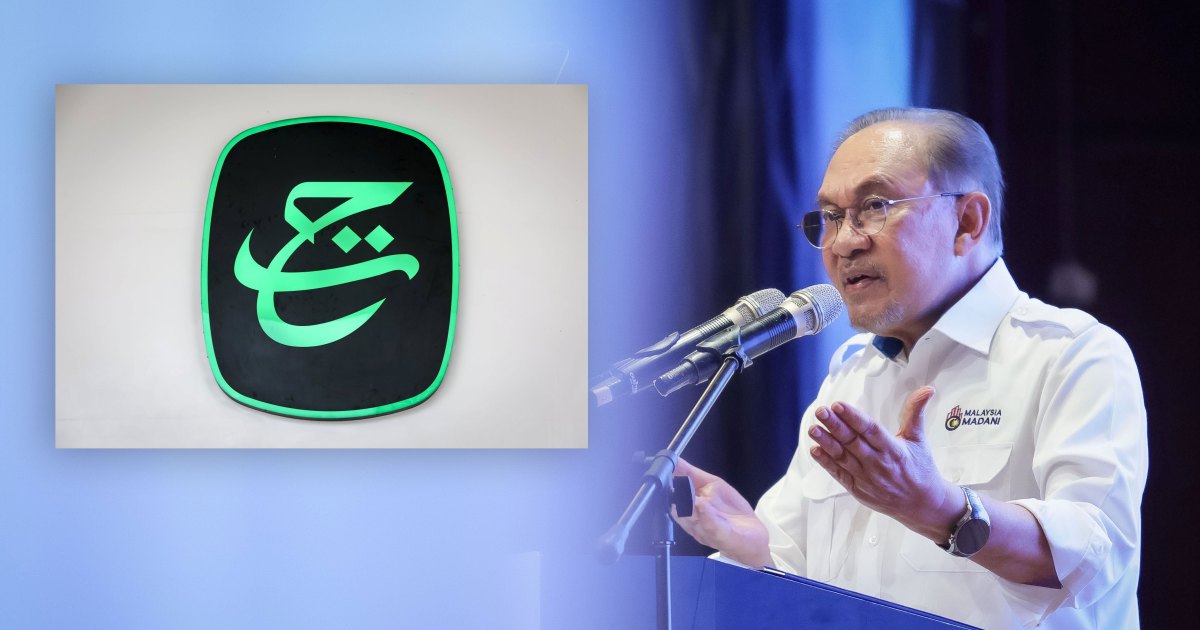
Prime Minister Anwar Ibrahim has made clear that nobody involved in the financial travails of Lembaga Tabung Haji (TH) will escape scrutiny, vowing that those implicated in losses and the misappropriation of authority must submit to thorough investigations with potential criminal prosecution if the evidence warrants it. Speaking in Jelebu, Anwar underscored the government's determination to pursue accountability mechanisms against individuals deemed responsible for the sovereign wealth fund's deteriorating financial position.
The statement represents a significant hardening of official rhetoric surrounding TH, Malaysia's pilgrimage fund that manages savings for prospective hajj pilgrims and operates substantial commercial assets. Over the past decade, TH has experienced mounting financial difficulties, with concerns about governance standards and the stewardship of contributors' funds raising alarms among stakeholders and the broader Muslim community who rely on the institution.
Anwar's commitment to accountability extends beyond rhetoric to the institutional machinery required for enforcement. The government has signalled its intention to deploy investigative authorities to examine the conduct of individuals within TH's management and governance structures. This approach suggests a departure from historical patterns where senior officials have often escaped meaningful consequences for institutional failures, a reality that has bred deep cynicism among the Malaysian public regarding elite accountability.
The focus on prosecution rather than mere administrative remedies reflects growing political pressure to address the TH situation as a matter of national concern. The fund's troubles have exposed what many observers regard as systemic weaknesses in corporate governance, oversight mechanisms, and the auditing processes intended to safeguard public assets managed by government-linked entities. These failings have broader implications for how Malaysia manages state institutions and protects citizen savings.
For hajj contributors—primarily middle and lower-income Malaysian Muslims—the TH losses represent not merely financial diminution but a betrayal of trust in an institution created specifically to facilitate their religious obligations. The fund occupies a unique position in Malaysian society, blending financial services with sacred duty, which amplifies the gravity of any governance failures. When TH experiences difficulties, it reverberates across communities that have entrusted their savings to the organisation.
The investigative and prosecutorial pathway outlined by Anwar would represent a notable shift in how Malaysia addresses white-collar wrongdoing within state institutions. Historically, such matters have been compartmentalised, investigated without transparency, and concluded without public clarity regarding culpability or consequences. The Prime Minister's explicit mention of prosecution if evidence suffices signals intent to break from this pattern, though implementation will ultimately determine whether the rhetoric translates into concrete action.
Regional observers note that Malaysia's approach to TH accountability will influence broader perceptions of governance improvements under the current administration. Across Southeast Asia, sovereign wealth funds and pilgrim savings mechanisms face similar governance challenges, and Malaysia's handling of the TH situation may establish precedents for accountability in the region. The visibility of Anwar's statement in Jelebu ensures that fulfilling this commitment will be monitored closely by both local constituencies and international observers interested in Malaysian institutional reform.
The financial losses incurred by TH have been substantial and multifaceted, encompassing poor investment decisions, exposure to volatile assets, and in some cases, investments characterised as imprudent or lacking adequate due diligence. The precise scale and nature of these losses have been subjects of ongoing scrutiny, with various investigations and audits seeking to establish the full extent of the damage to contributor funds. Determining causation—whether losses resulted from external market conditions, management incompetence, or deliberate misconduct—remains central to understanding appropriate accountability measures.
Anwar's statement implicitly acknowledges that attribution of responsibility will require careful differentiation between those who made poor decisions in good faith and those whose conduct crossed into criminal territory. The evidentiary threshold he articulated—requiring "sufficient evidence" for prosecution—reflects legal standards but also practical acknowledgment that not all institutional failures constitute prosecutable offences. Nevertheless, establishing this threshold transparently and applying it evenhandedly will be essential to maintaining public confidence in the process.
The TH situation also raises questions about preventative governance frameworks. Beyond prosecuting historical failures, Malaysian policymakers must address whether current oversight structures adequately protect the fund going forward. This includes examining board composition, audit independence, risk management protocols, and the availability of whistleblower protections for individuals reporting governance concerns. Strengthening these prospective mechanisms may ultimately prove as important as addressing past breaches.
For pilgrims and contributors seeking to understand their financial exposure and the prospects for recovery or restoration of diminished savings, the Anwar administration's accountability commitment carries both promise and uncertainty. While prosecution of those responsible may provide a sense of justice, it does not automatically restore lost funds or repair institutional damage. Simultaneously pursuing accountability and rebuilding TH's operational integrity and financial viability represents the genuine test of government resolve on this file.

