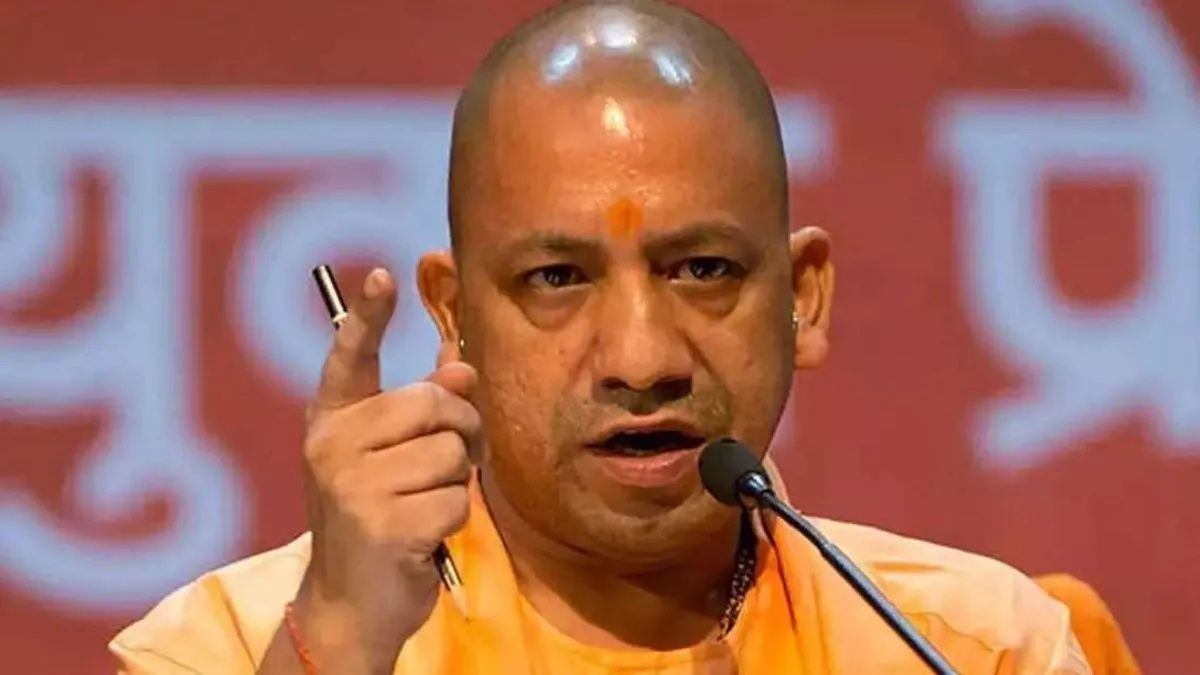
Uttar Pradesh Chief Minister Yogi Adityanath has escalated the political stakes surrounding a donation theft investigation at the Shri Ram Janmabhoomi Teerth Kshetra temple in Ayodhya, declaring his government will brook no interference with the religious sentiments of India's Hindu majority. Speaking at a public event in Deoria on Friday, Adityanath vowed swift action following the filing of a first information report in the case, promising that those who attempt to exploit or undermine people's faith will face serious consequences.
The Chief Minister's remarks signal the government's determination to keep the matter under state control while simultaneously deploying it as a political weapon against opposition parties. Adityanath stated that upon receiving the Special Investigation Team report, immediate action was initiated, and he stressed that his administration would distinguish between truth and falsehood in the controversy. His assertion that no one can be permitted to abuse public trust reflects broader concerns about institutional credibility at major religious sites, where financial stewardship and transparency carry deep symbolic weight for devotees across the Hindu world.
Adityanath's framing of the investigation transformed a governance issue into a cultural battle. He harked back to his visit to Ayodhya on June 19, reiterating that the temple represents not merely a physical structure but a civilisational symbol of Hindu faith and Sanatan Dharma. By invoking this spiritual dimension, he sought to insulate the temple from criticism and reposition any investigation as a matter of defending collective religious identity rather than examining institutional accountability. This rhetorical strategy has profound implications for how such scandals are handled in India's Hindu-majority regions, where religious sentiment often overrides secular scrutiny.
The Chief Minister directed sharp criticism at the Indian National Congress and Samajwadi Party, characterising them as adversaries of Hindu faith itself. He contended that Congress had historically denied the existence of Shri Ram and opposed the temple's construction, pointing to their court battles and legal interventions during the long-running Ayodhya dispute. By conflating opposition to temple construction with hostility toward faith, Adityanath collapsed the distinction between political disagreement and religious transgression—a rhetorical move that has become standard in contemporary Indian political discourse but carries troubling implications for religious pluralism and secular governance.
Adityanath's invocation of historical grievances and communal incidents revealed the depth of animosity underlying state politics. He accused the Samajwadi Party of ordering security personnel to fire upon Ram chant participants and of banning Krishna Janmotsav celebrations and Kanwar Yatra pilgrimages. He referenced the Lar riot as evidence of their anti-Hindu record. These accusations function as reminders of past communal tensions and suggest that current political rivals bear responsibility for religious persecution. Such rhetoric, while resonating with the Chief Minister's electoral base, risks deepening communal polarisation by framing political competition as fundamentally about the protection of Hindu interests against hostile forces.
The Chief Minister's attacks on Congress corruption and alleged plunder during previous administrations attempted to contrast the ruling Bharatiya Janata Party's governance model with earlier alleged mismanagement. He presented his government as a corrective force that has halted widespread theft and restored order. However, the donation case at the Ram Temple—one of India's most significant Hindu pilgrimage destinations—undermines this narrative of transparent and principled administration. The mere fact that theft could occur at such a prominent religious institution raises questions about internal oversight and financial controls that bureaucratic competence should have prevented.
For Malaysian readers and broader Southeast Asian observers, this controversy illuminates how religious institutions in demographically Hindu-majority nations navigate the tension between spiritual authority and administrative transparency. Southeast Asia's own Hindu communities, concentrated in Bali and parts of mainland regions, maintain temples that require similar balancing acts between maintaining sacred spaces and ensuring financial propriety. The Ayodhya case demonstrates how external political pressures can compromise institutional independence, a lesson relevant across religious landscapes where government involvement in temple administration remains contested.
Adityanath's appeal to Ram devotees to demonstrate patience while the SIT conducts its investigation represented an implicit acknowledgement that some in the religious community might grow impatient with procedural investigation. His warning against political allegations—addressed to opposition parties—simultaneously suggested that the government itself would control the narrative around findings. This asymmetry undermines the credibility of supposedly independent inquiry. When a Chief Minister simultaneously launches the investigation, defends the institution, attacks political opponents, and appeals for public support, the investigative process loses the appearance of impartiality essential for public confidence.
The Deputy Superintendent of Police and other officials named in the FIR face accusations of involvement in the donation theft. The specificity of these charges indicates that institutional malfeasance, rather than abstract anti-Hindu sentiment, appears to have occurred. Yet Adityanath's framing relocated the scandal from questions of individual criminal responsibility to broader cultural warfare. This rhetorical sleight of hand serves the government's short-term political interests but potentially compromises the investigation's credibility and the institution's recovery of public trust.
Adityanath's demand that opposition parties either present concrete evidence or cease allegations represents a challenge to democratic scrutiny. Opposition politicians' right to question government handling of scandal constitutes fundamental democratic practice. By characterising such questioning as attacks on faith itself, the Chief Minister attempted to delegitimise legitimate criticism. This conflation of political accountability with religious transgression carries serious implications for institutional governance across religious communities throughout India and South Asia.
The Ram Temple donation case ultimately reflects broader governance challenges facing India's religious institutions during an era of heightened communal consciousness and competitive politics. The temple's completion in January 2024 represented a significant moment for Hindu nationalism, but the subsequent discovery of alleged theft threatens to tarnish that achievement. How authorities handle this investigation—whether with genuine institutional transparency or through political management—will significantly influence public confidence in major religious sites' financial stewardship and administrative integrity across the Hindu world.

