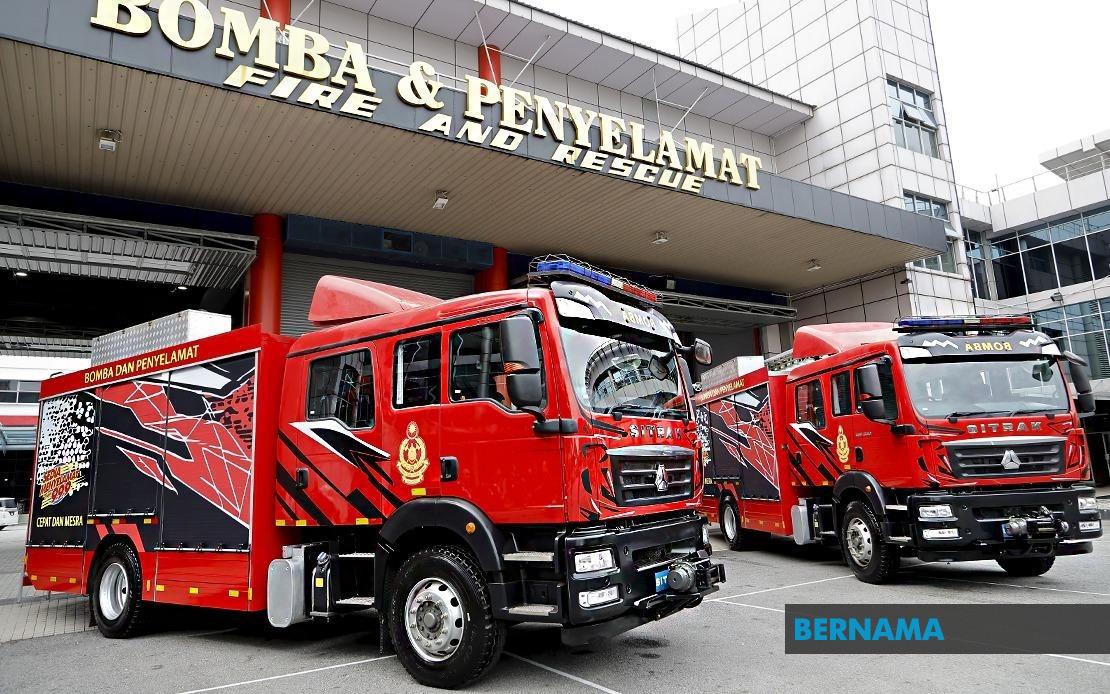
A moderate earthquake originating in North Sumatra sent tremors across the Klang Valley on July 22, prompting swift emergency responses from Malaysia's Fire and Rescue Department (JBPM). The seismic event, which registered 5.7 on the Richter scale with its epicentre approximately 55 kilometres southwest of Langsa, was felt across multiple commercial and institutional buildings in the greater Kuala Lumpur region, demonstrating how seismic activity in the broader Indonesian archipelago continues to affect Malaysian infrastructure and residents.
The JBPM received its first distress call at 12.31 pm, just thirteen minutes after the earthquake struck at 12.18 pm, from the Kajang Municipal Council building in Selangor. According to Ashrul Riezal Asbar, assistant director of operations for the Selangor JBPM, response teams from both Kajang and Subang Jaya stations were mobilised immediately to inspect the affected premises. A second emergency notification arrived at 12.40 pm from INTI International College Subang, located along Jalan SS15, indicating that the tremors had been felt across a broad geographical area despite the distance from the epicentre.
The third and most significant response came at 12.32 pm, when the Kuala Lumpur JBPM received an emergency call regarding tremor activity at Menara B2 Maju Link in Bandar Tasik Selatan. Rescue personnel from the Sungai Besi station were dispatched to the commercial tower and discovered upon arrival that building occupants had already undertaken precautionary evacuation measures. The tremors, which lasted approximately fifteen seconds, had prompted workers to leave their offices and congregate in designated safe areas, reflecting both the psychological impact of earthquake activity and the effectiveness of workplace safety protocols in Malaysia's commercial districts.
Following comprehensive structural assessments at all three locations, JBPM teams reached consistent findings regarding the integrity of the affected buildings. No cracks, fractures, or structural degradation was identified at any of the inspected premises, and all locations were formally cleared for continued occupation. These rapid clearances underscore the robust construction standards applied to Malaysia's commercial and institutional infrastructure, though they also highlight the importance of maintaining detailed structural health monitoring systems in a seismically active region.
The incident generated substantial activity on social media platforms, particularly on Threads, where residents and workers throughout the Shah Alam region shared their experiences of the tremors. This digital communication pattern reveals how Malaysian urban populations increasingly rely on peer verification and real-time information exchange when experiencing natural phenomena. Users such as 'nabilaishah' in Section 26 posted brief descriptions of the seismic event, while others like 'nadiaxzailan' described moments of initial uncertainty about the cause of the vibrations—a common experience where brief tremors can be mistaken for machinery vibration, vehicle movement, or environmental disturbances.
One particularly illustrative account came from a worker who initially attributed the table movement to her imagination before consulting colleagues and online discussions. This pattern of delayed recognition followed by community verification demonstrates how earthquake awareness in Malaysia remains variable, despite the nation's geographic proximity to the Pacific Ring of Fire and regular seismic activity throughout the Indonesian region. The reliance on peer confirmation rather than official alert systems suggests potential gaps in public emergency communication infrastructure that warrant examination by disaster management authorities.
The geographical distribution of reported tremors across Kajang, Subang Jaya, and Bandar Tasik Selatan—spanning approximately thirty kilometres—reflects the transmission characteristics of moderate-magnitude seismic waves through the Malay Peninsula's geological substrate. The 5.7 magnitude classification places this event in the range capable of causing noticeable ground motion and brief alarm without typically generating substantial structural damage, a distinction that separates minor seismic events from potentially catastrophic occurrences. For Malaysia, where major earthquake damage is relatively uncommon due to distance from primary subduction zones, such incidents serve valuable purposes in testing emergency response systems and public awareness levels.
The rapid activation of Malaysia's fire and rescue apparatus on July 22 demonstrates operational readiness among emergency services, though the incident also raises broader questions about early warning systems and public notification protocols. While international seismic monitoring networks can provide advance information about significant earthquakes in neighbouring countries, the integration of these alerts into Malaysia's civilian emergency response framework remains an evolving area. The JBPM's reactive approach—responding to citizen reports rather than issuing proactive alerts based on seismic data—represents a common model but one that potentially delays public awareness and precautionary measures.
For Malaysia's business continuity and public safety planning, such events furnish valuable data about how modern commercial towers respond to seismic stress and how diverse populations react to earthquake sensations. The immediate evacuation response documented at Menara B2 Maju Link indicates that safety training and awareness have taken root in major commercial properties, yet the delayed recognition of seismic activity among some workers suggests that broader public education initiatives could enhance collective preparedness. Regional considerations are particularly relevant, as the frequent seismic activity throughout Sumatra, Java, and Sulawesi means that Malaysian border regions remain subject to periodic ground motion from Indonesian earthquake activity.
The incident serves as a reminder that while major devastating earthquakes remain statistically unlikely in Peninsular Malaysia, the nation's exposure to moderate tremors from regional seismic sources necessitates continuous investment in structural engineering standards, emergency response training, and public awareness initiatives. The structural integrity demonstrated by the three buildings assessed on July 22 reflects decades of building code development and enforcement, yet complacency cannot be afforded as urbanisation and population density increase throughout the Klang Valley and other major metropolitan areas.

