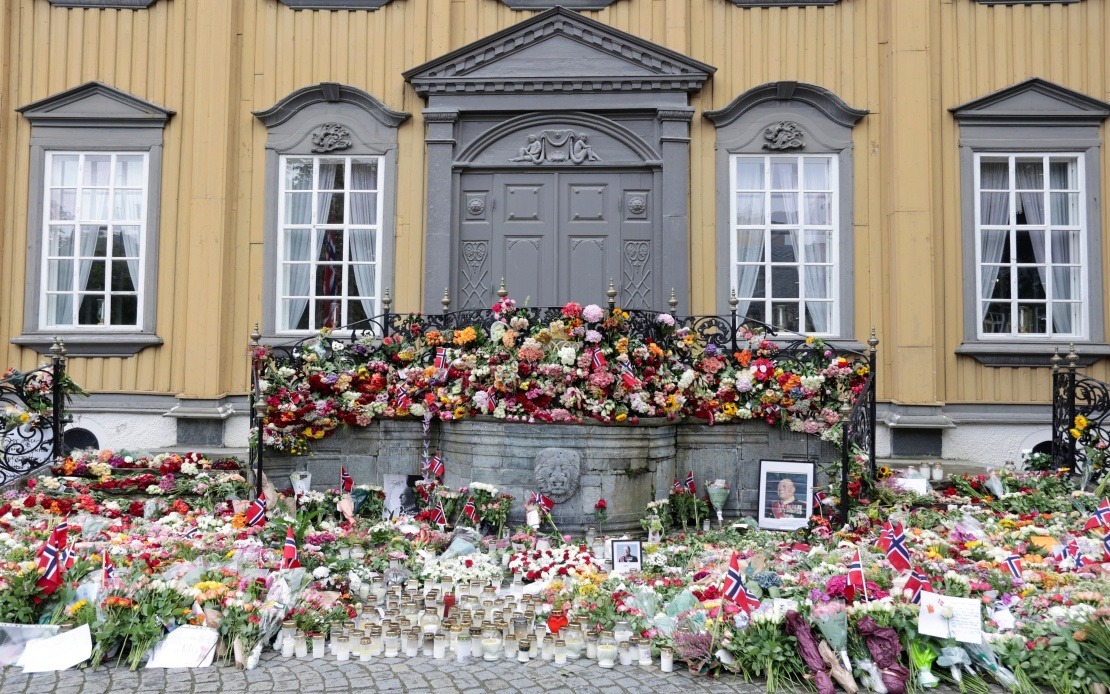
Norway came to a standstill on Sunday as the nation observed memorial services honouring King Harald V, who passed away on Friday at the age of 89 after a reign spanning more than five decades. Across the Scandinavian kingdom, from major urban centres to remote communities, Norwegians gathered at churches and cathedrals to pay their respects to a monarch who had become a defining figure in the country's modern history. The outpouring of public grief reflected Harald's deep connection with his people, cultivated through decades of steady constitutional leadership that guided Norway through significant social and economic transformations.
The Norwegian Royal House formally announced that the state funeral will be conducted on September 9, providing the nation with a formal occasion to commemorate the late king's legacy. This extended period between death and funeral allows time for dignitaries from around the world to arrange attendance, while also giving Norwegian citizens ample opportunity to participate in the mourning rituals that mark the passing of a reigning monarch. Such ceremonies carry particular weight in Norwegian society, where the royal family maintains considerable public affection despite the country's egalitarian traditions.
Tens of thousands of mourners converged on cathedrals and church buildings throughout Norway, creating scenes of collective remembrance that underscored the personal regard in which Harald was held. Beyond the formal religious services, spontaneous memorials emerged at the Royal Palace in Oslo, where citizens left flowers, candles, and handwritten tributes. These grassroots expressions of mourning revealed how Harald had transcended his constitutional role to become a symbol of Norwegian continuity and stability, particularly for citizens who had known no other reigning king during their lifetimes.
Norway's constitutional framework dictates an orderly and immediate transition of power, and Harald's 53-year-old son ascended to the throne without delay, adopting the regnal name Haakon VIII. This seamless transfer of sovereignty reflects the strength of Norway's parliamentary democracy, where the monarchy functions as a unifying institution rather than a centre of political power. The new king inherits a nation facing contemporary challenges ranging from energy policy transitions to defence considerations in an evolving European security environment, particularly given Norway's prominent position within NATO and its strategic relevance in Arctic geopolitics.
Haakon VIII's accession marks a generational shift in Norwegian leadership at a moment when the country confronts significant strategic decisions. His reign begins as Norway, despite not being an European Union member, remains deeply integrated into European affairs through its membership in the European Economic Area and other multilateral frameworks. The new monarch must navigate Norway's complex relationship with energy transition policies while maintaining the prosperity that petroleum wealth has generated, a balancing act that will define much of his early reign.
The succession also carries implications for Norway's evolving role in regional affairs. As a key NATO member sharing borders and maritime zones with Russia, Norway's leadership—both political and symbolic—carries weight beyond its population of roughly 5.5 million. Haakon VIII inherits responsibility for maintaining the constitutional monarchy as a stabilising force during a period of heightened international tension and domestic policy debates about defence spending, renewable energy investment, and social cohesion.
For observers across Southeast Asia and the broader international community, Norway's transition demonstrates how established constitutional monarchies manage succession with stability and dignity. Unlike realms where succession disputes generate uncertainty, Norway's clear legal framework and deeply rooted democratic traditions ensured that power transferred smoothly. This model contrasts with various global contexts where succession remains contentious, offering lessons in institutional resilience and democratic maturity.
King Harald V's 52-year reign witnessed Norway transform from a primarily resource-extraction economy into a sophisticated, diversified society. He presided over periods of tremendous prosperity, driven substantially by offshore oil and gas development, while also guiding the nation through the complexities of integrating immigrant communities and addressing climate change imperatives. His personal reputation benefited from his visible engagement with ordinary Norwegians and his reputation as an accomplished sailor and outdoorsman, characteristics that aligned with Norwegian cultural values emphasising modesty and connection to nature.
The memorial services and upcoming funeral provide occasions for reflection on Norwegian identity and values at a transitional moment. Haakon VIII's accession occurs as younger Norwegians, who have never known another monarch, assume increasing prominence in the country's governance and culture. The new king will need to establish his own relationship with the public while honouring his father's legacy, a challenge facing many newly enthroned monarchs in the modern era where tradition must coexist with contemporary expectations of relevance and accessibility.

