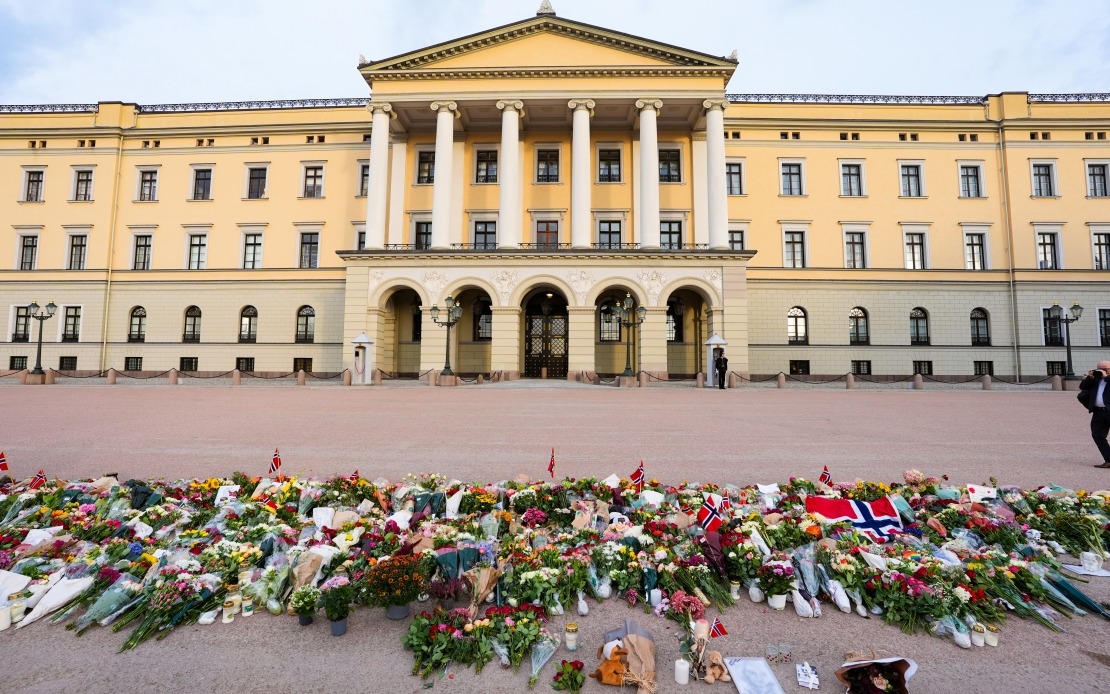
Norway's long-reigning King Harald V passed away Friday morning at Oslo's National Hospital, marking the end of an era for Scandinavian royalty. The 89-year-old monarch died peacefully at 6:35 am local time, as confirmed by the Royal Palace, which immediately lowered the flag at the palace to half-staff in observance of the national loss. His death concludes more than three and a half decades of service as Norway's constitutional head of state, a tenure that had made him the oldest actively reigning monarch in Europe at the time of his passing.
The king's health had been in decline since mid-August, when the Royal Palace announced his admission to the National Hospital for medical evaluation on August 17. Initial palace statements indicated that Harald had been undergoing treatment for hemolytic anemia, a chronic blood disorder that progressively caused fluid to accumulate throughout his body, creating significant physical challenges that limited his public duties in recent months. This condition, while manageable through cortisone therapy, represented a long-standing health concern that had required ongoing medical attention.
Complications arose when the Norwegian monarch developed a bacterial infection in his bloodstream, a potentially life-threatening development for a patient of advanced age already managing a serious hematological condition. Norwegian public broadcaster NRK reported that this secondary infection accelerated his clinical deterioration, ultimately proving fatal despite the best efforts of his medical team at the National Hospital. The combination of these conditions created a medical crisis from which the aged king could not recover.
Under Norway's constitutional framework, succession occurred immediately and automatically upon Harald's death. His eldest son, Crown Prince Haakon, has assumed the throne without ceremony or formal coronation, as Norwegian constitutional tradition does not include coronation rites. The transition represents a seamless transfer of monarchical authority, reflecting the established procedural practices that have governed Norwegian succession for decades.
The new king must now navigate several formal constitutional requirements to complete his formal assumption of power. The Norwegian government will convene an extraordinary Council of State at the Royal Palace for an initial meeting with the new monarch, during which his official regnal name will be formally announced to the nation and the world. This meeting serves as the ceremonial acknowledgment of the succession and establishes the framework for the reign to follow.
Additionally, the Norwegian Constitution mandates that the newly crowned monarch must appear before parliament to take a solemn oath of office, affirming his commitment to uphold the constitution and serve the Norwegian people. This parliamentary oath ceremony represents the formal legal underpinning of his authority and provides the legislative body an opportunity to formally recognize the new reign. The entire process, while laden with ceremonial significance, operates within Norway's distinctive constitutional system that vests considerable authority in parliament rather than concentrating power in the monarchy alone.
King Harald's accession to the throne had itself marked a significant moment in Norwegian history. He assumed the crown on January 17, 1991, following the death of his father, King Olav V, beginning a reign that would span more than 35 years and carry the Norwegian monarchy through profound social, economic, and geopolitical transformations. His tenure encompassed Norway's emergence as an energy superpower through North Sea oil development, the nation's integration into European frameworks through the European Economic Area, and the modernization of Norwegian society during an era of unprecedented prosperity.
Throughout his long reign, Harald maintained a reputation for dedication to constitutional governance and close connection to the Norwegian people. Unlike some European monarchies that have retreated from public engagement, Harald remained an active presence in Norwegian civic life, supporting charitable causes, national cultural initiatives, and diplomatic functions that enhanced Norway's international standing. His longevity on the throne provided continuity during periods of significant change, offering Norwegian society a stabilizing institutional presence.
The succession of Crown Prince Haakon, who has been trained for the role throughout his life, ensures continuity in Norwegian governance while presenting an opportunity for the monarchy to refresh its approach to contemporary challenges. Haakon represents a younger generation of European royals who have demonstrated capacity to navigate social media, environmental concerns, and evolving public expectations regarding institutional transparency and relevance. His accession is unlikely to herald dramatic constitutional changes but may bring subtle shifts in how the monarchy engages with Norwegian society and global affairs.
For regional observers across Southeast Asia, the Norwegian succession demonstrates how established constitutional monarchies manage transitions smoothly through clear legal frameworks and institutional practices that transcend individual personalities. Malaysia's own monarchy, with its unique system of rotational sultanates and constitutional arrangements, operates according to different principles, yet shares with Norway a commitment to constitutional governance within hereditary frameworks. The Norwegian example illustrates how long-established institutions can maintain public legitimacy across generations by adhering to transparent constitutional procedures and maintaining distance from partisan political controversies, lessons potentially relevant to discussions about institutional governance across Asia.

