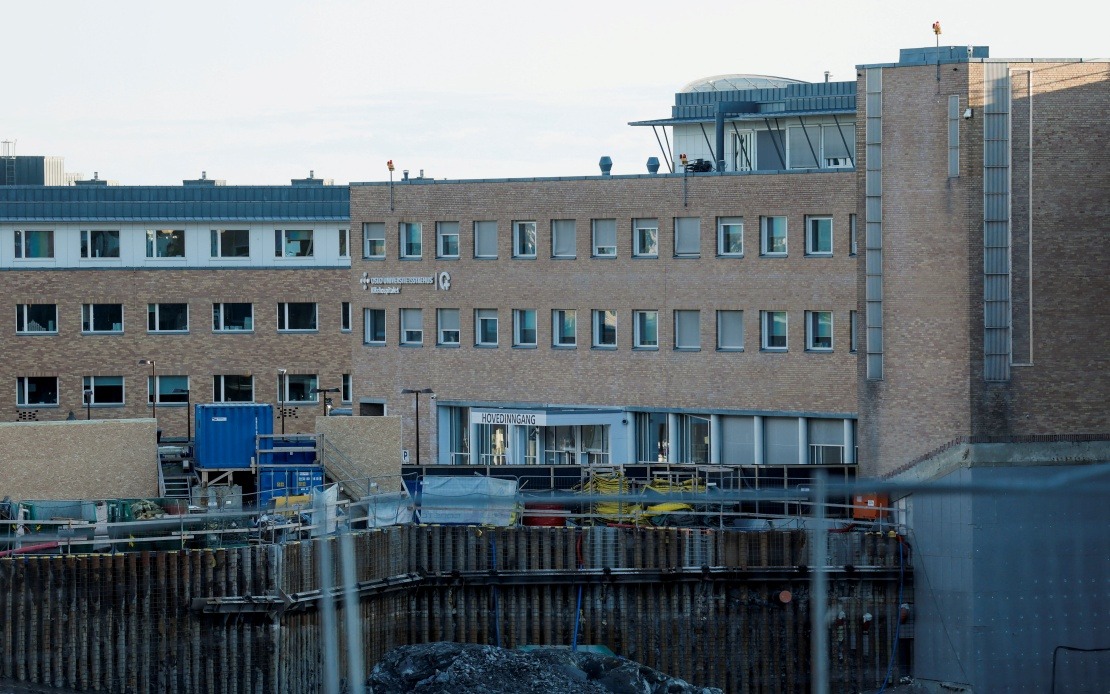
King Harald V of Norway, aged 89, entered hospital this week following a medical examination that revealed complications requiring inpatient treatment, according to an announcement from the Norwegian Royal Court. The admission comes after the long-reigning monarch underwent cortisone therapy in recent weeks to address haemolytic anaemia, a condition affecting red blood cell production and survival. Rather than resolving the underlying condition cleanly, the treatment course has triggered secondary complications that necessitate close hospital monitoring and management.
The medical complication stemming from the cortisone regimen involves pathological fluid accumulation throughout Harald's body—a recognised side effect of prolonged corticosteroid use that demands controlled treatment within a hospital setting. The Norwegian Royal Court confirmed in its statement that this fluid retention created a clinical situation requiring professional medical intervention beyond what outpatient care could safely provide. The king has been granted a two-week medical leave period, during which responsibility for state functions will transfer to his eldest son, Crown Prince Haakon, who will exercise the powers of regent during his father's recovery.
Harald's current hospitalisation represents another chapter in an extended period of declining health that has tested Norway's constitutional framework and raised questions about succession planning within the Nordic monarchy. February of this year brought an earlier hospitalisation when the king contracted an infection while vacationing in Tenerife, demonstrating how his travels abroad occasionally expose him to unexpected health threats. More significantly, in March 2024 Harald underwent surgical insertion of a cardiac pacemaker after falling seriously ill during a holiday in Malaysia—an incident that underscored the vulnerability of an advanced-age monarch to acute medical events and raised regional awareness of his precarious health status across Southeast Asia.
The broader royal family has simultaneously grappled with its own cascade of medical challenges, creating an unprecedented convergence of health concerns within the Norwegian palace. Queen Sonja, Harald's consort, required hospitalisation in May this year after developing heart complications that demanded acute medical attention. Princess Astrid, the king's sister, manages life with a chronically weakened heart condition requiring ongoing cardiology care. Most dramatically, Crown Princess Mette-Marit, the wife of Crown Prince Haakon, underwent lung transplantation in June after years of managing pulmonary fibrosis—a serious progressive lung disease that ultimately necessitated organ replacement as her own lungs deteriorated beyond functional capacity.
The concentration of serious health issues spanning multiple generations of the Norwegian royal household reflects both the advancing age of the senior generation and the unpredictable nature of modern chronic disease. These circumstances have prompted discussion among constitutional scholars and royal watchers regarding the long-term stability of the monarchy and whether current succession arrangements adequately prepare the institution for future transitions. Crown Prince Haakon's assumption of regency during his father's medical leave provides an opportunity for continuity of royal functions and demonstrates the system's capability to absorb periods when the primary monarch is temporarily unable to perform full duties.
For Malaysia and the broader Southeast Asian region, Harald's health trajectory carries specific relevance given his recent medical emergency during a Malaysian holiday. The incident earlier this year illustrated both the accessibility of Norway's royal family to regional tourism and the unpredictability of health incidents affecting elderly world leaders travelling abroad. Medical tourism and royal travel throughout the region has long been commonplace, yet Harald's complications in Malaysia highlighted the serious risks accompanying such journeys for senior figures with existing health vulnerabilities.
The cortisone treatment regimen that precipitated Harald's current hospitalisation highlights the delicate clinical calculus governing therapy for haemolytic anaemia in elderly patients. While corticosteroids remain among the most effective pharmacological approaches for suppressing the autoimmune destruction of red blood cells characteristic of haemolytic anaemia, their use in octogenarian patients requires exceptional caution due to increased susceptibility to metabolic complications. The fluid retention Harald experienced represents a predictable consequence of prolonged corticosteroid therapy rather than an unforeseen medical catastrophe, suggesting his physicians anticipated this possibility and had established protocols for managing such complications.
Norway's constitutional monarchy has historically demonstrated robust institutional resilience during medical crises affecting its sovereigns, with established legal frameworks permitting regency arrangements without disrupting governmental continuity. The transition to Crown Prince Haakon's temporary authority requires no extraordinary constitutional manoeuvre and follows precedent established through prior instances of royal illness. This institutional steadiness provides reassurance to international observers that Norway's government will continue functioning effectively throughout Harald's recovery period without governmental paralysis or succession uncertainty.
The two-week timeframe specified for Harald's sick leave suggests medical professionals anticipate that hospital treatment will sufficiently resolve the fluid accumulation within this period, enabling his return to active duties. Should complications extend beyond this window, the Norwegian system permits extension of regency arrangements and demonstrates flexibility in adapting to evolving health circumstances. The transparent communication from the Royal Court regarding the king's condition and treatment reflects contemporary norms of royal medical disclosure, contrasting sharply with historical practices of concealing monarch health details from public knowledge.
Harald's reign has spanned more than five decades and witnessed Norway's transformation into a modern energy superpower through North Sea petroleum wealth. His health challenges during the closing chapter of his reign will ultimately shape perceptions of his later years and may accelerate conversations about ideal succession timing within contemporary Nordic monarchies. Crown Prince Haakon's performance during regency periods provides valuable preparation for eventual assumption of full royal authority and allows both the institution and the Norwegian public to observe his capacity for governing responsibility during his father's incapacity.

