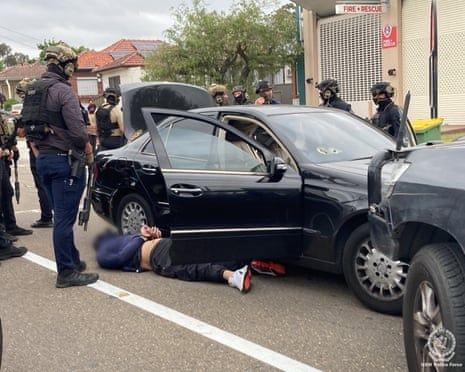
Police in New South Wales have announced a significant enforcement action against crime on public transport, with 356 arrests made during a concentrated three-day operation last week. The operation, known as Operation Waratah, represents the sixth iteration of an ongoing initiative designed to curtail violent and sexual offences across the state's extensive transit network. The scale of deployment underscores the urgency with which authorities are tackling what has become an increasingly visible concern for commuters across the region.
Operation Waratah was formally established in 2024 with a specific mandate: to disrupt criminal activity on trains, light rail trams, buses, and ferries throughout New South Wales. The program addresses growing community anxiety about personal safety on public transport, an issue that has gained prominence in public discourse across Australia and internationally. By concentrating resources and personnel on this singular objective, the NSW Police Force is attempting to create a visible deterrent while simultaneously apprehending individuals engaged in predatory behaviour.
The sixth phase of the operation, conducted between Thursday and Saturday of last week, deployed more than 400 uniformed and plainclothes officers across the state's sprawling public transport infrastructure on a daily basis. This represents a considerable commitment of personnel for a jurisdiction that must balance multiple policing priorities. The operation's intensity reflects the nature of the offences targeted, where the presence of trained officers can both prevent incidents and provide reassurance to vulnerable passengers who may otherwise avoid using public transport.
The cumulative impact of Operation Waratah since its inception in 2024 has been substantial. The 356 arrests in this latest phase bring the total number of people arrested and charged under the operation to more than 1,800. This figure demonstrates both the scale of the problem authorities are addressing and the sustained commitment required to manage it. For Malaysian readers accustomed to generally safe public transport systems, the numbers may seem alarming, though context suggests that the operation's existence itself may be generating these arrest figures through increased police visibility rather than indicating a recent spike in criminal activity.
During the three-day enforcement period, officers conducted patrols across a diverse array of transit modes. The deployment included inspection of 539 trains, 127 buses, and 29 light rail trams, illustrating the comprehensive nature of the operation. This geographical and operational breadth ensures that offenders cannot simply shift their activities to less-monitored transport routes or modes. The strategic distribution of resources across multiple transport types reflects sophisticated law enforcement planning.
The tangible outcomes of this particular phase extend beyond arrests alone. Police seized 28 knives and other weapons during the operation, indicating that many arrested individuals posed an immediate physical threat to other passengers. These weapons confiscations remove potentially lethal instruments from circulation and suggest that officers were encountering individuals prepared to commit serious harm. Separately, officers made 137 drug detections, indicating that substance-related offences remain prevalent on public transport and often coincide with violent behaviour.
The 356 arrested individuals were collectively charged with 645 offences, demonstrating that many individuals face multiple charges relating to distinct incidents or overlapping criminal conduct. This multiplicity of charges suggests organised patterns of behaviour rather than isolated incidents, supporting the rationale for focused enforcement operations. The breadth of charges also reflects the comprehensive approach police are taking, targeting not merely the most serious offences but also secondary criminal activity that contributes to overall transport network safety.
For Southeast Asian observers, Operation Waratah offers both instructive and cautionary elements. Many developed transport networks in the region maintain relatively low crime rates through a combination of visible policing, community culture, and infrastructure design. Australia's need for such intensive enforcement operations suggests that even wealthy, developed nations can experience significant public transport crime problems. The operation's existence and scale may also reflect evolving social challenges including substance abuse, mental health crises, and general public order disruptions that manifest acutely in enclosed transit environments.
The operation also raises questions about sustainability and long-term effectiveness. While short-term enforcement bursts generate arrest statistics and provide visible deterrence, policing scholars debate whether such periodic operations produce lasting behavioural change or merely displace criminal activity temporally. The establishment of Operation Waratah as a recurring initiative, rather than a one-off response, suggests NSW authorities believe ongoing enforcement is necessary to maintain baseline safety levels on public transport.
Community perception of public transport safety directly influences ridership patterns and urban mobility. In cities where perception of danger exceeds actual risk, commuters may shift to private vehicles, increasing congestion and emissions while reducing transit revenue. New South Wales authorities appear keenly aware of this dynamic, using Operation Waratah partly as a public reassurance measure alongside its crime-reduction function. The police announcements accompanying each phase generate media coverage that reinforces the message that authorities are actively protecting transport users.
The operation's targeting of both violent offences and sexual crimes reflects contemporary law enforcement priorities that acknowledge how transit networks can facilitate predatory behaviour, particularly against vulnerable passengers. Sexual assault and harassment on public transport is an underreported global phenomenon, and dedicated enforcement operations like Waratah aim to deter perpetrators and increase victim confidence in reporting.
Looking forward, the challenge for NSW authorities lies in balancing the effectiveness of intensive short-term operations against budget constraints and competing policing demands. Whether Operation Waratah's successive phases represent a sustainable model or a temporary response to cyclical crime patterns remains to be seen. The operation's continuation and the accumulating arrest figures suggest that public transport crime remains a persistent challenge requiring ongoing strategic attention.

