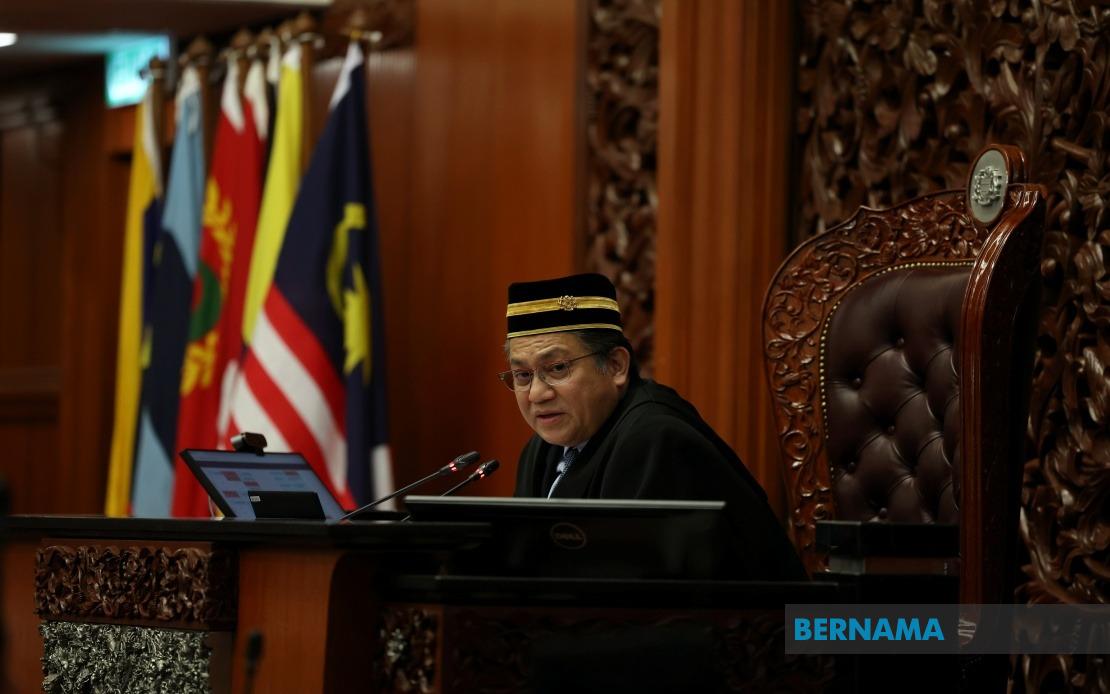
Senator Datuk Nur Jazlan Mohamed has secured another three-year term as Deputy Speaker of the Dewan Negara, cementing his position in Malaysia's legislative upper chamber leadership. The reappointment, formally announced on July 20 in parliament, came by royal directive from His Majesty the Yang di-Pertuan Agong and will run from June 15, 2026 through June 14, 2029. The nomination was advanced by Higher Education Minister Datuk Seri Zambry Abd Kadir acting on behalf of Prime Minister Datuk Seri Anwar Ibrahim, presented before the Senate's question-and-answer proceedings.
Nur Jazlan's continuation in this role represents a vote of confidence in his stewardship of parliamentary procedure and legislative management. The 60-year-old politician previously assumed the Deputy Speaker position in June 2023 and has maintained the role through the current parliamentary term. His political experience extends well beyond the Senate chamber, having served as Deputy Home Minister during the 2015-2018 period and representing the Pulai constituency in the Dewan Rakyat for fourteen years until 2018. Within UMNO, he holds dual positions as a member of the party's Supreme Council and chief of the Pulai Division, giving him considerable influence within the coalition's largest component party.
On the same occasion, fellow Senator Mussodak Ahmad was also reappointed for a second term, though through a distinct pathway. Mussodak's reappointment came via nomination from the Kedah State Legislative Assembly and covers a three-year period commencing March 20, 2026 and concluding March 19, 2029. The timing of these dual reappointments reflects the staggered renewal cycles that characterise Senate membership, where different cohorts of senators serve overlapping terms based on their appointing authorities.
Mussodak brings his own political credentials to the upper house, serving as secretary of Kedah PAS and having contested state-level elections in the Bayu and Guar Chempedak constituencies. His initial appointment to the Senate in March 2023 represented his entry into national-level legislative work, and his reappointment signals PAS's continued participation in the current political configuration at federal level. The presence of both UMNO and PAS representatives being renewed in the Senate demonstrates the multiparty composition of Malaysia's upper chamber and its function as a forum encompassing diverse political perspectives.
The reappointments arrive as the Dewan Negara enters an extended sitting period under its parliamentary calendar. The Second Meeting of the Fifth Term covering the 15th Parliament is scheduled to run for ten days from July 20 through August 4, providing ample time for substantive legislative work and debate. During such extended sittings, the Deputy Speaker assumes heightened responsibility for managing proceedings, maintaining decorum, and ensuring orderly passage through parliamentary business.
The Deputy Speaker's role, though less prominent than the Speaker's position occupied by Datuk Awang Bemee Awang Ali Basah, carries real procedural weight in senate operations. The officer presides over debates, rules on points of order, and guides the house through complex legislative procedures. Nur Jazlan's reappointment reflects recognition of his competence in these technical and diplomatic dimensions of parliamentary governance. His prior ministerial experience managing the Home Ministry bureaucracy has equipped him with administrative acumen valuable in coordinating the Senate's operations.
For Malaysian governance structures, the continuity represented by Nur Jazlan's second term speaks to broader questions about legislative leadership. The Senate, constitutionally mandated to serve as a house of review and a forum for state representation alongside the directly elected lower house, depends on experienced hands to function effectively. Nur Jazlan's trajectory from backbench MP to ministerial office to Senate leadership illustrates the career paths available to mid-ranking politicians within Malaysia's institutional framework.
The timing of these reappointments also reflects the underlying political stability that has characterised the current administration. Prime Minister Anwar Ibrahim's government has maintained sufficient coherence to execute routine procedural appointments without significant contestation, suggesting functional cooperation between the ruling coalition partners. The smooth reconfirmation of both a UMNO figure and a PAS representative indicates that inter-coalition dynamics remain workable at the operational level.
From a broader Southeast Asian perspective, Malaysia's bicameral parliamentary structure positions the Senate as a chamber of considerable institutional importance. Unlike purely ceremonial upper houses in some democracies, the Dewan Negara possesses genuine legislative authority and serves as an essential component of Malaysia's constitutional architecture. Leadership positions within this institution therefore merit careful consideration and merit-based selection, making Nur Jazlan's reappointment noteworthy as a confirmation of his suitability for continued service.
The Senate sitting now underway will test the operational effectiveness of this renewed leadership. With ten days of scheduled proceedings, significant legislative items typically come before the upper house for consideration, amendment, and final passage. The Deputy Speaker's role in facilitating this work—whether through managing time allocation, ruling on procedural questions, or maintaining the decorum essential to legislative effectiveness—remains central to senate functionality.

