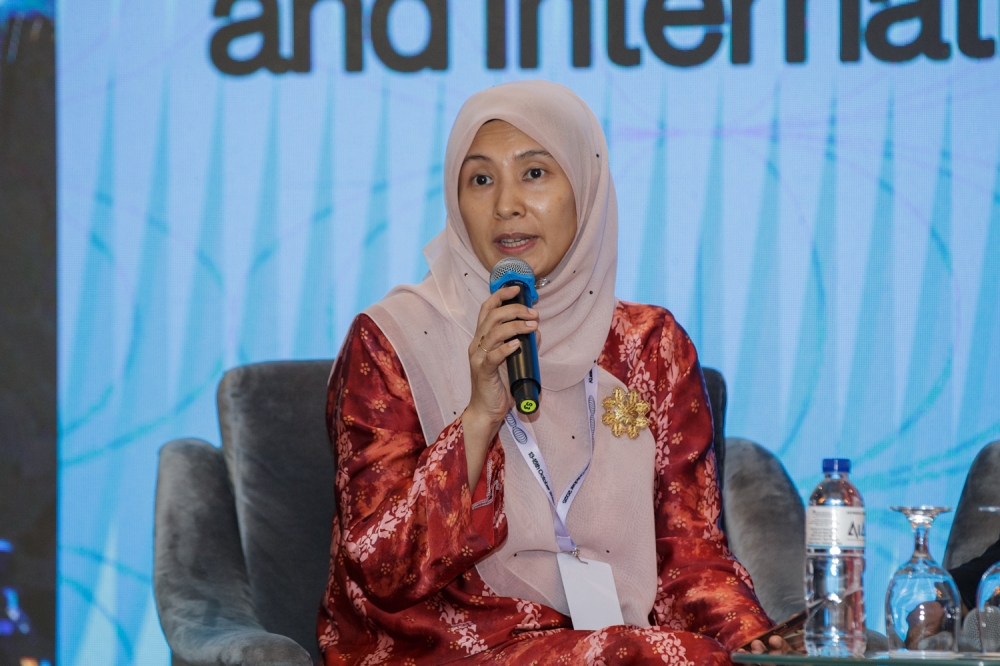
Nurul Izzah Anwar, the deputy president of Parti Keadilan Rakyat, has announced her withdrawal from the senior party post, citing her intention to pursue additional studies as the primary motivation behind the decision. The move, disclosed in early August, signals a significant shift in PKR's leadership composition and raises questions about succession planning within the opposition-aligned party that has been instrumental in Malaysian politics over the past two decades.
The stepping down of Nurul Izzah represents a deliberate choice to reallocate her energies toward educational advancement rather than the demands of high-level party administration. Her decision underscores the tension that senior political figures often face between maintaining institutional responsibilities and personal development objectives. For Nurul Izzah, who has been a prominent voice in PKR since her youth and has held multiple positions within the party structure, the move reflects a recalibration of priorities at this juncture of her career.
Within the Malaysian political landscape, the vacancy created by Nurul Izzah's departure introduces new dynamics to PKR's internal governance. The party, which has long positioned itself as a reformist force in Malaysian politics, now confronts questions about how this leadership transition will influence its strategic direction and cohesion. Observers have noted that PKR's effectiveness often hinges on the coordination and alignment of its senior leadership, making such transitions potentially consequential for the party's broader political positioning.
Nurul Izzah's academic pursuits carry broader significance given her family's historical prominence in Malaysian politics and her own intellectual credentials. Her willingness to step back from an executive role to focus on education sends a distinct message about balancing public service with personal enrichment and knowledge advancement. This approach contrasts with the traditional trajectory of many Malaysian politicians who accumulate positions without interruption, suggesting an alternative model for career management in the political sphere.
The timing of her announcement coincides with a period of considerable political flux in Malaysia, where coalition dynamics remain fluid and opposition parties continue navigating their evolving roles. PKR's position within the broader opposition framework has been subject to periodic reassessment, and leadership changes at the deputy level inevitably intersect with these larger structural questions. How the party manages this transition will likely influence perceptions of its institutional stability among both supporters and critics.
For Malaysian political observers, Nurul Izzah's decision also reflects generational considerations within PKR. As a politician who rose to prominence relatively early in her career, her choice to pursue further education at this stage demonstrates that even well-established political figures may seek additional formal credentials or academic development. This phenomenon is increasingly common globally, where politicians recognize the value of specialized knowledge in an increasingly complex governance environment.
The departure of a deputy president necessarily triggers procedural questions about succession. PKR's party constitution will determine whether interim arrangements are necessary or whether a formal election will select Nurul Izzah's replacement. Such processes typically involve negotiation among factions within the party, offering opportunities for organizational recalibration and potential shifts in factional balance. The resolution of this succession matter will provide insight into PKR's internal power distribution and decision-making mechanisms.
From a regional perspective, Nurul Izzah's step back from active party leadership occurs against the backdrop of broader Southeast Asian political trends. The region has witnessed increasing emphasis on technocratic expertise and specialized knowledge among political leaders, suggesting that Nurul Izzah's educational focus aligns with contemporary expectations for senior figures. Her decision may also influence how other regional opposition parties consider the relationship between academic credentials and political advancement.
The practical implications for PKR's operations remain to be seen, particularly regarding the specific responsibilities that Nurul Izzah previously shouldered. Deputy presidents typically oversee internal party affairs, membership matters, and organizational coordination. The party will need to redistribute these functions efficiently to maintain continuity. Whether PKR appoints an interim functionary or accelerates a formal selection process will indicate how urgently the party views addressing this vacancy.
Nurul Izzah's educational aspirations also raise intriguing possibilities about her future trajectory. Politicians who temporarily step back from active roles frequently return with enhanced credentials and renewed perspectives. Her investment in further studies could position her for different responsibilities within PKR or contribute specialized expertise to future policy initiatives. This pattern suggests that her departure should be understood as a reallocation rather than a permanent withdrawal from political engagement.
The broader message from Nurul Izzah's decision extends beyond PKR's immediate operations. It challenges conventional assumptions about how political commitment must manifest, suggesting that stepping back for personal development can be compatible with serious engagement in public affairs. For younger Malaysian politicians considering their career trajectories, her example demonstrates that flexibility and evolution characterize many successful political careers in the contemporary environment.

