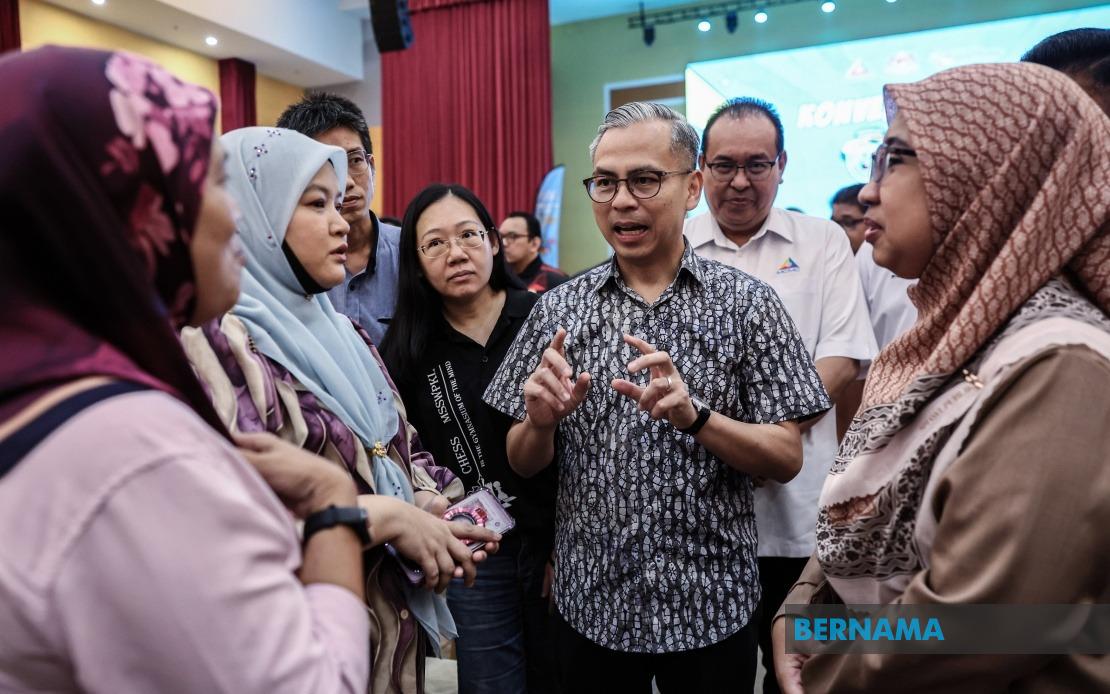
PKR will continue functioning normally despite Nurul Izzah Anwar stepping back temporarily from her position as deputy president, the party's information chief assured observers on Wednesday. Datuk Seri Fahmi Fadzil, the Communications Minister, told reporters that organisational activities would proceed without interruption following the Central Leadership Council's decision to grant the request. The PKR hierarchy has entrusted Vice-President Datuk Seri Saifuddin Nasution Ismail with assuming her responsibilities during the period of leave.
The nature of Nurul Izzah's departure reflects evolving priorities rather than any organisational crisis. The MPP rejected her outright resignation but acceded to her request for temporary leave, allowing her to concentrate on personal matters and doctoral research. This distinction proved significant, as it preserved her formal standing within the party while accommodating her immediate needs. Fahmi emphasised that she retains full membership credentials and remains expected to contribute meaningfully to PKR's political work going forward, suggesting a planned return to active duties.
The decision carries implications for PKR's internal hierarchy and succession planning as the coalition government moves through its administrative cycle. Saifuddin's elevation to interim control of the deputy president's portfolio provides visibility for the senior administrator and establishes continuity in the party's decision-making structures. For Malaysian observers tracking the complex interplay of personalities and positions within the ruling coalition, this arrangement demonstrates how PKR manages competing demands between parliamentary representation, party bureaucracy, and individual advancement opportunities.
Fahmi fielded separate questions about speculation surrounding Subang MP Wong Chen's parliamentary future, clarifying that no official notification had reached him about any seat vacancy. He deferred to Tan Sri Johari Abdul, the Dewan Rakyat Speaker, as the appropriate source for such announcements, indicating the matter remains subject to formal parliamentary procedures rather than party declarations. This careful demarcation between party operations and institutional arrangements underscores the distinctions governing different spheres of political activity in Malaysia's system.
Concerning the timing of the next general election, Fahmi downplayed speculation about early polling, stating the government held no plans for an accelerated ballot. He projected that Malaysia would proceed to the polls by the end of 2026 at the latest, affirming the government's commitment to completing its full term. This message intended to project stability amid ongoing economic adjustments and policy implementation across the coalition's agenda.
The government's immediate focus remains securing effective administration and consolidating support among Unity Government constituents, Fahmi noted. He highlighted the commitment shown by component parties within Pakatan Harapan and the broader coalition to support Prime Minister Datuk Seri Anwar Ibrahim's leadership trajectory. This emphasis on unity and continuity reflects the ongoing challenge of maintaining coherence within Malaysia's multi-party governing arrangement, where competing interests and electoral considerations continuously test coalition bonds.
Priority initiatives commanding attention across government levels include advancing recommendations from the Royal Commission of Inquiry into Lembaga Tabung Haji's operations between 2014 and 2020. The RCI's findings touch on significant public institutional governance questions, and implementation momentum matters for establishing accountability and restoring public confidence in the pilgrim fund management structure. The issue underscores how government reform agendas interact with coalition stability and individual party positioning within the administration.
Fahmi hinted cryptically at forthcoming announcements from the Prime Minister that he characterised as beneficial for Malaysian communities and national development. Without elaborating specifics, he suggested significant policy developments were in preparation, though the timing and substance remained undisclosed. Such hints typically precede cabinet reshuffles, major policy pivots, or significant initiative launches designed to shape political narratives heading into election-year deliberations.
The broader context for Nurul Izzah's sabbatical involves PKR's positioning within the ruling coalition as political calculations intensify. The party balances ministerial representation, parliamentary strength, and internal factional dynamics while navigating Anwar's leadership and broader coalition pressures. Her temporary withdrawal, while framed as personal and educational in nature, also reflects reality that senior party figures occasionally require space from immediate operational demands. The arrangement allows PKR to maintain institutional continuity while accommodating individual circumstances, a pragmatic approach that numerous coalition parties employ when managing complex personnel situations.
For Malaysian political observers and regional analysts monitoring Southeast Asian governance patterns, this episode illustrates how established governing coalitions manage routine administrative adjustments without generating systemic instability. The measured response by PKR leadership, the seamless delegation of responsibilities, and the reaffirmation of coalition commitment project an image of institutional maturity and procedural normality. Yet the underlying complexities of maintaining coalition discipline, managing diverse party interests, and preparing for electoral contests remain constant preoccupations for administrators navigating Malaysia's multi-party parliamentary system.

