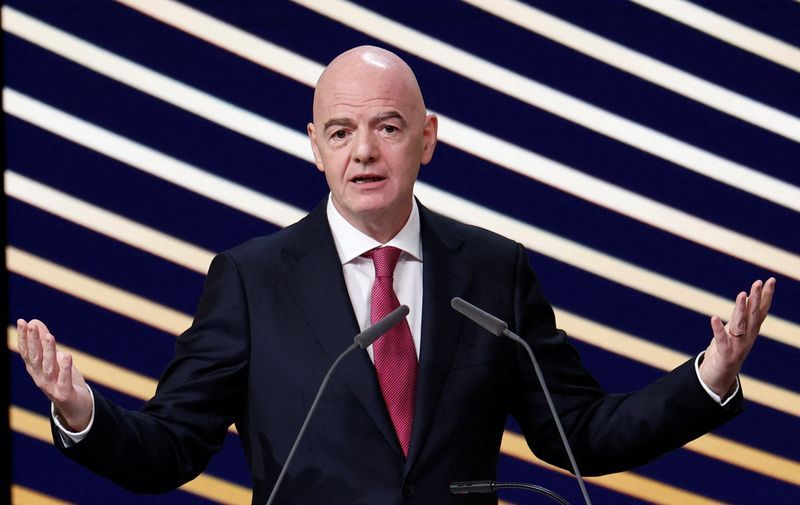
The Oceania Football Confederation has publicly welcomed FIFA's decision to shelve its controversial private investment proposal, positioning the region as a stabilising force amid international football's deepening leadership crisis. The stance marks a notably divergent path from UEFA, the AFC, and CONCACAF, which have all demanded a comprehensive review of President Gianni Infantino's stewardship and publicly criticised his handling of the failed FFE (FIFA Forward Enterprise) scheme. Infantino, who is campaigning for reelection at next year's FIFA Congress, faces unprecedented pressure from multiple confederations questioning both his judgment and his fitness to lead world football's governing body.
The OFC's measured response reflects the unique position of Oceania within FIFA's structure. As soccer's smallest confederation with only eleven full member nations, the region has historically benefited from FIFA's direct investment in grassroots development over the past decade. At a regional meeting held on Wednesday, OFC leadership concluded that despite the setback of the withdrawn proposal, the confederation's football development programmes have made meaningful progress under the current FIFA administration. This calculation suggests that economic considerations and development gains have weighted heavily in the OFC's decision to avoid joining the growing chorus of criticism surrounding Infantino's leadership.
New Zealand Football's withdrawal of support for Infantino represents a significant crack in what might have been a unified regional position. As the only Oceania nation to qualify for this year's World Cup, New Zealand carries disproportionate influence within the confederation and commands greater visibility on the international stage. The football association's statement emphasises that its decision stems not from a grudge against specific individuals but from a fundamental breakdown in institutional trust within FIFA's decision-making processes. The move signals that even smaller football nations, despite their limited voting power, are prepared to hold FIFA accountable when they perceive governance failures.
The withdrawn FFE proposal had represented an ambitious attempt to modernise FIFA's financial structure by introducing private capital into the organisation's operations. The scheme came with an immediate $20 million allocation for member associations in the next funding cycle, with potential for doubling that amount had nations agreed to the full investment framework. For smaller confederations like Oceania, which typically operate with constrained budgets and limited commercial revenue streams, such financial incentives carry considerable weight. The decision to withdraw the proposal thus removed both a tangible carrot and, for some nations, a difficult ethical calculation about accepting private funding in exchange for loyalty.
New Zealand Football's stance reflects broader concerns about how the FFE initiative was developed and implemented. The association specifically called for an independent review of the decision-making processes that produced the scheme, suggesting that the problem extends beyond the proposal's substance to encompass the methods by which FIFA leadership pursued it. This distinction matters considerably in governance terms: it signals that confidence in Infantino's judgment and leadership style has been fundamentally compromised, regardless of whether specific proposals themselves prove workable. New Zealand's framing emphasises that divisiveness within international football threatens the sport's collective strength and legitimacy.
Infantino's reelection campaign now confronts a genuinely fractured global football community. The revolt by UEFA, AFC, and CONCACAF represents roughly three-quarters of FIFA's voting membership, and New Zealand's defection removes the prospect of unified Oceania backing that might have provided symbolic reassurance. The three major confederations have explicitly attacked Infantino's conduct, moving beyond technical criticisms of specific proposals to question his character and judgment as a leader. This represents an unusually confrontational challenge to an incumbent FIFA president, historically an office that enjoyed broad deference within the confederation system.
FIFA's response to the crisis included convening an emergency meeting in Morocco last week, where leadership offered apologies to all 211 member associations for mishandling the FFE proposal. The organisation simultaneously reaffirmed that the president retained full backing from the executive apparatus. This simultaneous apology and confidence vote reflected an attempt to compartmentalise the failures — acknowledging mistakes in execution while defending the leader's fundamental legitimacy. However, the strategy appears insufficient to stem the momentum building among major confederations seeking substantive changes in FIFA's governance.
The OFC's willingness to accept FIFA's explanations and move forward contrasts sharply with the scepticism evident in other confederations. This divergence likely reflects several factors beyond simple self-interest. Oceania nations have maintained closer relationships with FIFA staff and may perceive the situation through a different lens than the major confederations, which have more institutional independence and stronger alternative revenue streams. Additionally, the region's smaller scale means its football politics tend toward pragmatism and consensus-building rather than adversarial challenge to larger powers.
New Zealand Football's independent position within its own confederation mirrors broader trends in global governance, where regional blocs increasingly fragment as individual members pursue distinct national interests. The football association's emphasis on institutional trust and independent review suggests a more sophisticated governance analysis than simply opposing Infantino's reelection. By demanding transparency and independent verification of FIFA's decision-making processes, New Zealand is staking out a position that emphasises institutional integrity over political outcomes, a framing that could resonate with other nations reconsidering their positions.
The unfolding situation carries significant implications for Southeast Asian football governance and regional confederations within AFC. Should the reform movement gain traction and Infantino's reelection face genuine jeopardy, or alternatively should he secure reelection despite the opposition, both outcomes would signal important lessons about FIFA's vulnerability to confederation pressure and the relative power of different voting blocs. For smaller nations within larger confederations, the New Zealand example demonstrates that independent action, though limited in direct impact, can meaningfully contribute to broader accountability movements within international football governance.

