A landmark defense pact signed by Turkey, Saudi Arabia, and Pakistan in the holy city of Mecca has drawn strong endorsement from the Organisation of Islamic Cooperation, signalling broader institutional support for what observers regard as a potentially transformative realignment among three major Muslim-majority nations. The agreement, inked during a high-level trilateral summit at Al-Safa Palace, reflects deepening security cooperation among regional powers at a moment when geopolitical tensions remain elevated across the Middle East and South Asia.
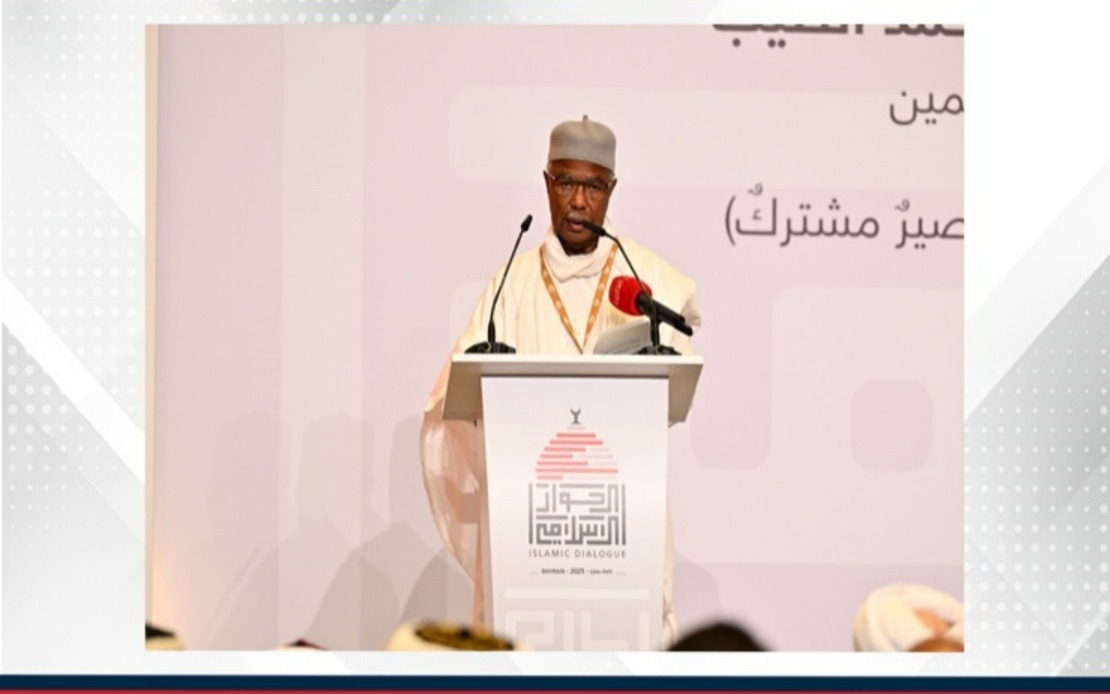
OIC Secretary-General Sharein Brahim Taha issued an official statement commending the three signatories for what he characterized as a decisive move toward strengthening collective defence mechanisms and regional partnerships. Taha's unusually emphatic language—describing the pact as both historic and a fundamental pillar for regional security—underscores the institutional weight the OIC sees in this initiative. His support suggests the organization views the agreement as aligned with broader OIC objectives around mutual security and solidarity among member states, a position that carries symbolic significance given the OIC's role as the primary forum for Islamic nations.
The agreement was formally executed by Turkish President Recep Tayyip Erdoğan, Saudi Crown Prince Mohammed bin Salman, and Pakistani Prime Minister Shehbaz Sharif, bringing together the leaders of three nations with substantial military capabilities and strategic influence across their respective regions. Turkey commands NATO's second-largest standing army and projects power across the Eastern Mediterranean and Central Asia. Saudi Arabia anchors Gulf security architecture and possesses one of the Middle East's most advanced defense systems. Pakistan, home to the world's fifth-largest military and a nuclear arsenal, wields considerable influence throughout South Asia. The convergence of these three powers represents a notable diplomatic achievement in itself.
According to Turkish officials briefed on the agreement's contents, the defense arrangement is explicitly framed as non-confrontational, targeting no specific country while establishing shared commitments to regional peace and stability. This carefully calibrated messaging reflects the sensitivity surrounding such military alliances in a region where bloc-building can rapidly escalate tensions. The agreement functions as a deterrence framework, stipulating that any armed attack against one signatory shall be treated as an assault against all three, effectively extending mutual defence guarantees across the trilateral partnership.
The mechanism of burden-sharing embedded within the pact signals an intent to distribute the financial and operational costs of collective security among the three nations rather than placing disproportionate responsibility on any single party. This approach differs from traditional hub-and-spoke alliance models and suggests the signatories envision themselves as genuinely equal partners in a cooperative security arrangement. The emphasis on common security approaches indicates coordination mechanisms likely to develop concerning military doctrine, intelligence sharing, and potential joint operations or exercises.
For Malaysia and other Southeast Asian nations monitoring regional developments, the agreement carries several implications. First, it demonstrates that major Muslim-majority powers are prioritizing direct bilateral and multilateral military cooperation outside traditional Cold War frameworks, potentially influencing expectations among regional actors about security partnerships. Second, it reflects Turkish and Saudi strategic activism in reshaping Middle Eastern alignments, particularly following the normalization between Saudi Arabia and Iran brokered by China in March 2023. Third, it underscores Pakistan's continued integration into broader Islamic world security considerations beyond its traditional South Asian focus.
The OIC's enthusiastic backing provides institutional legitimacy to the agreement that extends beyond the three signatories themselves. By framing the pact as a contribution to Muslim-world stability, the OIC positions the agreement as serving broader religious and civilizational interests rather than narrow strategic calculations. This framing may encourage other OIC members to view the arrangement favorably and potentially seek association with its principles, though the agreement itself remains restricted to the three signatories.
Taha's explicit hope that the agreement would contribute to peace and prosperity regionally and internationally reflects the OIC's traditional diplomatic language, yet in this context, such statements carry weight given the organization's observation role in global affairs. The Secretary-General's validation suggests the OIC sees no contradiction between the defense pact and broader Islamic unity, positioning military cooperation as compatible with peaceful internationalism—a subtle but important messaging point in a world where defense agreements often generate suspicion.
The timing of the pact, finalized in August following months of diplomatic preparation, coincides with a broader recalibration of Middle Eastern politics. Saudi Arabia's recent warming of relations with Iran, normalization efforts in the region, and growing economic diversification have created space for Riyadh to pursue multiple security arrangements rather than depending entirely on Western partnerships. Turkey's own regional positioning, following its rapprochement with Gulf states and efforts to reset ties with Egypt and other Arab nations, finds expression in this trilateral framework. Pakistan, managing its own regional challenges while seeking to strengthen ties with wealthy Gulf partners, sees the agreement as validating its security importance.
Observers in Southeast Asia should note that the agreement's emphasis on regional rather than global security suggests the three nations are primarily focused on stabilizing their immediate geopolitical neighborhoods. This differs from containment strategies that might target specific external powers. The agreement's non-exclusionary framing—targeting no country—indicates the signatories wish to avoid triggering defensive counteralignments or major-power backlash, a pragmatic approach that respects the reality that Turkey, Saudi Arabia, and Pakistan maintain diverse international partnerships and cannot afford isolation.
The defense pact also reflects confidence-building among three nations with sometimes complicated bilateral histories. Turkish-Saudi relations warmed considerably after the diplomatic isolation Saudi Arabia faced following journalist Jamal Khashoggi's death at the Turkish consulate in Istanbul. Turkish-Pakistani relations have remained relatively stable despite occasional strategic disagreements. Saudi-Pakistani ties have deepened through religious and economic channels. The agreement signals these relationships have matured sufficiently to support formal military cooperation frameworks.
Looking ahead, the practical implementation of the Mecca Joint Defense Agreement will determine its actual impact on regional security. Joint command structures, intelligence-sharing protocols, combined exercise schedules, and defense industrial cooperation remain to be clarified through implementing mechanisms. The OIC's endorsement provides political cover for these practical developments, helping legitimize the agreement among broader Muslim publics and institutions who might otherwise question military alliances.
The agreement ultimately represents a deliberate choice by three major Islamic nations to deepen security interdependence while maintaining their existing international partnerships. This layered approach to security—pursuing both traditional alignments and new regional partnerships—characterizes contemporary great-power competition in Eurasia. For regional observers, the pact signals that Muslims-majority powers increasingly view their security interests as interconnected and believe coordinated responses serve their collective interests more effectively than isolated national strategies. The OIC's formal validation of this principle may influence security calculations throughout the Islamic world in coming years.

