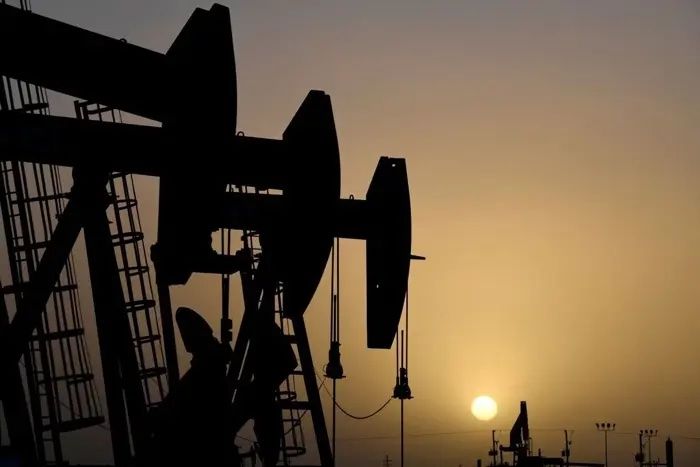
Crude oil markets firmed on Friday as military tensions between the United States and Iran ratcheted higher, propelling benchmark prices to their strongest weekly performance in months. Brent crude futures climbed to $84.93 a barrel, gaining 70 cents or 0.83%, while West Texas Intermediate added 81 cents to reach $79.76 a barrel. The moves erased losses from the previous trading session and reinforced a robust upward trajectory that has lifted both contracts roughly 12% over the course of the week, with Brent now recording three consecutive weekly gains and WTI securing its second.
The price strength reflects a confluence of geopolitical risks centred on two critical chokepoints for global oil commerce. The immediate threat emanates from the Strait of Hormuz, through which roughly one-third of the world's seaborne oil transits daily, now subject to heightened tensions as the US and Iran have abandoned the temporary truce agreed just weeks earlier. Compounding this danger is the separate emergence of the Red Sea as a potential flashpoint, with Tehran reportedly instructing its Houthi allies to position themselves to block this alternative export corridor should American forces target Iranian power installations. For energy markets already primed by geopolitical uncertainty, the prospect of simultaneous disruptions to multiple supply routes has injected a substantial and sustained premium into oil valuations.
The escalation began in earnest on Wednesday when American forces unleashed two major aerial bombardment campaigns against targets positioned along Iran's southern coastline. The strikes continued through Thursday and into the weekend, with the US Central Command confirming that American forces initiated what it characterised as a sixth consecutive night of operations designed to degrade Iranian military infrastructure. The timing and scale of these operations marked the first significant renewal of direct hostilities since the memorandum of understanding that had temporarily paused fighting just one month prior. This resumption signals a breakdown in whatever diplomatic constraints had previously existed and raises the prospect of an open-ended cycle of tit-for-tat military action.
Iran has responded symmetrically, dispatching waves of missiles and unmanned drones toward American military installations positioned throughout the region, with particular focus on recently expanded air bases in neighbouring Jordan. This pattern of mutual strikes, each calibrated to signal resolve without necessarily triggering wholesale warfare, has become the new operative dynamic. Yet from an energy security perspective, the distinction between limited military exchanges and broader regional conflict capable of threatening shipping lanes remains dangerously thin. Market participants have priced in a premium reflecting this dual-risk scenario, wherein both the immediate danger of Hormuz disruption and the contingent threat of Red Sea closure weigh simultaneously on crude valuations.
Qatar's defence infrastructure illustrated the volatility of the current environment when it reported successfully intercepting an Iranian missile attack early Friday morning, though the interception operations themselves caused casualties, with the country's interior ministry confirming that shrapnel injured a child. These incidents underscore how escalatory spirals in the region can produce unpredictable consequences that extend beyond direct military participants, affecting civilian populations and complicating diplomatic off-ramps. The involvement of Qatar, a key energy producer and crucial hub for global liquefied natural gas commerce, adds another dimension to energy security concerns.
International Energy Agency Executive Director Fatih Birol articulated the gravity of the situation during remarks delivered Thursday at the Council on Foreign Relations in Washington. Birol expressed explicit concern about the trajectory, warning that deterioration over coming weeks could inflict substantial damage to global energy stability. His comments reflect the agency's assessment that current tensions have moved beyond abstract risk considerations into territory requiring active mitigation and diplomatic engagement. The IEA's position carries particular weight given its responsibility for coordinating emergency oil releases and advising member countries on energy security policy.
For Southeast Asian economies heavily dependent on uninterrupted oil supplies, including Malaysia, the implications warrant careful attention. The region's refining sector relies substantially on Middle Eastern crude feedstock, and any sustained interruption to either the Hormuz Strait or Red Sea routes would rapidly transmit price pressures through regional markets. Refineries across Singapore, Malaysia, and Thailand would face elevated input costs, while transportation and manufacturing sectors would experience corresponding margin compression. The timing proves particularly sensitive given the region's ongoing recovery dynamics and the persistent inflation concerns that central banks have struggled to contain.
Technical analysis suggests additional price momentum may develop if current support levels hold firm. IG analysts noted that West Texas Intermediate could potentially test the mid-$80s range provided it maintains footing above key support positioned in the mid-$70s. This technical framework reflects market participants' belief that fundamental supply concerns warrant further repricing higher, even absent additional headline catalysts. The velocity of this week's gains indicates that traders have shifted from viewing geopolitical risk as peripheral to treating it as central to near-term price discovery.
The broader strategic context reveals how regional military competition increasingly channels through energy markets rather than conventional military confrontation. Both the United States and Iran possess powerful incentives to calibrate their actions to avoid full-scale war, yet each also faces domestic political pressures that constrain compromise. This dynamic creates an equilibrium wherein restricted but persistent military operations become the expected equilibrium, generating sustained if not escalating energy premium. For investors, policymakers, and businesses across Malaysia and the broader region, navigating this environment requires acknowledging that oil price stability has become fundamentally intertwined with Middle Eastern geopolitical trajectories, and that the current trajectory points toward sustained elevation rather than rapid resolution.

