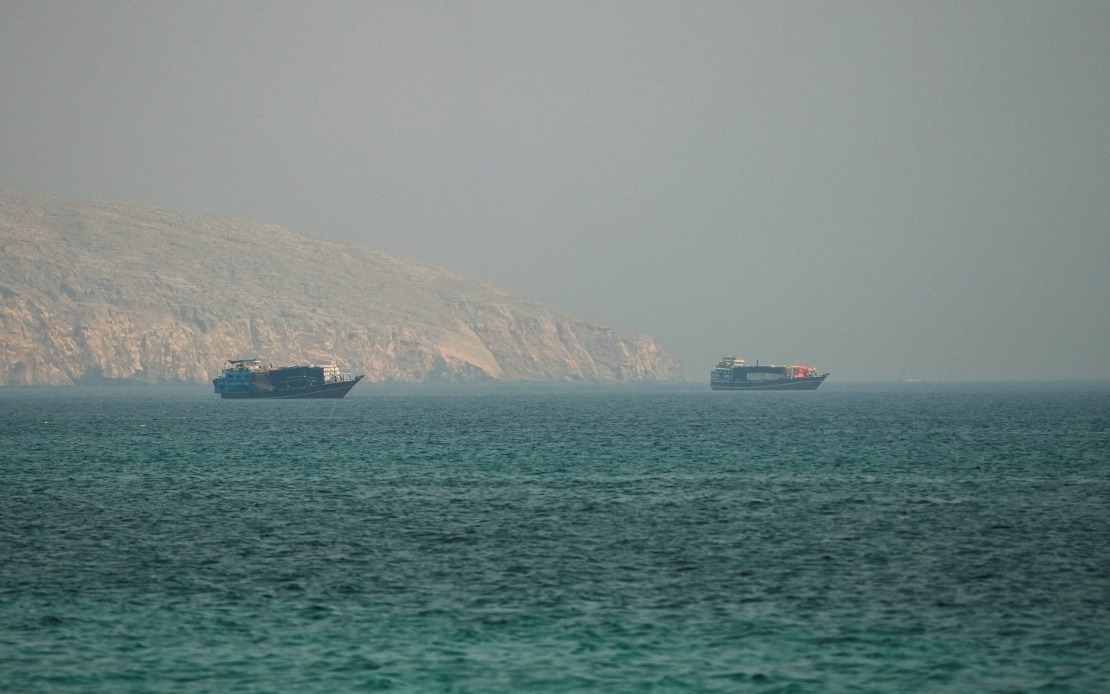
Oman has staked out a middle ground in escalating tensions over the Strait of Hormuz, rejecting mandatory transit tolls while expressing openness to voluntary payment arrangements for maritime support services. An Omani official articulated this position during the 137th International Maritime Organisation Council session in London this week, signalling the sultanate's desire to balance the competing interests of shipping nations and regional powers in one of the world's most strategically vital waterways.
The statement represents a carefully calibrated diplomatic response to mounting friction over passage through the Strait of Hormuz, through which roughly one-third of global seaborne oil trade flows annually. By publicly distancing itself from compulsory toll schemes while endorsing optional contributions, Oman appears to be charting a course that preserves its reputation as a neutral stakeholder and respected maritime facilitator without capitulating to pressure from either Western shipping interests or Iran.
Oman's position carries particular significance given its geographical position as one of two nations bordering the strategic waterway alongside Iran. The sultanate has historically positioned itself as a dialogue broker in the volatile Persian Gulf region, and this latest intervention underscores its continued commitment to that role. By emphasising adherence to established international maritime law principles, particularly the doctrine of transit passage, Oman is framing its approach within recognized legal frameworks rather than as a political concession.
The proposal reportedly drew inspiration from existing arrangements in the Strait of Malacca, where shipping companies contribute voluntarily to support regional maritime initiatives. For Malaysian and Southeast Asian readers, this reference point is significant—the Malacca model demonstrates how major trading nations and regional powers can cooperate on maintaining vital sea lanes without resorting to coercive tolling mechanisms. However, the comparison also highlights crucial differences. The Strait of Hormuz operates in a far more geopolitically charged environment, where Iran's behaviour has already triggered concerns about unilateral imposition of fees.
Western media reports indicate that Oman had submitted its voluntary framework proposal to the United States and allied nations, suggesting that the initiative may have received preliminary backing from key stakeholders before being formally presented at the IMO session. This sequencing suggests sophisticated diplomatic groundwork, with Oman attempting to build consensus for a framework before it becomes entangled in broader regional confrontation.
The timing of Oman's intervention coincided with competing proposals at the same IMO Council meeting. The United Arab Emirates and other nations submitted a resolution specifically condemning reported mandatory transit tolls that Iran has allegedly imposed on passing vessels. This direct challenge reflected growing frustration among maritime trading nations over what they characterise as attempts to unilaterally charge fees for passage through international waters. Iran responded with its own proposal emphasising that it has engaged in consultations with Oman regarding waterway management, framing its actions as coordinated rather than unilateral.
Iran's statement is revealing for what it suggests about behind-the-scenes diplomacy. By highlighting ongoing consultations with Oman specifically, Tehran appears to be claiming that it has regional backing for its approach. Whether Oman's voluntary framework represents a tacit acceptance of some Iranian role in fee collection or merely a diplomatic courtesy remains unclear, though the sultanate's emphasis on international law suggests it views any fees as problematic if imposed mandatorily.
For regional trade and logistics sectors, this dispute carries immediate practical implications. Shipping companies operating in the Gulf already face uncertainty about potential fees, insurance surcharges, and routing alternatives. An unresolved situation creates incentives for vessels to seek circuitous routes around the Arabian Peninsula, increasing transit times and costs. The voluntary contribution model that Oman proposes would theoretically offer greater predictability than mandatory tolls, though enforcement mechanisms and transparency would be critical to its success.
Oman's explicit commitment to preserving safe and open sea lanes reflects the broader stakes at play. The Strait of Hormuz is not merely an economic chokepoint but a genuine military flashpoint, where Iranian armed forces and Western naval powers maintain a tense presence. Any framework that reduces friction over passage without compromising legitimate security interests serves broader regional stability objectives. Southeast Asian shipping interests, particularly Malaysia, have significant exposure to Hormuz traffic disruption, making Oman's efforts directly relevant to regional prosperity.
The voluntary framework approach also offers advantages for Iran by allowing it to collect contributions without the international opprobrium attached to mandatory tolls. If successful, such a scheme could generate revenue for Tehran while maintaining the legal fiction of respecting international maritime principles. Shipping companies might find this more acceptable than outright tolls, particularly if contributions finance genuinely useful services rather than appearing as pure extraction.
However, the proposal's viability depends on international acceptance and reliable implementation mechanisms. Unlike the Strait of Malacca, where multilateral governance structures exist and littoral states have strong incentives to maintain reputation and commercial relationships, the Hormuz situation involves more antagonistic parties with fundamentally opposed strategic interests. Building trust in a voluntary system will require sustained diplomatic effort and verification mechanisms.
Oman's intervention demonstrates why the sultanate punches above its weight diplomatically in the Gulf. Rather than being swept into regional polarisation, it continues to propose pragmatic solutions grounded in international law and existing precedent. The coming weeks will reveal whether this middle path gains traction or whether Hormuz passage remains ensnared in larger geopolitical tensions that diplomatic ingenuity alone cannot resolve.

