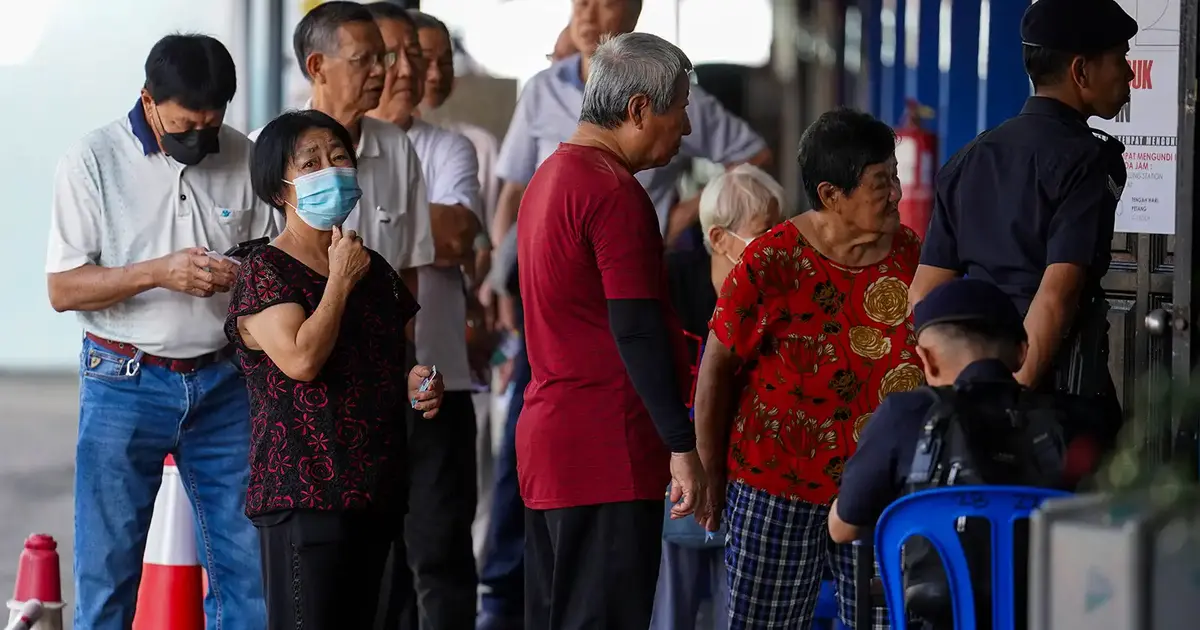
The disappointing performance of Pakatan Harapan among Chinese voters in Johor's recent state election stemmed predominantly from a collapse in voter participation rather than a significant exodus of supporters to Barisan Nasional, according to Ong Tze Chong, the former Bangi MP and PKR politician. This distinction between reduced turnout and active defection carries important implications for understanding the actual state of political allegiance in one of Malaysia's most strategically significant states.
Ong's assessment challenges the narrative that Chinese voters have fundamentally abandoned their previous backing of the opposition coalition. Instead, his observation highlights a more nuanced picture where segments of the electorate, particularly among the Chinese community, may have opted to sit out the election rather than transfer their votes to the ruling coalition. This phenomenon of selective abstention represents a different kind of political problem for Pakatan, one that speaks to motivation and messaging rather than a loss of ideological commitment.
The turnout issue becomes particularly significant when examining electoral mathematics in Johor. Chinese voters have historically constituted a decisive demographic in several constituencies, especially in urban and semi-urban areas. When these voters remain at home during polling, the effective voting power shifts toward other demographic groups and toward whichever coalition manages to mobilise its base more effectively. For Pakatan, a coalition that has traditionally relied on strong urban support, low Chinese voter participation proved especially damaging.
Ong's claim that only a limited number of Chinese voters actively switched allegiance to Barisan Nasional suggests that the opposition may retain deeper reservoirs of support than election day results indicate. This interpretation provides some comfort to Pakatan strategists who worry that their coalition faces existential challenges in key states. The gap between actual voters and potential voters represents an opportunity for mobilisation and engagement rather than a fundamental erosion of political standing.
The turnout variable becomes more explicable when considered against the backdrop of Malaysia's broader political volatility. Chinese-majority urban areas have been battlegrounds for competing narratives about governance, economic performance, and representation. Disillusionment with any particular government—whether Pakatan or Barisan—can manifest as reduced participation rather than positive support for alternatives. Voter fatigue and cynicism about political promises represent genuine obstacles that transcend simple party loyalty calculations.
For Malaysian observers and political analysts, Ong's analysis carries practical weight. Understanding whether electoral losses reflect genuine defection or simply diminished turnout requires different strategic responses. If Chinese voters merely abstained, Pakatan needs to rebuild enthusiasm and address the concerns that kept supporters home. Conversely, if genuine defection had occurred, the coalition would face the much more difficult task of convincing voters that abandoned them to return.
The Johor state election serves as a bellwether for Southeast Asian political trends more broadly. Malaysia's multiracial democracy regularly negotiates the challenge of maintaining coalition politics across ethnic lines. When any significant demographic group shows signs of disengagement, it threatens the delicate balance that has defined Malaysian electoral competition. Ong's remarks acknowledge this underlying anxiety while offering a somewhat more optimistic reading of Pakatan's predicament.
Turnout patterns also deserve attention because they can compound across successive elections. If Chinese voters who sat out the Johor state election subsequently disengage from federal politics or future state contests, the cumulative effect could reshape Malaysian politics more fundamentally than a single election result suggests. This dynamic explains why opposition parties focus considerable effort on voter mobilisation campaigns that extend far beyond election day itself.
The framing of the narrative around Johor's results matters for internal party dynamics as well. Within Pakatan, different factions have competing explanations for electoral disappointment. Some attribute failures to policy missteps, others to inadequate campaign machinery, and still others to demographic shifts favouring Barisan. Ong's emphasis on turnout provides a framework that neither condemns the coalition's overall direction nor presents an impossibly steep recovery challenge. This positioning allows the coalition to pivot toward organisational improvements without fundamental strategic overhaul.
Looking forward, the turnout question will shape how both Pakatan and Barisan approach the next electoral cycle in Johor. The opposition coalition will likely invest heavily in Chinese voter engagement and turnout operations, recognising that its path back to state power depends partly on reversing the abstention patterns evident in recent elections. Barisan, meanwhile, will work to consolidate support and ensure that voters who participated remain committed to the ruling coalition.
For Malaysian voters themselves, particularly the Chinese communities in Johor, the distinction between abstention and defection holds personal political meaning. It reflects whether they have truly shifted their assessment of which coalition better serves their interests, or whether they remain undecided and waiting for more compelling reasons to participate. That ambiguity, captured in Ong's explanation of low turnout, will likely define Johor's political trajectory for years to come.

