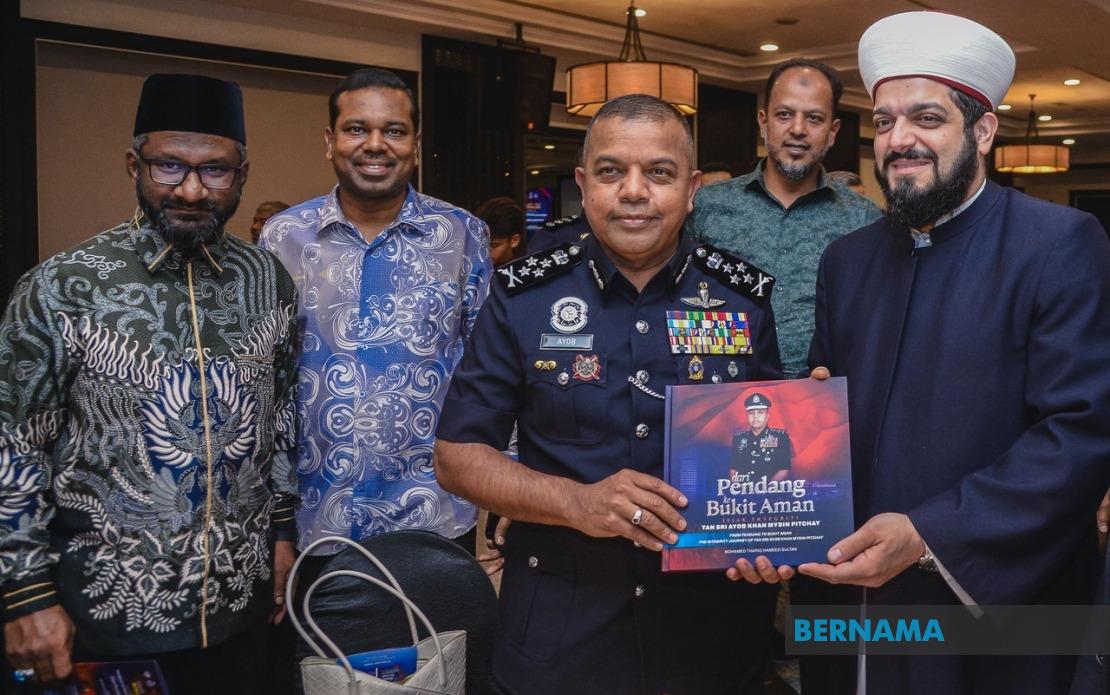
The security landscape facing Malaysia has fundamentally shifted, with extremist and militant organisations abandoning conventional recruitment pathways in favour of sophisticated digital strategies that exploit the ubiquity of online platforms and gaming environments. Deputy Inspector-General of Police Tan Sri Ayob Khan Mydin Pitchay articulated this troubling evolution during remarks made in Kuala Lumpur, underscoring how the threat environment continues to mutate and intensify through technological innovation. The warning carries particular weight given the speaker's position and the presence of senior officials from Malaysia's criminal investigation and internal security apparatus at the event.
Traditional recruitment dynamics have undergone wholesale transformation. Where extremist groups once relied on intimate religious study circles—known locally as usrah sessions—conducted in person and in private settings, they now maintain sprawling digital recruitment funnels operating across mainstream consumer platforms. This shift represents more than mere tactical adjustment; it reflects a strategic recognition that online environments offer scalability, anonymity, and direct access to vulnerable populations that physical spaces cannot replicate. The explicit mention of Roblox, a gaming platform with substantial youth penetration globally and across Southeast Asia, illustrates how recruitment networks have embedded themselves within entertainment infrastructure that parents and authorities traditionally viewed as benign recreation.
The modernisation of extremist ideology itself has proven equally consequential. Rather than relying solely on theological arguments or religious grievance narratives, contemporary militant messaging increasingly exploits emotional vulnerability, personal grievance, and manufactured hatred as primary recruitment vectors. Ayob Khan's reference to cases involving teenagers motivated by anger rather than religious conviction suggests a broadening recruitment profile that extends beyond traditionally religious constituencies. This psychological rather than purely ideological approach complicates prevention and intervention strategies, as it expands the potential recruit pool beyond individuals with documented religious interest or affiliation.
For Malaysia specifically, the implications are substantial. The nation has experienced periodic security incidents stemming from militant activities, and the government has invested considerably in counter-terrorism infrastructure. However, the shift toward digital recruitment channels creates enforcement and detection challenges that traditional intelligence frameworks may not adequately address. Gaming platforms operate across jurisdictional boundaries, encryption technologies obscure communication patterns, and the social nature of gaming environments—where recruitment can masquerade as ordinary friendship-building—complicates identification of malicious intent.
The police leadership's response reveals awareness of this capability gap. The Deputy Inspector-General explicitly emphasised the necessity for law enforcement to maintain proactive rather than reactive positioning, effectively arguing that the window for intelligence-driven intervention must occur before attack planning reaches operational stages. This formulation acknowledges that waiting for indicators of imminent attack leaves insufficient margin for prevention. The invocation of Special Branch's Counter-Terrorism Division and allied units underscores an institutional push toward enhanced digital surveillance and infiltration capabilities.
The multi-agency representation at the announcement—including the Criminal Investigation Department, Commercial Crime Investigation Department, and Internal Security and Public Order Department—suggests coordination efforts aimed at consolidating counter-extremism capabilities across traditionally siloed bureaucratic domains. Such coordination remains nascent in many Southeast Asian contexts, where institutional turf concerns and resource limitations often fragment counter-terrorism efforts. Malaysia's demonstrated willingness to convene senior officials around this issue indicates policy prioritisation at the highest levels.
Regional considerations merit examination as well. Southeast Asia's rapidly expanding digital infrastructure and gaming market penetration create conditions particularly favourable to online extremist recruitment. Countries throughout the region have grappled with returning fighters, ideology-driven terrorism, and homegrown militant cells. The digitisation of recruitment networks means that radicalisation pathways no longer require geographic proximity or cultural familiarity; a teenager in Penang can establish meaningful ideological connection with extremist frameworks originating thousands of kilometres distant.
Parental awareness and platform governance represent complementary intervention points that remain underdeveloped in most contexts. Gaming platforms such as Roblox have implemented safety features and community moderation, yet determined recruitment networks operate within grey zones where platform policies prove difficult to enforce consistently. Similarly, most Malaysian households lack systematic understanding of online radicalisation vectors or the warning signs manifest in adolescent behaviour. Educational campaigns targeting digital literacy and extremist recruitment tactics have received limited investment relative to their demonstrated necessity.
The statement's emphasis on ideological rather than purely organisational threats also merits attention. Traditional counter-terrorism doctrine focuses on dismantling organisational structures, arresting leadership cadres, and interdicting weapons and funding. However, recruitment conducted through decentralised digital networks and motivated by emotional rather than organisational imperatives proves far more difficult to dismantle through conventional law enforcement approaches. An individual radicalised through gaming platform interactions may have minimal organisational affiliation, no operational planning, and no clear chain of command—yet still pose serious security risk.
Moving forward, Malaysian authorities face the challenge of developing counter-messaging and intervention programmes specifically designed for digital environments. Platforms must be engaged to enhance content moderation and reporting mechanisms, while educational institutions require training to identify and support at-risk individuals. International cooperation becomes essential, given the transnational nature of online extremist networks and the jurisdictional complexities of pursuing recruitment conducted across borders.
The Deputy Inspector-General's warning ultimately signals recognition that Malaysia's extremism challenge has entered a new phase requiring fundamentally reconceived approaches. The stakes could scarcely be higher; intelligence failures resulting in successful attacks carry profound consequences for national security, public confidence in law enforcement, and social cohesion. The shift from usrah circles to Roblox lobbies represents not merely a change in method but a transformation in the character of the threat itself, demanding corresponding evolution in detection, prevention, and intervention capabilities.

