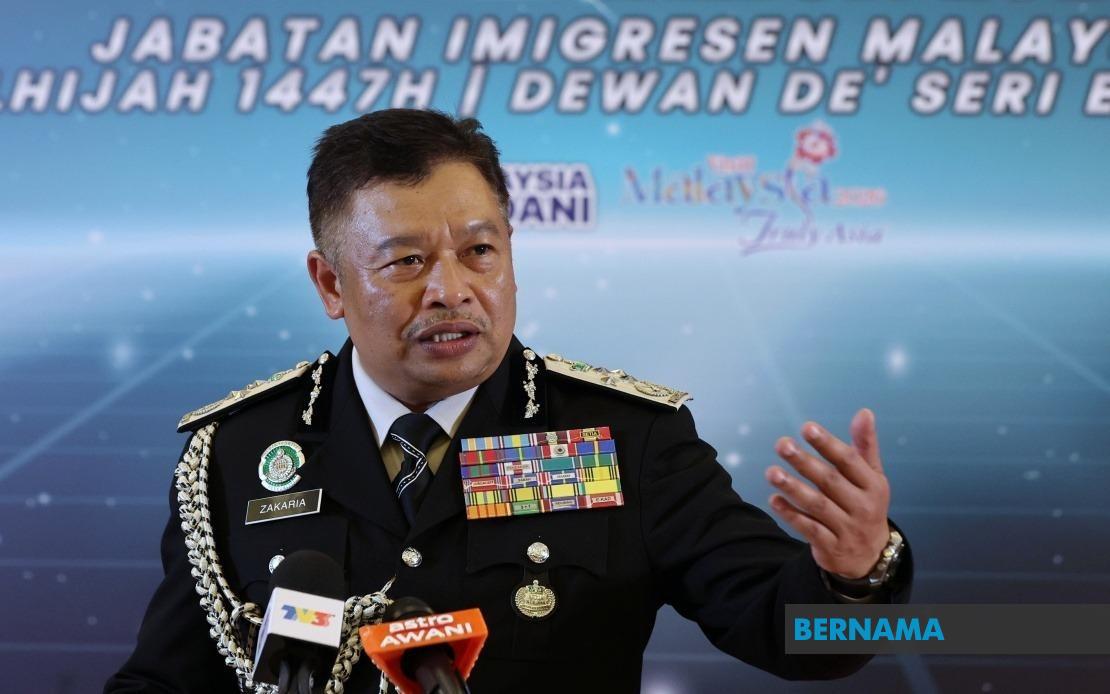
Malaysia's Immigration Department has moved to reassure the public that concerns over the recent suspension of extended passport validity periods are isolated to a small number of carriers, according to Immigration Director-General Datuk Zakaria Shaaban. Speaking at a press conference in Putrajaya on August 13, Zakaria disclosed that feedback from industry sources has identified only two airlines experiencing difficulties when their systems attempt to process Malaysian passports carrying validity periods exceeding a decade. He cautioned, however, that this figure may not represent the complete picture, as the department continues to investigate whether other carriers have encountered similar technical obstacles without yet reporting them.
The distinction Zakaria drew between airline system failures and diplomatic rejection proved crucial in clarifying widespread misconceptions about the policy shift. The issue fundamentally does not represent any international refusal to recognise or accept Malaysian passports, he emphasised, but rather reflects technical incompatibilities within the proprietary systems operated by specific carriers. This observation carries significant implications for Malaysian travellers concerned about the validity of their documents abroad. The problems encountered represent a narrow technical challenge confined to particular airlines' booking and processing infrastructure, not a broader geopolitical or diplomatic development affecting Malaysia's standing in the international travel community.
Zakaria underscored that the Immigration Department has refrained from assigning blame to the affected airlines, noting that the systems in question are deployed globally by numerous carriers and aviation-related entities. The fact that most airlines worldwide successfully process Malaysian passports with extended validity periods without encountering comparable difficulties suggests the problem reflects specific technical implementations rather than inherent flaws with Malaysian travel documents. This technical rather than governmental distinction matters considerably for Malaysian passport holders planning international travel, as it indicates the suspension represents a temporary accommodation to resolve compatibility issues rather than a permanent shift in passport policy.
The temporary suspension, which took effect immediately upon announcement, specifically targets the additional validity period exceeding the standard 10-year term. Zakaria clarified that the base 10-year validity period for Malaysian International Passports remains unaffected and has never been discontinued despite recent confusion in public discourse. The distinction between the fundamental passport validity and the extended supplement reflects a nuanced policy adjustment that many citizens initially misunderstood as a wholesale change to passport duration. The core eligibility and standard validity period for Malaysian passports therefore continue unchanged, with only the premium extension feature temporarily restricted pending resolution of technical compatibility issues with international aviation stakeholders.
Contextualising the extension mechanism that now faces suspension provides important background for Malaysian travellers. Previously, the Immigration Department had implemented a practice of accounting for remaining validity on applicants' existing passports when processing renewals. Where individuals still possessed substantial validity remaining on their original documents—more than six months—the department would grant an additional six-month extension to their new passport to compensate them for the unused period on their previous booklet. This generous approach recognised that citizens whose passports remained valid would otherwise lose the remaining months of coverage when transitioning to replacement documents, potentially representing significant financial disadvantage for frequent travellers or those holding passports relatively recently issued.
The temporary halt to validity extensions exceeding the 10-year standard reflects ongoing consultation between Malaysian authorities and international aviation bodies. Zakaria indicated that the Immigration Department is actively collaborating with both the affected airlines and the International Civil Aviation Organization (ICAO) to resolve the underlying system incompatibilities. This bilateral engagement suggests the suspension represents a pragmatic interim measure rather than a permanent policy reversal, with resolution anticipated once technical barriers can be overcome through coordination between national immigration authorities and international civil aviation regulators. For Malaysian travellers, this indicates the restriction should be relatively short-lived pending successful technical remediation.
Recognising the potential hardship caused by the sudden suspension, the Immigration Department has introduced a support mechanism for citizens already holding passports issued with the extended 10-year-plus validity. The department is offering free replacement of such passports, allowing holders to exchange their documents bearing the problematic extended validity for standard 10-year booklets without incurring the normal passport renewal fees. This compassionate approach acknowledges that citizens who obtained passports in good faith under the previous policy should not bear financial penalties as authorities resolve technical issues with international partners. The free replacement scheme thus represents a practical recognition of the legitimate expectations created by Malaysia's prior extension practices.
The revelation of this technical challenge underscores broader complexities within international travel infrastructure that often remain invisible to ordinary passengers. Airlines' booking and processing systems must conform to global standards established by aviation regulators, yet these systems frequently operate across decades-old legacy infrastructure running parallel to newer platforms. When national governments implement policy innovations such as extended passport validity, the ripple effects through international aviation technology can prove unpredictable. Malaysia's experience illustrates how even administrative changes to travel document validity can trigger unexpected compatibility issues with global airline networks, challenging the assumption that modern international systems seamlessly accommodate national policy variations.
For Malaysian business travellers, tourists, and expatriates accustomed to the extended validity provided by the previous system, the suspension introduces uncertainty regarding travel planning horizons. Individuals whose passports will expire beyond the 10-year standard mark now face potential difficulties with the two affected airlines, though the majority of carriers can process such documents without technical impediment. This creates an asymmetrical situation where Malaysian passport validity remains legally sound under international norms, yet practical obstacles emerge when interacting with specific airline systems. Travellers may need to monitor announcements regarding which carriers remain affected and plan their airline selections accordingly during the interim period.
The Immigration Department's communication strategy has aimed to separate the technical airline issue from broader questions about Malaysia's passport status internationally. Zakaria's careful framing distinguishes between system incompatibility and governmental policy, between isolated technical problems and systematic international rejection. This precision matters as Malaysia maintains its position within Southeast Asian travel networks and global aviation systems. The suspension, while administratively inconvenient, does not signal any deterioration in Malaysia's diplomatic standing or the international recognition of Malaysian travel documents. Rather, it reflects the quotidian technical challenges that arise when national administrative innovations intersect with complex international infrastructure systems requiring coordination across multiple jurisdictions and technology platforms.
Looking forward, resolution of this issue hinges on successful technical coordination between Malaysian authorities, the affected airlines, and ICAO standards bodies. The Immigration Department's proactive offer of free replacements and clear public communication regarding the temporary nature of the suspension suggests institutional preparedness to manage this transitional period. For Malaysian travellers, maintaining awareness of the affected carriers and the expected timeline for resolution will be essential during the coming months. The department's ongoing engagement with international partners indicates that this technical challenge, while inconvenient, represents the kind of administrative friction point that modern international travel systems periodically encounter rather than a fundamental threat to Malaysia's passport legitimacy or the security of Malaysian citizens' travel rights globally.

