Johor's top administrator has positioned a significant reshuffle of the state cabinet as a measured step towards rejuvenating the government's operations while carefully preserving the reputation of those departing from the line-up. Speaking from Johor Bahru, Menteri Besar Datuk Onn Hafiz Ghazi framed the restructuring as integral to maintaining governmental effectiveness and driving the state towards sustained prosperity, signalling that such personnel movements represent ordinary administrative practice rather than any form of demotion or disciplinary action.
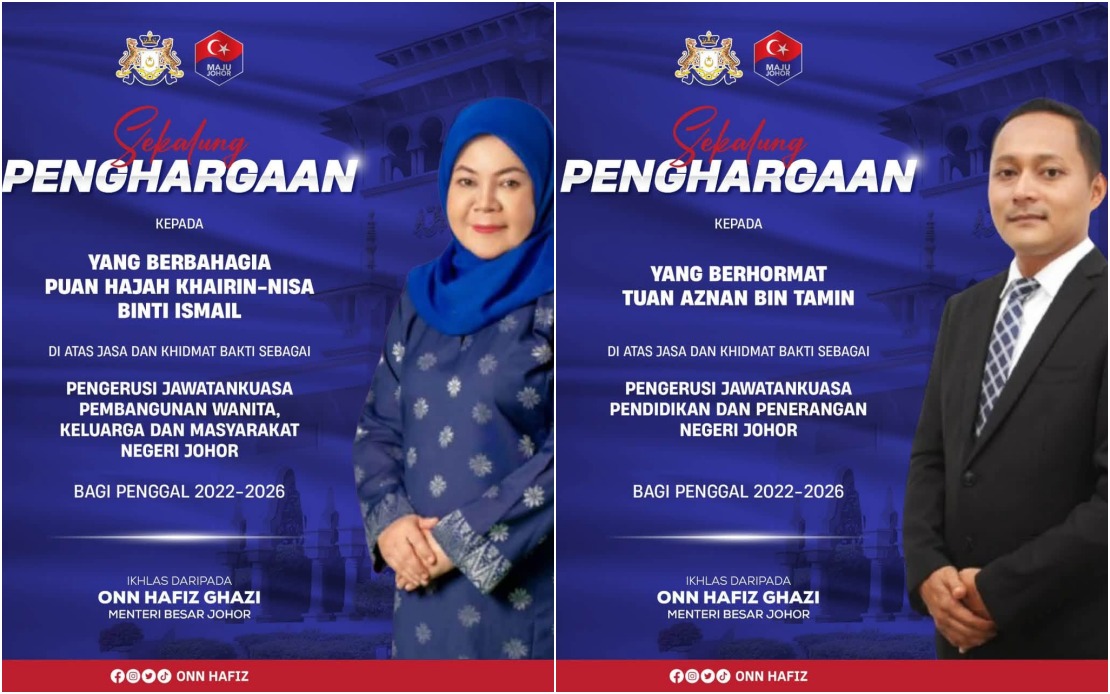
The departure of four seasoned exco members marks a notable transition for the state administration. Datuk Zahari Sarip, K. Raven Kumar, Aznan Tamin and Khairin-Nisa Ismail concluded their tenure from the 2022-2026 term, with Onn Hafiz extending formal recognition of their individual and collective efforts. By publicly articulating appreciation for their sacrifices, dedication and intellectual contributions, the Menteri Besar appears intent on maintaining cordial relations with outgoing members whilst simultaneously establishing a fresh administrative direction. This approach reflects contemporary political management in Malaysian state governments, where transitions are carefully narrated to avoid internal party friction.
Onn Hafiz's statement emphasises that positions within the executive council, whilst important, do not represent the totality of an official's value to government or their continuing role within broader governance structures. This messaging carries particular significance in Malaysian politics, where exco appointments are viewed as significant career advancement and their loss can carry reputational implications. By suggesting that accumulated experience, intellectual capacity and service commitment remain transferable assets beyond specific cabinet roles, the Menteri Besar creates political space for departing members to maintain face and continued influence within Johor's ruling coalition.
The newly constituted cabinet reflects a mixture of continuity and renewal that has become standard practice across Malaysian state governments. Six incumbent assemblymen retained their existing portfolios, indicating that institutional knowledge and established working relationships persist within the administration. Simultaneously, four new members entered the exco, introducing fresh perspectives and potentially repositioning internal political dynamics. This balanced approach suggests a cabinet restructure driven by succession planning rather than wholesale ideological reorientation, though the specific motivations behind individual changes remain officially undisclosed.
The formal investiture ceremony before Tunku Mahkota Ismail at Istana Bukit Serene lent ceremonial weight to the transition, underscoring the constitutional nature of the appointments and their foundation in legitimate state authority. In Malaysia's constitutional monarchies, such palace ceremonies serve to legitimise governmental changes and position them within established institutional frameworks. The participation of the Regent in oath-taking reinforces that leadership transitions operate within proper constitutional channels, a particularly important symbolic function when significant changes occur.
For Malaysian observers and regional analysts tracking state-level political developments, Johor's reshuffle illustrates broader patterns in contemporary Malaysian governance. State administrations regularly undertake cabinet restructuring to accommodate emerging leaders, rebalance factional interests within ruling coalitions, or respond to shifting electoral calculations. The explicit acknowledgment of outgoing members' contributions, rather than their unceremonious removal, reflects evolved political norms that recognise the reputational value of managing transitions diplomatically. This approach contrasts with earlier practices where losing office might carry unspoken stigma or be attributed to policy failure.
Onn Hafiz's emphasis on collective achievement and team unity warrants scrutiny as a governing philosophy. By attributing state successes achieved during the previous term to the departed exco members' contributions, the Menteri Besar constructs a narrative of shared responsibility and accomplishment. This framing protects the outgoing ministers' legacies whilst also establishing that progress continues under new leadership—implicitly suggesting that their departure does not jeopardise ongoing development initiatives. Such messaging matters significantly in maintaining investor confidence and public perception of governmental stability.
The reshuffle also reflects the challenge of managing limited political opportunities within state cabinets. Malaysian states typically feature compact executive councils, meaning available positions remain strictly limited. When four departing members vacated their seats, promotion opportunities opened for ambitious assemblymen, potentially rewarding loyalty and performance-based advancement within the Johor government. The appointment of four newcomers suggests a deliberate effort to broaden representation and potentially incorporate emerging voices within the state's ruling structures, though the strategic reasoning behind specific selections remains subject to informed speculation.
From a governance perspective, Johor's administrative renewal occurs within the context of Malaysia's federal system where state governments enjoy considerable autonomy over education, local government, commerce and public works. The quality and composition of state cabinets therefore carries direct implications for how these portfolios function. A reshuffle that introduces new perspectives to established functions might unlock innovation in service delivery or administrative efficiency, while maintaining experienced hands in critical areas preserves institutional continuity. The balance Onn Hafiz appears to have struck reflects such considerations.
Regional significance extends to how Malaysian state governments model political transitions that avoid toxic internal conflicts. Johor's approach—honouring departing members whilst advancing new leadership—potentially sets examples for other states managing similar transitions. As Southeast Asian democracies increasingly grapple with questions about effective political succession and generational change, Malaysian state-level practices offer instructive cases, particularly regarding how institutional frameworks can accommodate leadership transitions without damaging governmental legitimacy or factional harmony.
Looking forward, the composition and performance of Johor's reconstituted executive council will likely shape the state's trajectory over the coming months. The success of this reshuffle ultimately depends on whether the new exco members demonstrate comparable competence and commitment to their predecessors, and whether any departing members successfully transition to alternative roles within government or party structures. Political observers will watch closely to discern whether this administrative renewal genuinely revitalises governance or represents routine personnel management within an established political ecosystem.

