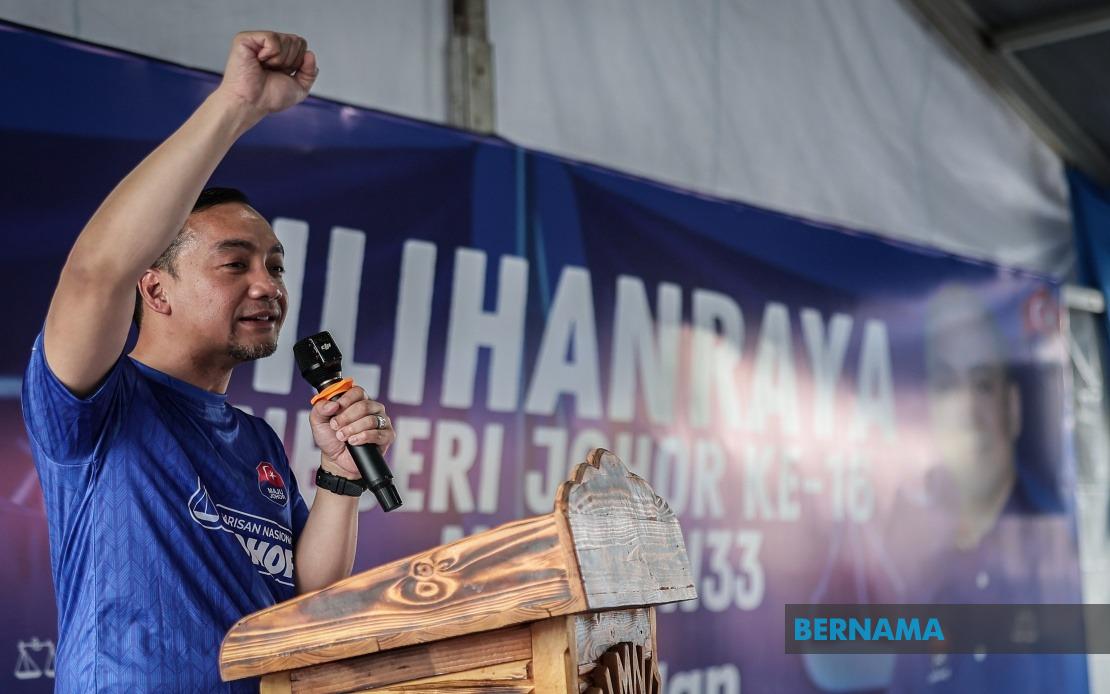
Confidence is building within Barisan Nasional's camp as the Johor state election approaches, with party leadership pointing to strong community reception for their Endau candidate as evidence that the coalition's strategy is resonating with voters. At a campaign event in Mersing on June 29, BN chairman Datuk Onn Hafiz Ghazi outlined his assessment of the coalition's prospects, attributing momentum gains to the warm welcome extended to Alwiyah Talib, the candidate contesting the Endau seat. The Johor Menteri Besar characterised the local response to the campaign as highly positive, suggesting that this groundswell of support would carry the coalition through to polling day on July 11.
The case of Alwiyah Talib herself embodies a broader narrative that BN leadership is keen to promote during this election cycle. Having previously represented Endau as a BN member before switching to Perikatan Nasional and retaining the seat in the 2022 state election with a majority of 3,041 votes, her return to Barisan Nasional represents what party officials view as validation of their strategy. Onn Hafiz framed her candidacy as consistent with UMNO president Datuk Seri Dr Ahmad Zahid Hamidi's "Rumah Bangsa" initiative, a concept designed to project BN as an umbrella organisation capable of accommodating diverse political perspectives while maintaining coalition cohesion. This messaging appears calculated to address concerns about party flexibility and inclusivity, particularly relevant in multiethnic Malaysia where electoral coalitions must demonstrate broad-based appeal.
The Menteri Besar's remarks at the "Santai ONN X ONN Bersama Menteri Besar Johor" event underscored his confidence in Alwiyah's credentials as a proven administrator. Rather than dwelling on her previous allegiance to Perikatan Nasional, party leadership has chosen to highlight her track record of constituency work and service delivery. Onn Hafiz's observation that Alwiyah "has always worked for the people" signals that BN is willing to prioritise electoral pragmatism over strict party loyalty, a positioning that could appeal to swing voters evaluating candidates on performance grounds rather than factional alignment. This approach reflects recognition that Malaysian voters, particularly in state elections where local governance issues dominate, often prioritise demonstrated competence and accessibility over broader political ideology.
The election dynamics in Johor carry significance beyond the state itself, given the peninsula's political weight and its role as a UMNO stronghold. The Johor state legislature, where voters will return representatives on July 11, has been a testing ground for BN's electoral strategy following the coalition's comeback from the 2018 federal election defeat. Early voting is scheduled for July 7, compressing the campaign period and placing emphasis on organisation and messaging efficiency. BN's reported preparations across multiple constituencies, including Tenggaroh where Mohd Youzaimi Yusof is the coalition candidate, suggest a coordinated ground operation designed to maximise turnout among supporters.
Onn Hafiz's assertion that the campaign has proceeded without "untoward incidents" warrants contextualisation within Malaysia's recent political volatility. State elections following the 2022 federal election outcome have occasionally been marked by internal coalition tensions or unexpected shifts in voter sentiment. The smooth campaign narrative being promoted by BN leadership may reflect genuine organisational harmony, but also functions as reassurance to party members and supporters that internal discipline remains intact. In Malaysian electoral contests, the perception of a united, well-functioning party machine frequently translates into voter confidence and donor enthusiasm.
The Endau constituency itself presents an interesting case study in Johor electoral patterns. Its five-cornered contest in 2022 resulted in Alwiyah's victory with a relatively modest 3,041-vote margin, suggesting the seat is neither a secure BN stronghold nor a reliably opposition-leaning district. This competitive positioning explains why BN is investing significant leadership attention in the constituency and why the return of an established local figure is strategically valuable. Voters in such marginal seats often demonstrate susceptibility to campaign messaging focused on capable local representation, making Alwiyah's previous record in the position a substantive asset rather than merely symbolic.
The "Rumah Bangsa" framing that Onn Hafiz emphasised reflects BN's broader effort to position itself as an evolutionary force within Malaysian politics. Rather than presenting the coalition as a static entity defending entrenched privileges, this concept attempts to portray BN as adaptive and inclusive, willing to work with political figures regardless of previous affiliation provided they share commitment to serving their constituents. This messaging carries particular resonance in Johor, where UMNO retains considerable organisational strength but faces periodic challenges from Malay-Muslim voters evaluating alternative political homes. By welcoming back defectors like Alwiyah, BN communicates that loyalty is variable but collective purpose in serving the state remains paramount.
The July 11 polling date represents a consolidation moment for BN's post-2022 recovery narrative. Johor's demonstrated support for the coalition in recent contests has been crucial in restoring party confidence and funding flows, and maintaining this electoral momentum is essential for UMNO's broader project of repositioning as Malaysia's indispensable political force. State-level victories accumulate legitimacy and validate claims about renewed popular confidence in BN governance. Conversely, slippage in Johor would amplify questions about whether the coalition's recovery is durable or merely a function of particular circumstances.
For Malaysian and Southeast Asian observers monitoring trends in regional democracy, the Johor election offers insights into how established parties leverage institutional advantages and adapt to changing voter preferences. BN's strategy of candidate-focused campaigns centred on proven local performance rather than broader ideological positioning reflects pragmatic understanding of what drives voting behaviour in Malaysian electoral contexts. The willingness to field former opposition members also demonstrates that Malaysia's political landscape, while structured around competing camps, retains sufficient permeability to allow for tactical repositioning when electorally advantageous.
Looking toward July 11, BN's confidence appears grounded in organisational readiness and perceived voter responsiveness, at least as articulated by state leadership. Whether this optimism translates into the vote margins necessary to sustain the coalition's trajectory will become clear when Johor voters cast their ballots. The outcome will provide crucial data about whether BN's recovery from 2018 represents durable political rehabilitation or a phenomenon dependent on particular circumstances and personalities. For Alwiyah Talib, the election represents an opportunity to validate her homecoming to the coalition and strengthen her position as a prominent Johor-based female political leader.

