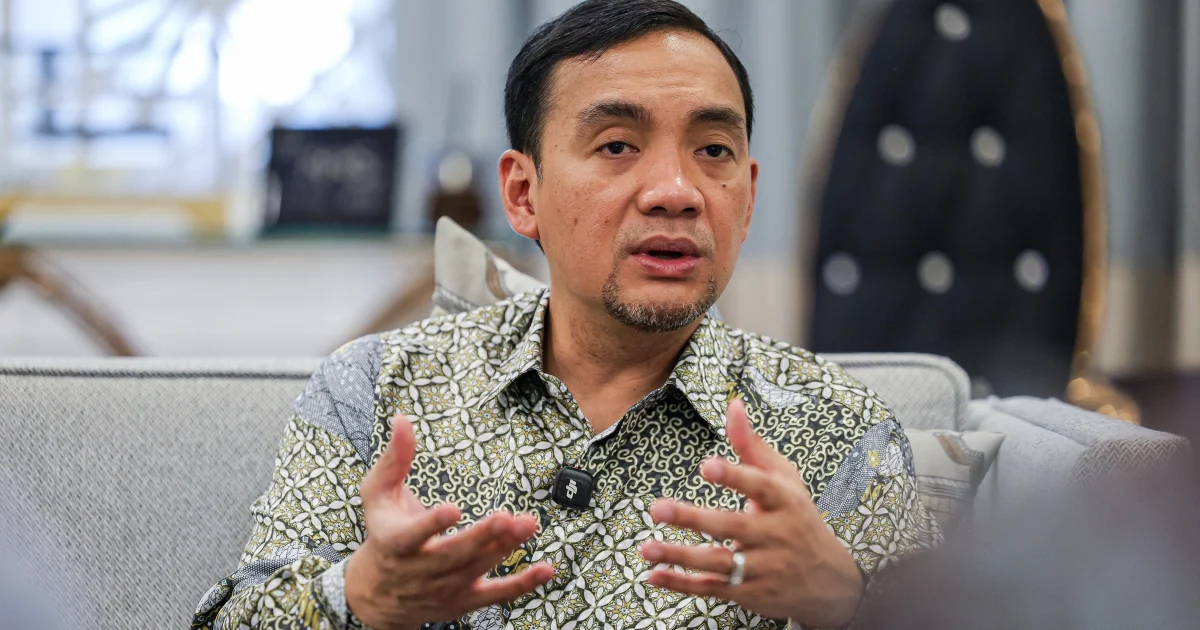
Caretaker Johor Menteri Besar Datuk Onn Hafiz Ghazi has firmly disputed assertions that he attributed the dissolution of the state assembly to a directive from the palace, directly contradicting claims made by Datuk Dr Mohd Puad Zarkashi regarding his earlier statements on the matter.
The denial comes at a sensitive moment for Johor's political landscape, where questions about the decision-making process behind the assembly's dissolution have sparked considerable debate among stakeholders and observers. The timing of such clarifications underscores the importance state leadership places on establishing the official narrative regarding governmental decisions, particularly those involving the Sultan and constitutional procedures.
Onn Hafiz's position is significant because it addresses a core question about institutional relationships in Malaysian governance: the distinction between the ruler's formal constitutional role and the executive's autonomous decision-making authority. By rejecting the characterisation that the palace "ordered" the dissolution, the caretaker leader appears to be reasserting the government's responsibility for and independence in making such consequential political decisions.
The controversy highlights ongoing tensions within Johor's political sphere, where various factions have different interpretations of events leading to the assembly dissolution. Dr Mohd Puad's claims, by attributing the decision to palace direction, would have shifted responsibility away from the executive branch. Onn Hafiz's rebuttal suggests this framing misrepresents both what he said and the actual distribution of decision-making authority in the state's governance structure.
For Malaysian observers, this dispute touches on fundamental constitutional principles governing state-level politics. The Sultan of Johor possesses important ceremonial and formal powers, but how these powers interact with the menteri besar's operational control remains a nuanced area where political actors sometimes offer divergent interpretations based on their interests and positions.
The context of caretaker administration adds complexity to these discussions. During caretaker periods, when a menteri besar serves in a transitional capacity pending elections, their authority and agency become especially scrutinised. Onn Hafiz's insistence on clarifying his remarks may reflect an effort to establish that decisions made under his watch reflected considered governmental judgment rather than external compulsion.
This exchange also reveals how political communications and media reporting can create interpretive disputes in Malaysian politics. What one person characterises as having been said, another may dispute as misrepresented or taken out of context. Such disagreements, while sometimes appearing procedural, carry weight because they shape public understanding of how power actually operates within state institutions.
Johor's political environment remains dynamic, with multiple coalition arrangements and individual political actors jockeying for influence. In this context, claims about who directed major decisions carry tactical significance for various stakeholders seeking to position themselves favourably ahead of fresh elections or new governmental arrangements.
The substance of Onn Hafiz's denial reinforces a broader principle in Malaysian governance: that elected executives, rather than the monarchy operating through formal constitutional mechanisms, typically drive policy decisions and administrative actions. While the Sultan's assent may be constitutionally required for certain measures, the distinction between approval and direction remains meaningful in understanding how authority actually functions.
As Johor moves toward resolving its caretaker status through electoral processes, such clarifications about decision-making roles become part of the political record that voters and observers will consider. They contribute to ongoing conversations about accountability, institutional relationships, and the proper exercise of governmental powers at the state level.
The broader implication for Southeast Asia's largest Malay-majority state is that constitutional norms around executive independence and institutional relationships remain contested terrain, even as formal structures appear settled. How political leaders interpret and articulate these relationships continues to shape governance practices and political culture in ways that extend beyond any single decision or declaration.

