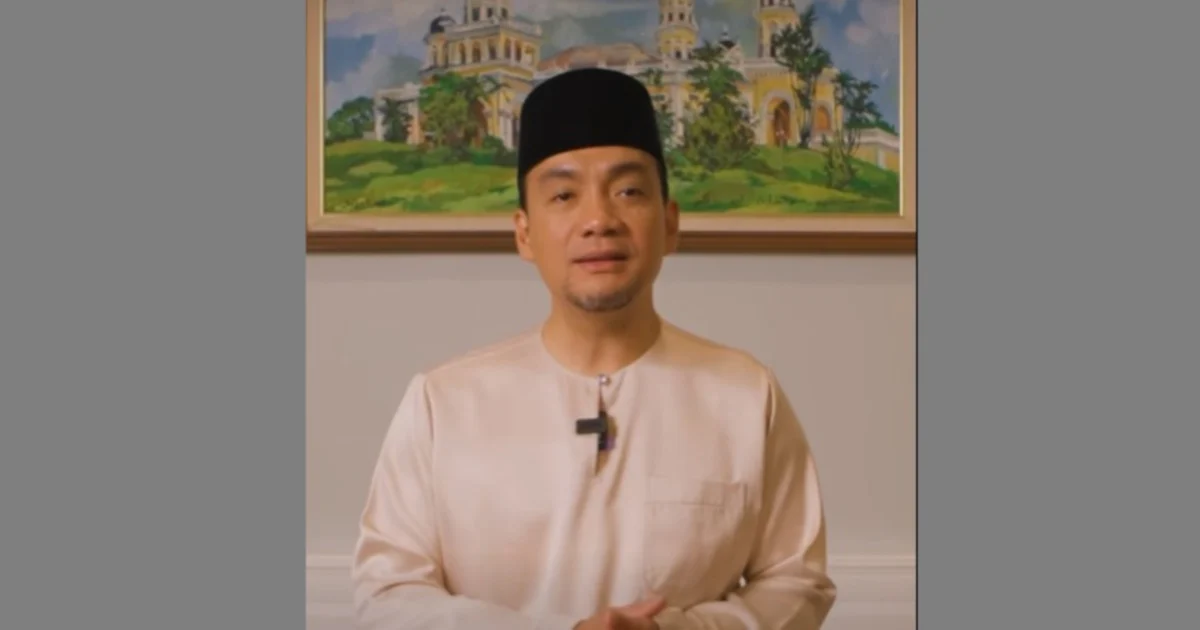
Johor's caretaker menteri besar Datuk Onn Hafiz Ghazi has launched a targeted outreach to military and police personnel across the state, appealing directly to their interests as he seeks to preserve Barisan Nasional's control in the forthcoming election. The effort to secure backing from the security forces, traditionally a significant voting bloc in Malaysian elections, underscores the coalition's focus on mobilising reliable voter segments ahead of early polling on July 7.
Security force personnel represent a crucial demographic in state elections, particularly in Johor where military installations and police headquarters are concentrated in several constituencies. These voters, characterised by their disciplined engagement with the electoral process, have historically demonstrated reliable support patterns and high turnout rates. The strategic importance of this group is magnified during early voting phases, when security personnel often cast ballots before the general population due to operational requirements and shift schedules.
Onn Hafiz's appeal emphasises continuity and stability under Barisan Nasional's stewardship of Johor, framing the coalition's continuation as essential for maintaining state development momentum and ensuring security sector welfare. The approach reflects broader coalition messaging centred on proven governance and institutional experience, contrasting sharply with opposition platforms that emphasise change and reform narratives. By targeting military and police voters early, Barisan Nasional aims to establish psychological momentum that translates into broader public support.
The timing of this security forces campaign illustrates sophisticated electoral strategy. Early voting procedures allow designated groups—including uniformed personnel—to cast ballots before official election day, a mechanism that permits campaigns to concentrate resources on mobilising these blocs when turnout momentum is critical. Security voters, required to vote early due to duty rosters and operational commitments, become a barometer for how the broader electorate might respond to campaign messaging and governance performance narratives.
For Johor specifically, the security forces represent a meaningful but not determinative share of the electorate. The state comprises 56 state assembly constituencies spread across urban, semi-urban, and rural areas, each with distinct demographic compositions and voting patterns. However, in competitive or marginal constituencies, particularly those with significant military or police establishments, security force votes can prove decisive between narrowly competing candidates and parties.
Barisan Nasional's focus on this cohort also reflects the coalition's broader challenge in contemporary Malaysian politics: maintaining support among traditional voter bases whilst expanding appeal to younger, urban, and swing voters. Security personnel tend to skew older and more conservative, making them receptive to stability-oriented messaging but less responsive to reform or anti-establishment rhetoric. This demographic characteristic makes them valuable anchors in Barisan Nasional's electoral strategy.
Onn Hafiz's position as caretaker menteri besar, rather than an elected one, adds nuance to his campaigning. His role technically requires administrative neutrality, yet electoral dynamics demand active promotion of the administration's record and vision. This tension between caretaker conventions and practical campaigning has become increasingly blurred in Malaysian electoral practice, where serving state leaders routinely campaign for their coalitions despite formal non-partisan caretaker status.
The July 7 early voting represents an opportunity for Barisan Nasional to establish polling momentum and generate positive media coverage of strong voter turnout among organised groups. Should security force turnout and support prove substantial, coalition strategists can frame this as validation of their governance record and public confidence in continuity. Conversely, lower-than-expected security force support would signal deeper underlying challenges to coalition performance narratives.
The election itself emerges as Johor's first state poll under the constitutionally revised electoral system, where direct state elections follow Federal Territory direct elections as recent normalisations of the electoral process. Johor's significant size—economically, demographically, and politically—makes it a crucial battleground where coalitional mathematics and voter mobilisation directly determine regional representation and influence within federal power structures.
Beyond immediate electoral calculations, security force engagement in state election campaigns reflects broader questions about institutional relationships in Malaysian democracy. Military and police voting patterns influence not merely election outcomes but also the perceived legitimacy and security sector alignment with particular political formations. Barisan Nasional's emphasis on this demographic reflects longstanding coalition strength among uniformed personnel, a relationship rooted in institutional history and personal networks spanning decades.
The opposition faces contrasting challenges in attracting security force support, hampered by historical positioning as challengers to institutional establishments and by messaging emphasising systemic reform over continuity. This structural disadvantage among security voters provides Barisan Nasional a substantial strategic asset that opposing coalitions struggle to overcome regardless of broader economic or governance performance metrics.
As early voting approaches, the real-time measurement of security force response will offer Malaysia's political analysts crucial indicators of coalition strength, voter satisfaction with incumbent performance, and the effectiveness of respective campaign messaging across this traditionally significant demographic. Johor's election ultimately serves as a referendum on governance records whilst simultaneously testing coalition capacity for mobilising foundational voter blocs in an increasingly competitive electoral environment.

