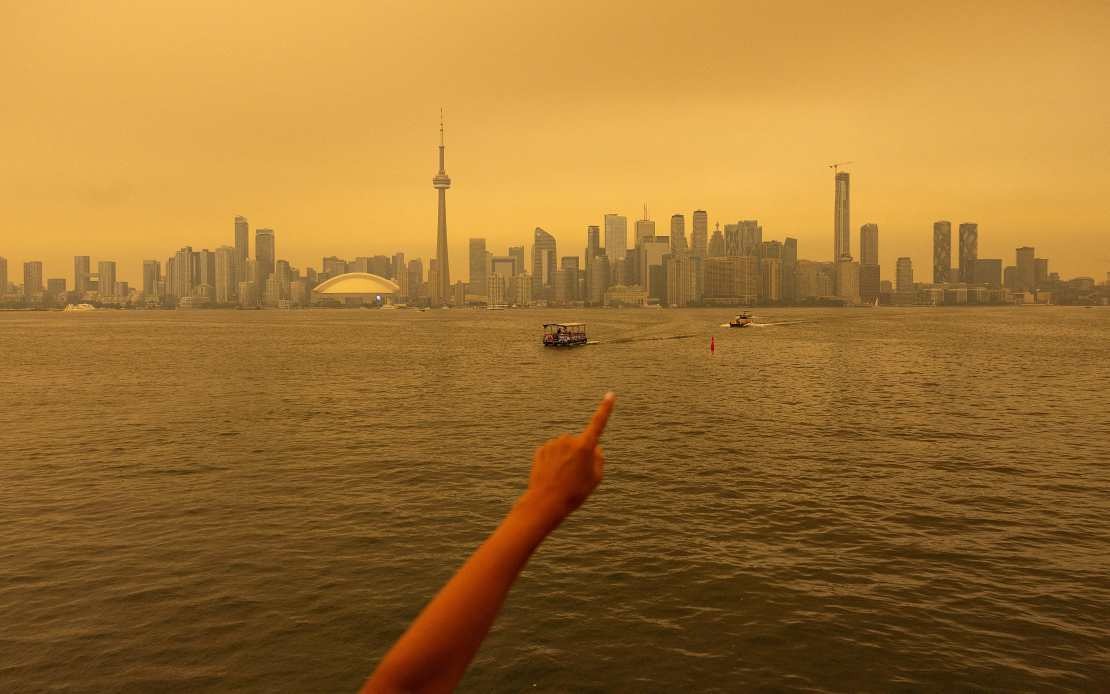
Wildfires raging across northwestern Ontario have transformed Canada's largest cities into haze-shrouded zones, with Toronto and Ottawa experiencing air quality levels among the most dangerous recorded globally. The crisis, which intensified over recent days, demonstrates how natural disasters in one region can rapidly cascade into public health emergencies affecting millions of people across multiple provinces. For Malaysian observers, the situation underscores the vulnerability of major urban centres to environmental hazards and the interconnected nature of atmospheric pollution across vast geographies.
On Wednesday morning, Toronto's Air Quality Health Index reached "very high risk" classification according to Environment Canada data, placing the city at the worst air quality among major global metropolitan areas. The capital city, Ottawa, simultaneously issued air quality alerts as prevailing wind patterns and high humidity conspired to trap smoke particles close to ground level, creating a visibly yellow haze across the skyline. Both cities advised residents to limit outdoor activities, particularly for vulnerable populations including children, the elderly, and those with respiratory conditions. The simultaneous degradation of air quality across two major Canadian population centres highlighted how wildfire smoke ignores municipal boundaries and administrative divisions.
The atmospheric pollution crisis stems from more than 100 active fires still burning across northwestern Ontario's forest regions. These blazes have forced emergency evacuations from multiple communities as flames advance unpredictably through heavily wooded terrain. Weather authorities warned that meteorological conditions favour the persistence of heavy smog for several additional days, as prevailing airflow patterns continue channelling smoke southward into populated regions. The inability to rapidly disperse smoke indicates that residents should prepare for extended periods of hazardous air quality rather than temporary inconvenience.
Beyond air quality impacts, the wildfires have severely disrupted transportation infrastructure crucial to Canada's economic functioning. Canadian National Railway (CN) suspended train operations in affected sections following an extraordinary incident captured on video and subsequently authenticated by the company on Wednesday. Footage filmed late Monday by a locomotive crew member shows a freight train surrounded by towering flames consuming forests on both sides of the tracks near Armstrong, Ontario. The intense red glow visible inside the locomotive cab demonstrates the extreme proximity and intensity of the wildfire threat to rail infrastructure. The crew was safely evacuated, but the incident underscored the genuine danger posed to transportation workers and the vulnerability of linear infrastructure like railways to spreading wildfires.
CN's decision to suspend operations in the affected corridor reflects the impossibility of maintaining normal railway traffic through active fire zones. Such disruptions carry significant economic consequences, as freight rail forms a critical backbone for Canadian commerce, connecting resource extraction zones in northern regions to processing facilities and distribution centres in the south. Manufacturing operations, resource companies, and retailers dependent on just-in-time logistics face supply chain complications. The railway suspension also limits options for residents in affected communities seeking to evacuate, as road transportation becomes the sole viable option during peak emergency periods.
The wildfire situation carries particular relevance for Southeast Asian observers given the region's own experience with transboundary smoke pollution. Just as Ontario's fires create hazardous conditions across Canadian provinces, the region regularly confronts smoke from peat fires and agricultural burning originating in Indonesia, crossing into Malaysia, Singapore, and Brunei. The Ontario crisis demonstrates that wealthy, developed nations with sophisticated firefighting capabilities face similar challenges in containing smoke impacts across large distances. This reality suggests that addressing transboundary air pollution requires international coordination and upstream prevention rather than relying solely on emergency response after fires ignite.
Canada's experience also highlights the climate change dimension of wildfire intensity and frequency. Warmer temperatures, extended dry seasons, and altered precipitation patterns have created conditions favouring more intense and unpredictable wildfires across North America. The cascading impacts—from air quality degradation to infrastructure disruption to economic losses—illustrate why climate-related disasters disproportionately affect interconnected modern economies dependent on reliable transportation, power, and logistics networks. For Malaysia and other Southeast Asian nations vulnerable to drought and forest fire risks, the Ontario situation provides a cautionary example of how climate-driven disasters can rapidly overwhelm response capacity.
Government authorities in Ontario and neighbouring provinces have coordinated emergency responses including public health warnings, school closures, and infrastructure evacuations. However, the persistence of smog despite these measures underscores the limits of purely reactive emergency management when facing environmental hazards of such magnitude and geographic scale. Citizens in affected regions face difficult choices about when to venture outdoors, whether to engage in physical activities, and how to protect vulnerable family members—complications that extend far beyond the immediate fire zones.
The situation remains fluid as weather patterns continue shifting and firefighting efforts progress across the vast Ontario forest regions. Meteorological forecasts suggest some relief may arrive as wind patterns change, potentially redirecting smoke away from major urban centres. However, the underlying fire suppression challenge persists, with over 100 active fires still requiring containment across difficult terrain. The full economic and public health impact of this event will only become apparent after fire suppression succeeds and air quality gradually improves over the coming weeks.

