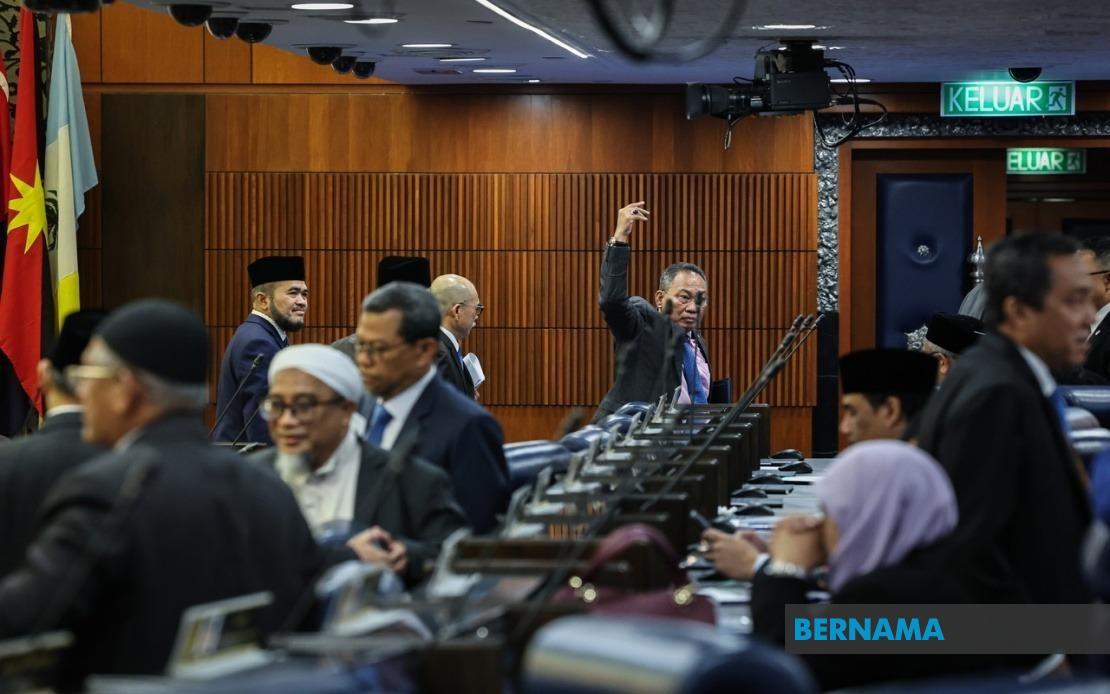
When Perikatan Nasional MPs, led by Opposition Leader Datuk Seri Hamzah Zainuddin, walked out of the Dewan Rakyat yesterday rather than participate in a ministerial briefing on the Tabung Haji Royal Commission of Inquiry report, they triggered fresh questions about the opposition's commitment to its parliamentary oversight duties. The boycott meant that lawmakers representing millions of Malaysian voters abandoned what should have been a crucial opportunity to interrogate findings affecting one of the nation's largest Islamic financial institutions and its 10 million depositors.
Academic observers argue that the opposition's absence represents a fundamental abdication of the check-and-balance function that forms the backbone of democratic governance. When a government institution faces serious questions about mismanagement—as the RCI report suggests occurred at Tabung Haji between 2014 and 2020—the elected opposition should be at the forefront of demanding accountability. Instead, by boycotting the debate and ministerial briefing, opposition MPs surrendered the parliamentary platform they are constitutionally empowered to use. This becomes particularly troubling when one considers that Tabung Haji serves Muslim Malaysians saving for the Hajj pilgrimage, many of them ordinary citizens with modest savings accumulated over years.
Associate Professor Dr Mazlan Ali from Universiti Teknologi Malaysia emphasises that Parliament exists precisely for such moments—when institutions require public scrutiny and when citizens need their representatives to demand transparent explanations from those in power. The minister responsible for religious affairs, Dr Zulkifli Hasan, was present and prepared to answer questions within his portfolio scope. Yet rather than testing his responses, probing the RCI's conclusions, or raising specific concerns on behalf of depositors, the opposition chose the symbolic gesture of walking out. This substitutes theatre for substance, spectacle for the hard work of legislative oversight that Malaysian voters expect their representatives to undertake.
The opposition's stated justification—that Prime Minister Datuk Seri Anwar Ibrahim's absence due to medical treatment made the proceedings incomplete—invites scrutiny on multiple grounds. First, constitutional principle holds that Parliament's functions do not hinge on any single individual, regardless of rank. The institution operates through its structures and procedures, not personality politics. Second, the government had specifically assigned Dr Zulkifli Hasan to brief Parliament on the RCI report, implicitly indicating that this minister held adequate responsibility and information to address parliamentary questions. To demand the Prime Minister's personal attendance, while he undergoes hospitalisation, blurs the lines between holding government accountable and pursuing political theatre.
Dr Nazreena Mohammed Yasin from Universiti Tun Hussein Onn underscores that substantive accountability mechanisms depend on MPs actively participating in parliamentary debates. When lawmakers engage with government representatives, ask penetrating questions, and demand satisfactory responses, the principle of democratic accountability gains real force. Opposition participation transforms parliamentary proceedings from mere ceremonial events into genuine opportunities for scrutiny. Through such engagement, the government becomes answerable not just to the ruling coalition but to the broader electorate represented by opposition members. When that participation is withdrawn, the quality of democratic oversight deteriorates substantially.
The Tabung Haji context amplifies these concerns significantly. The RCI report detailed governance weaknesses spanning a seven-year period, institutional matters that did not arise overnight and likely involved numerous decisions, approvals, and oversight failures. Depositors who entrusted their savings to this organisation deserve more than a government account of what went wrong—they deserve their elected representatives rigorously examining the RCI's findings and demanding clear commitments about future safeguards. The opposition's boycott effectively abandons these millions of Malaysians at a moment when their interests most require parliamentary champions.
Furthermore, the walkout creates an unfortunate political perception that opposition parties care less about depositor protection than about making partisan points against the government. Whether this perception accurately reflects opposition intentions matters less than the fact that such a perception emerges at all. In democratic systems, legitimacy of oversight depends not only on actions taken but on the appearance that all parties prioritise public interest above political advantage. When opposition MPs exit the chamber rather than engage, they allow a narrative to develop suggesting political calculation supersedes fiduciary concern for ordinary citizens' financial security.
The broader implications extend beyond Tabung Haji itself. Malaysia's financial institutions and government programmes require constant parliamentary vigilance to ensure proper management and honest administration. Every time legislators choose spectacle over substance, every time they boycott rather than engage, the overall quality of democratic governance diminishes. Institutional weaknesses identified by investigations like the RCI only matter if Parliament can translate those findings into action—reforms, new oversight mechanisms, policy changes. That translation process requires opposition participation. Without it, even damning reports risk becoming historical documents rather than catalysts for improvement.
Moreover, the precedent established yesterday may resonate through future parliamentary proceedings. If opposition parties establish that boycotting debates becomes an acceptable tactic when circumstances prove politically inconvenient, Parliament's deliberative function suffers cumulative damage. Government legislation and ministerial explanations require sustained, intelligent challenge to be properly tested. That challenge becomes impossible when opposition benches stand empty. Over time, this pattern erodes Parliament itself, transforming it from a forum where competing visions contend seriously to a stage where one side performs for an absent audience.
Moving forward, Malaysian democratic culture would benefit from opposition lawmakers reconsidering their approach to parliamentary duties. The responsibility to scrutinise government operates independently of whether particular circumstances seem politically advantageous or disadvantageous. Prime ministers receive hospital treatment; deputy prime ministers occasionally require medical leave; various ministers may be unavailable at times. Parliament's work cannot depend on perfect attendance from the executive branch. Instead, democratic systems function precisely because institutions persist and procedures continue regardless of individual availability. Opposition MPs serve 10 million Tabung Haji depositors and millions of other Malaysians—constituencies that deserve elected representatives willing to engage in rigorous, sustained parliamentary oversight rather than symbolic gestures of protest.

