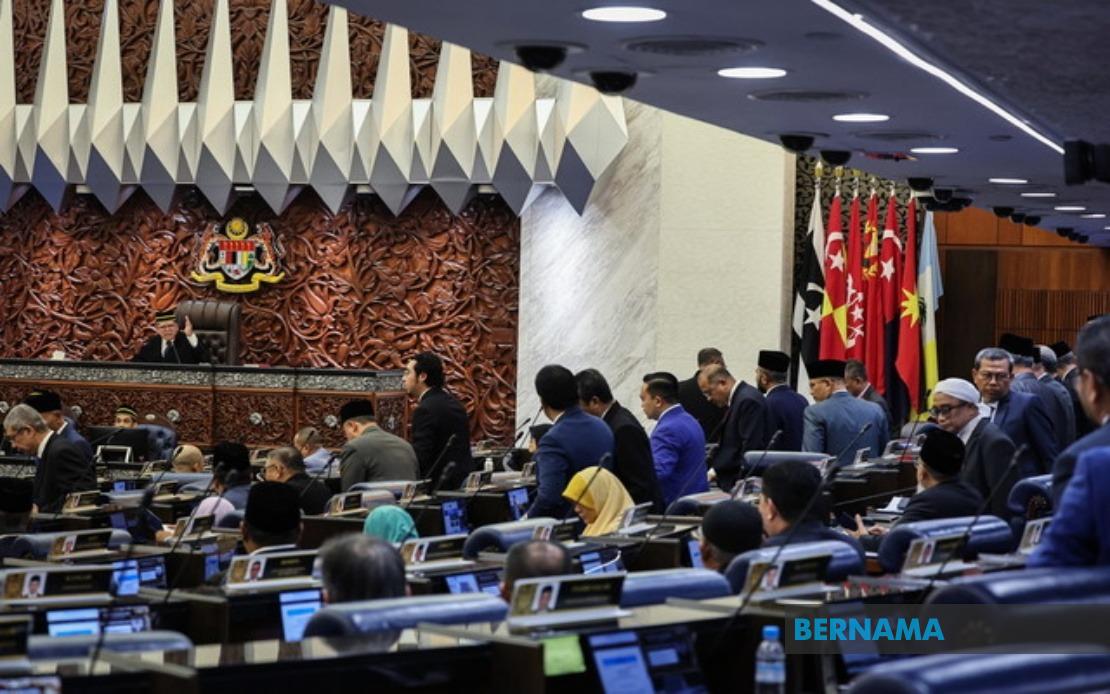
Members of Parliament from Perikatan Nasional staged a walkout from the Dewan Rakyat on August 11, declining to participate in the parliamentary debate surrounding the Royal Commission of Inquiry report on Lembaga Tabung Haji. Opposition Leader Datuk Seri Hamzah Zainudin led the departure, accompanied by PN Chief Whip Datuk Seri Takiyuddin Hassan and PN chairman Datuk Seri Dr Samsuri Mokhtar. The action came after Takiyuddin proposed that the special sitting be adjourned due to the absence of Prime Minister Datuk Seri Anwar Ibrahim and Deputy Prime Minister Datuk Seri Fadillah Yusof, both undergoing medical treatment.
The walkout represents a critical juncture in how parliamentary opposition operates within Malaysia's democratic framework. The RCI report on Tabung Haji, released publicly on July 29 following government approval, was intended to be thoroughly examined and debated by all MPs, giving the legislature an opportunity to scrutinize findings that directly affect millions of depositors. The special sitting had been convened specifically to allow members across the political spectrum to engage substantively with the report's contents and implications for one of Malaysia's most significant financial institutions serving the Muslim community.
Prof Datuk Dr Sivamurugan Pandian from Universiti Sains Malaysia's School of Social Sciences argues that the walkout, while framed around the Prime Minister's absence, functions primarily as a political protest maneuver rather than a strategy genuinely oriented toward defending depositors' interests. This distinction matters significantly because it raises fundamental questions about what Parliament is designed to accomplish. If the institution's core function is to hold government accountable and create a permanent legislative record of policy positions, then symbolic departures may undermine those objectives even when undertaken for principled reasons.
The academic's analysis points toward a deeper tension within opposition politics. Some PN MPs remained in the chamber despite their colleagues' departure, suggesting internal disagreement about the walkout's strategic merit. This fracturing within the opposition bloc itself indicates that assessments of its effectiveness diverged meaningfully. Those who stayed behind may have calculated that remaining present allowed them to articulate concerns directly into the parliamentary record, whereas those departing prioritized the symbolic gesture of protest against perceived executive disrespect toward the legislature.
From a publicity perspective, walkouts generate immediate media attention and convey dissatisfaction with apparent executive conduct. The visual of opposition members departing the chamber sends a powerful message to constituents and the broader public. However, Sivamurugan argues that this advantage in terms of headlines does not necessarily translate into substantive policy influence. A walkout produces symbolism; remaining and debating produces documentation. In a system theoretically built on checks and balances, what ultimately matters is creating a retrievable record of arguments, evidence, and alternative proposals that can guide future policy decisions and serve as accountability markers.
The absence of the Prime Minister from such a significant debate carries genuine symbolic weight that should not be dismissed as entirely trivial. Tabung Haji involves billions of ringgit in depositors' savings and represents a pillar of Islamic financial infrastructure in Malaysia. That the sitting head of government chose not to participate, citing health reasons, naturally invites opposition concerns about the gravity with which the executive regards the institution's challenges. Signaling displeasure through departure communicates something real about opposition sentiment and can resonate with affected depositors who might view PM attendance as reflecting institutional priority.
Yet the fundamental weakness of the walkout as a tactical response lies in its surrender of the parliament floor itself. By departing, opposition members abandoned the primary arena where they could have methodically cross-examined government positions on the RCI's findings, introduced alternative interpretations of data, and proposed concrete remedies for identified problems. These substantive contributions would have entered the official parliamentary record, binding the government to responses and creating benchmarks against which future TH performance could be measured. Leaving the chamber cedes this advantage to government supporters who remained.
The role of Parliament as an institution depends upon continuous accumulation of documented debate and argument. Over time, these records become the historical basis for legislative accountability and policy adjustment. A walkout, by contrast, produces a moment of drama that fades quickly. Six months or a year hence, when depositors ask what Parliament actually did to address Tabung Haji's problems, a walkout creates minimal evidentiary trail compared to extensive recorded debate filled with specifics, figures, and alternative proposals. This temporal dimension distinguishes symbolic political action from institutional consequence.
For Malaysian readers and Southeast Asian observers, the incident illustrates broader questions about how opposition parties navigate parliamentary systems. The tension between principled protest and practical leverage is genuine. Sometimes government conduct is sufficiently egregious that absenting oneself becomes morally necessary. Yet the challenge opposition movements face is ensuring that protest serves strategic ends rather than becoming an end in itself. The walkout strategy risks creating narratives that opposition actors care more about theater than about methodical advocacy for the constituents and interest groups—like TH depositors—that elected them.
The specific context of Tabung Haji adds weight to these considerations. Millions of Malaysian Muslims depend on the institution for savings accumulated through years of contributions. The RCI report presumably identifies serious structural or governance problems requiring policy response. From a depositor protection standpoint, parliamentary debate that forces government to articulate remedies and commit to specific improvements arguably serves these stakeholders better than a walkout that permits government to control the legislative narrative. Opposition parties that wish to demonstrate genuine concern for vulnerable Malaysians might have calculated that staying engaged, asking difficult questions persistently, and forcing recorded responses served their political interests more effectively than departure.
Simultaneously, Sivamurugan's observation that walkouts should be understood as political signals carries validity. The signal being sent here is that opposition deems PM absence disrespectful to Parliament and insulting to the gravity of the Tabung Haji situation. Whether that signal resonates with Malaysian voters depends partly on how extensively opposition parties communicate the reasoning and context. A walkout unaccompanied by sophisticated explanation risks appearing petulant rather than principled. But a walkout coupled with sustained media argument that Parliament's dignity and depositors' interests demand executive engagement might construct a more persuasive narrative.
The incident ultimately reflects the perpetual challenge democratic oppositions face: maintaining institutional legitimacy while contesting government actions. PN's decision to depart may have been defensible on multiple grounds. Yet the most durable opposition power derives not from symbolic actions but from exhaustive use of parliamentary procedure to document government accountability, build alternative policy proposals, and create records that shape public understanding of issues. In that framework, debate genuinely does defeat walkout, and the best response to executive absence is not to follow it out the door but to deepen one's presence where institutional authority actually resides.

