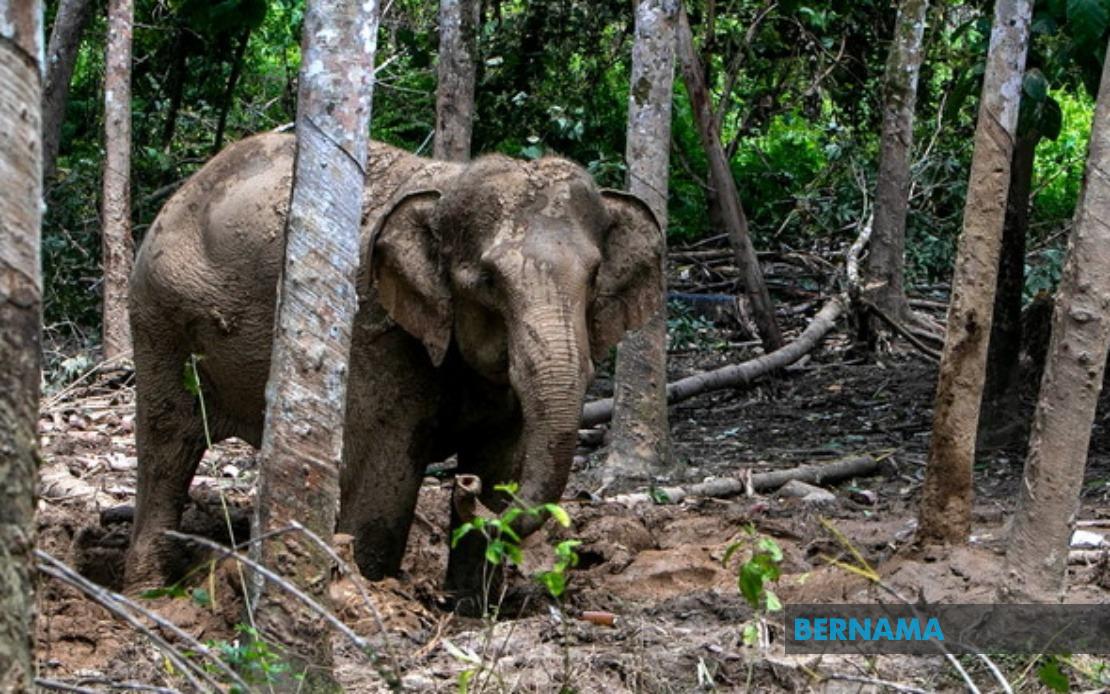
A resident of Kampung Orang Asli Perjek in the Legap Resettlement Scheme near Sungai Siput, Perak, sustained significant injuries on Friday evening when he confronted a herd of wild elephants that had wandered into the village's agricultural areas. The incident underscores the persistent tensions between human communities and wildlife in Peninsular Malaysia's forested regions, particularly affecting vulnerable populations whose livelihoods depend on subsistence farming in elephant corridors.
Authorities from the Department of Wildlife and National Parks (PERHILITAN) Peninsular Malaysia responded to emergency reports around 10 pm, dispatching officers from the Sungai Siput district to assess the situation and gather evidence. Upon investigation, wildlife personnel confirmed that four elephants had penetrated the settlement perimeter and were actively foraging on cassava and banana crops that villagers had cultivated behind their homes. The animals' presence represented both an immediate threat to the community's food security and a serious safety hazard.
When the injured villager and his neighbors attempted to drive the elephants away using traditional methods, the situation escalated unexpectedly. The victim ventured too close to the herd during these efforts, prompting a sudden and violent response from one of the animals. The elephant's attack left him with severe injuries, including significant bleeding and a temporary loss of consciousness. Fellow villagers quickly intervened to extract him from immediate danger, likely preventing more serious harm.
Local residents transported the injured man to Raja Permaisuri Bainun Hospital in Ipoh, where medical staff stabilized his condition. Hospital officials reported that despite the severity of his injuries, he had achieved stability and remained under observation. The incident adds another chapter to the growing catalogue of human-wildlife confrontations that plague rural Malaysian communities, particularly in states like Perak where forest reserves and elephant sanctuaries border agricultural settlements.
Drone surveillance deployed by PERHILITAN confirmed that all four elephants had eventually departed from the village area, though their movements toward the community raise questions about the effectiveness of existing barriers and deterrent systems. Wildlife managers indicated they had implemented additional management strategies designed to minimize the likelihood of recurring incursions. These measures presumably include reinforced barriers around cultivated areas and adjusted patrol schedules, though the specifics remained undisclosed in official communications.
The Orang Asli community in the Legap Resettlement Scheme occupies a particularly precarious position in Malaysia's wildlife conservation landscape. Resettled from their ancestral territories, these indigenous residents often lack the resources and infrastructure available to other agricultural communities, leaving them disproportionately vulnerable to wildlife encounters. Their reliance on subsistence farming for food and income generates ongoing friction with elephant herds that traverse the same landscapes in search of natural food sources.
PERHILITAN has announced plans to assist the victim's family through the Wildlife Attack Victim Assistance initiative, a program managed by the Ministry of Natural Resources and Environmental Sustainability. This scheme provides financial and medical support to Malaysian citizens who sustain injuries during wildlife encounters, though accessibility and adequacy of such support remains contested among advocacy groups working with rural and indigenous communities. The initiative represents official acknowledgment that human-wildlife conflicts exact real costs on vulnerable populations.
Authorities have issued stern guidance to the general public regarding elephant encounters, emphasizing that civilians should never attempt to manage or drive away large wild animals independently. Such confrontations, PERHILITAN stressed, pose extreme risks to human safety and often escalate situations that might otherwise resolve peacefully. The department encouraged residents facing wildlife incursions to immediately report incidents through official channels rather than taking unilateral action.
Members of the public who encounter wildlife-related incidents in Peninsular Malaysia can contact PERHILITAN through its dedicated hotline at 1-800-88-5151 or submit reports via the Public Complaints Management System (SISPAA) accessible through the department's official website. These communication pathways enable rapid response deployment and proper documentation of human-wildlife conflicts, supporting both immediate safety measures and longer-term management planning.
The Perak incident illustrates broader challenges facing Southeast Asia's human-wildlife coexistence framework. As elephant populations recover in protected areas across Thailand, Malaysia, and Sumatra, these animals increasingly venture beyond reserve boundaries into agricultural lands where they encounter subsistence farmers and indigenous communities. Finding sustainable solutions requires balancing wildlife conservation objectives with the immediate survival needs of marginalized rural populations—a challenge Malaysian policymakers have yet to adequately address through comprehensive land-use planning and community-centered interventions.

