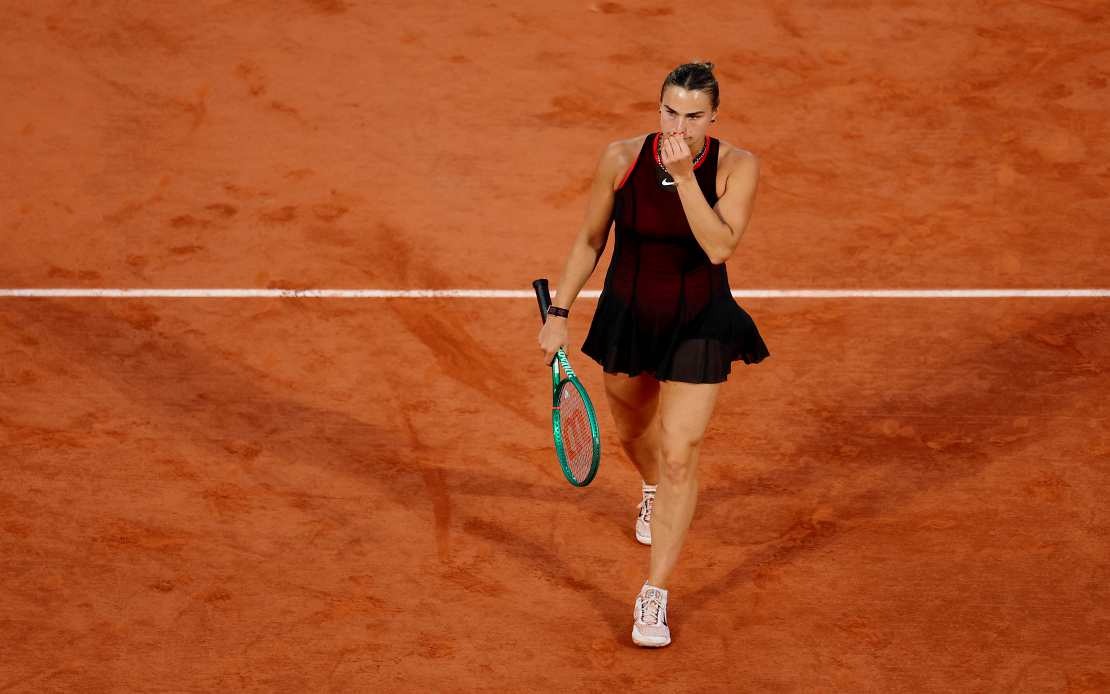
Japan's former world No. 1 Naomi Osaka produced a dominant display against top-seeded Aryna Sabalenka of Belarus on Sunday at Wimbledon, securing a 6-2, 7-6(2) fourth-round victory that marks a significant milestone in her career. The 14th-seeded Japanese star's breakthrough triumph at the All England Club represents her first quarterfinal appearance at the prestigious grass-court major, cementing her resurgence on the professional tennis circuit after navigating personal and competitive challenges in recent years.
Osaka's path to this achievement carries particular resonance in tennis history. She becomes the first Japanese woman to reach the final eight at Wimbledon since Ai Sugiyama accomplished the feat nearly two decades ago in 2004, a gap that underscores the rarity of Japanese success at this storied tournament. The 26-year-old's ability to perform consistently on grass has been questioned throughout her career, making this quarterfinal run especially noteworthy for a player accustomed to succeeding on harder courts where she captured four Grand Slam titles earlier in her career.
Beyond the historical significance, Osaka's victory over Sabalenka carries considerable psychological weight. The Belarusian world No. 1 had dominated their head-to-head matchups in 2024, winning three consecutive encounters heading into this encounter, including a fourth-round encounter at the French Open. This streak had created a psychological burden that Osaka was determined to overcome at Wimbledon. The Japanese star acknowledged the pressure of facing consecutive defeats against the same opponent, noting that the opportunity to reverse that trend at the All England Club provided powerful motivation during the match.
Osaka's tactical approach against Sabalenka revealed a refined understanding of grass-court dynamics. Rather than engaging in extended baseline exchanges where the powerful Belarusian typically thrives, Osaka employed calculated aggression to control points and dictate tempo. Her first set demonstrated this masterclass in execution, with the Japanese player securing a commanding 6-2 advantage through efficient ball striking and strategic positioning. The second set proved more competitive, but Osaka maintained composure during the tiebreaker, clinching a 7-6(2) result that reflected her superior execution under pressure.
During her on-court interview following the victory, Osaka expressed genuine joy about her performance and the venue. She emphasized that the experience of playing entertaining tennis on the hallowed grass courts of Wimbledon carried deep personal significance, representing not merely a tournament victory but a restoration of the pleasure that initially drew her to professional competition. This emotional authenticity provides context to her recent career trajectory, as Osaka has spoken extensively about prioritizing enjoyment alongside competitive success.
The South Asian sports landscape and Malaysian fans particularly recognize the significance of Asian representation at Wimbledon's latter stages. While tennis in Southeast Asia continues developing, Japanese athletes have consistently provided inspiration for regional players aspiring to compete at the sport's highest level. Osaka's continued success reinforces the narrative that Asian players can not only participate in Grand Slam competition but also challenge and defeat the sport's dominant figures.
Osaka's next opponent will be Karolina Muchova of the Czech Republic, the 10th seed, with a semifinal berth at stake. Muchova represents another formidable challenge, as the Czech player has demonstrated impressive form on grass and possesses the technical skills to trouble Osaka. Nevertheless, momentum clearly favors the Japanese star following her commanding performance against the world's top-ranked player.
Meanwhile, Japanese tennis experienced a contrasting outcome in the men's singles draw. Qualifier Shintaro Mochizuki, ranked 151st globally, fell victim to defending champion Jannik Sinner of Italy in the fourth round. The Italian top seed dispatched the Japanese qualifier 6-3, 7-6(0), 6-3, ending Mochizuki's remarkable run through the tournament. The qualifier's journey to the fourth round had represented an inspiring underdog narrative, but ultimately lacked the competitive resources necessary to sustain a challenge against a defending major champion performing at peak efficiency. Sinner's dominant victory reinforced the considerable gap separating elite-ranked professionals from the sport's emerging talent pool, despite Mochizuki's impressive qualifying achievement.
Osaka's quarterfinal qualification arrives during a period of renewed confidence following her previous career interruptions. Her ability to elevate performance against elite opposition, particularly in converting opportunities against the sport's highest-ranked competitor, suggests her trajectory could extend well beyond Wimbledon. The tennis community will monitor her progress closely as she pursues a first Wimbledon semifinal appearance, a result that would further rehabilitate her standing as one of the sport's premier champions.

