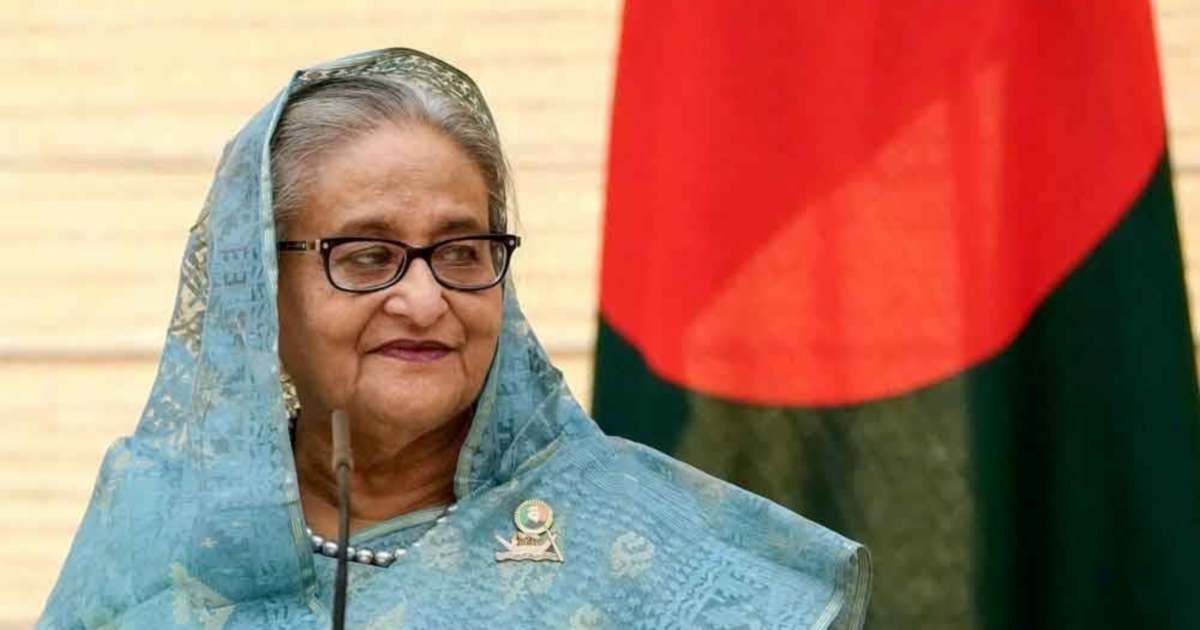
Sheikh Hasina, who fled Bangladesh following a dramatic political upheaval that saw mass protests and civil unrest topple her government, has made a bold declaration that she intends to come back to her homeland before the year concludes. The announcement represents a significant escalation in the political standoff between the ousted leader and the interim administration that has assumed power in Dhaka, signalling that the country's institutional crisis remains far from resolution.
The former Prime Minister's announcement carries particular weight given the existential threat posed by the death sentence handed down against her in her absence. Rather than retreat from the legal jeopardy she faces, Hasina has chosen to contest the ruling's legitimacy itself, arguing that the conviction violates Bangladesh's constitutional framework and represents nothing more than a weaponisation of the judicial system for partisan advantage. This defiant posture reflects a calculation that her political base remains sufficiently mobilised to protect her, or alternatively, that the charges lack genuine substance under international legal scrutiny.
Hasina's return would fundamentally reshape Bangladesh's political landscape, which has been in flux since her departure. The interim government, tasked with managing the transition and organising new elections, would face an immediate constitutional and security challenge of unprecedented proportions. Her presence in the country would likely reignite the factional tensions that precipitated her exit, potentially destabilising the fragile consensus that currently undergirds the interim administration's authority.
The timing of her pledge merits careful consideration. By anchoring her return to a specific calendar year rather than conditional upon legal or political developments, Hasina has raised the stakes considerably. Such declarations often reflect behind-the-scenes negotiations with influential parties or assessments of shifting sentiment within Bangladesh's military and bureaucratic establishment, both crucial players in any political transition. Alternatively, they may represent a strategic communication aimed at maintaining her political salience among supporters who might otherwise drift toward alternative opposition figures.
From a regional perspective, Hasina's defiance carries implications for South Asian stability. Bangladesh's internal political turbulence attracts attention from neighbouring India, Pakistan, and China, each with distinct interests in the country's trajectory. India, in particular, has maintained close relations with Hasina's Awami League party, and her exile has complicated New Delhi's regional diplomacy. A return would signal renewed assertiveness from a faction that has traditionally aligned with Indian interests, potentially reshaping bilateral relationships and regional dynamics.
The international dimension of her predicament also warrants attention. Several countries with significant Bangladeshi diaspora populations and democratic governance standards have condemned the death sentence as politically motivated. Should Hasina succeed in returning and consolidating power, questions about the legitimacy and fairness of her trial would likely attract scrutiny from foreign governments and human rights organisations. Conversely, if the interim government or successor administration succeeds in preventing her return or prosecution, it would demonstrate the consolidation of a new political order fundamentally distinct from the Hasina era.
Within Bangladesh's fractious opposition landscape, Hasina's declaration of return complicates calculations for other political actors. The interim government and various opposition factions must now prepare contingencies for her actual arrival, whether that involves enhanced security measures, attempts at negotiated settlement, or confrontational responses. The uncertainty this creates extends to business and investor communities, who require predictability for economic planning.
The death sentence itself emerged from Bangladesh's judicial system operating under conditions that observers have questioned as insufficiently impartial. Trials in absentia raise particular concerns about due process, as the accused cannot directly contest evidence or testimony presented against them. Hasina's legal team has undoubtedly counselled that international legal standards would render such a conviction highly vulnerable to challenge, particularly if she returns and engages with the judicial process through proper representation.
For Malaysia and other Southeast Asian democracies, Bangladesh's political crisis offers sobering lessons about institutional fragility. The pattern whereby electoral competition devolves into accusations of unconstitutional overreach, leading to mass mobilisation and ultimately to the ouster of sitting governments, reflects vulnerabilities present across the region. Bangladesh's experience underscores the importance of maintaining independent judiciaries and preventing the politicisation of legal proceedings, challenges that resonate acutely in contemporary Southeast Asia.
Looking forward, Hasina's return—should it materialise—would test Bangladesh's ability to manage political transition through constitutional means rather than cycles of confrontation and displacement. The interim administration's response to her repatriation will signal whether the country has developed institutional mechanisms sufficient to accommodate competing political forces, or whether the fundamental patterns that produced her ouster remain unresolved. The implications extend beyond Bangladesh, as regional observers assess whether South Asian democracies can develop more stable frameworks for managing transitions of power.

