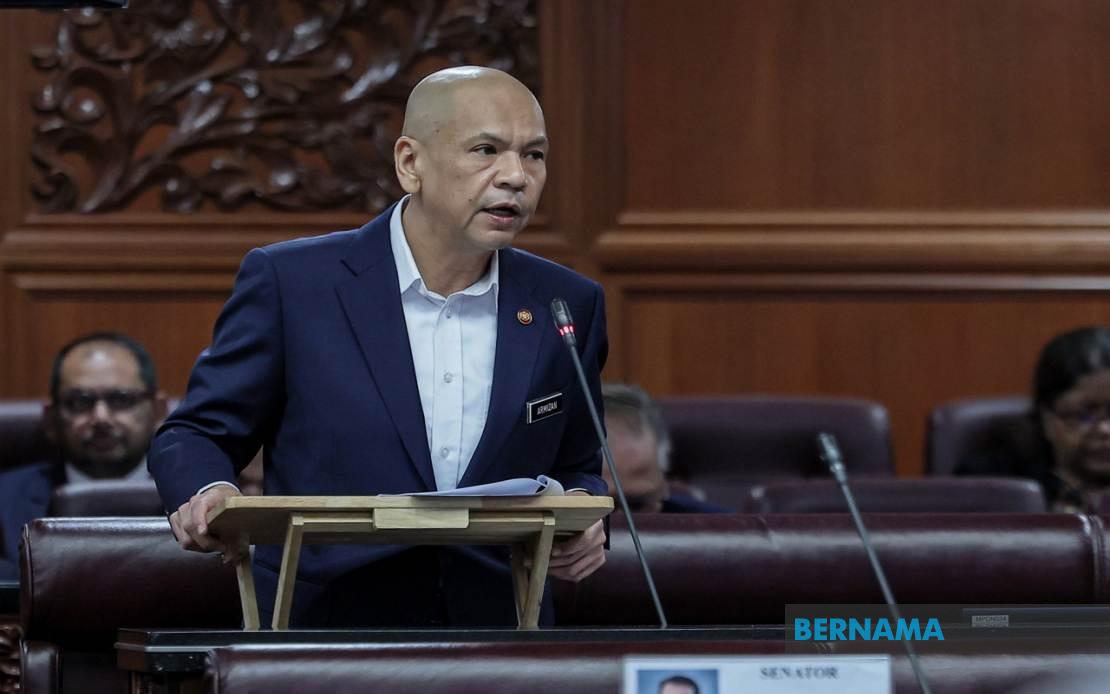
The Malaysian government has substantially expanded its consumer relief initiative, with the Ministry of Domestic Trade and Cost of Living reporting 15,881 Rahmah MADANI Sales Programme events conducted across the country during the first half of 2024. Minister Datuk Armizan Mohd Ali disclosed the figures in Parliament on June 30, underscoring the administration's commitment to bringing affordable goods and services directly to consumers nationwide as part of its broader economic support strategy.
The reach of this initiative is comprehensive, extending into the granular structure of Malaysia's electoral and administrative geography. Armizan confirmed that the programme has penetrated all 600 state constituencies whilst simultaneously maintaining presence in all 40 Federal Territory zones spanning Putrajaya, Kuala Lumpur, and Labuan. This universal coverage represents a deliberate strategy to ensure that no voter constituency or administrative zone remains without access to subsidised retail events, signalling the government's determination to translate cost-of-living pledges into tangible on-ground delivery across urban, suburban, and rural settings alike.
The trajectory of programme expansion reveals an accelerating implementation pattern that intensified markedly in 2024 and 2025. Comparative figures demonstrate the scaling-up effort: only 6,870 sessions occurred throughout 2023, but this doubled to 12,419 by 2024. Most dramatically, the programme is projected to reach 25,708 sessions in 2025. These numbers underscore a deliberate policy acceleration rather than incremental growth, reflecting heightened government attention to household purchasing power at a time when regional tensions and global supply chain disruptions have pressured inflation.
The original annual target established by planners was 23,040 sessions for 2025, but this ceiling was raised to 30,000 following Prime Minister Datuk Seri Anwar Ibrahim's announcement in May. This upward revision occurred in response to economic pressures stemming from what officials characterised as an "energy and supply crisis triggered by the West Asia conflict." For Malaysian consumers and regional observers, this recalibration signals that Putrajaya views the geopolitical volatility in West Asia as a direct economic threat to Malaysian households, necessitating expanded intervention beyond originally planned levels.
The government has adopted what Armizan termed five "strategic approaches" to institutionalise and professionalise the sales programme, moving it away from ad-hoc interventions toward permanent structural fixtures. The first pillar involves embedding the initiative directly into the annual national budget framework beginning in 2024, complete with dedicated activity codes and ringfenced funding allocations. This budgetary anchoring ensures the programme transcends electoral cycles and ministerial preferences, acquiring quasi-permanent status within government operations.
The second strategic element establishes mandatory annual scheduling and frequency targets for every constituency and zone. Armizan explicitly contrasted this disciplined approach with predecessor governments' irregular bargain sales, which were sporadic and unpredictable. By implementing predetermined calendars and frequency benchmarks, the current administration has converted a discretionary tool into an obligation with measurable accountability metrics. This systematisation matters for consumer planning and retail sector coordination alike.
Private-sector mobilisation forms the third pillar of the strategy. The government has actively enrolled 2,695 strategic retail partners as of late June, drawing from companies, businesses, and cooperative structures across the retail spectrum. This partnership architecture transforms government sales events from purely public-sector operations into public-private collaborations where commercial retailers gain promotional exposure and government extends its logistical reach. For Malaysian business stakeholders, this represents an opportunity to align commercial interests with government social objectives.
Distribution methodology constitutes the fourth strategic component, encompassing three distinct delivery channels: traditional in-store transactions, open-air market-style settings, and mobile sales units. The government has further layered temporal differentiation into this spatial distribution, timing events around festive seasons, paydays, and back-to-school periods. This multi-channel, multi-temporal approach acknowledges that Malaysian consumers occupy diverse geographic and economic situations—urban dwellers with regular access to retail outlets, rural populations requiring mobile outreach, and various groups with spending patterns tied to cyclical income and holiday calendars.
The fifth and most consumer-facing innovation is the introduction of a comprehensive Rahmah MADANI sales calendar commencing in 2025. This calendar provides advance notification of dates, times, and locations for every state constituency and Federal Territory zone, enabling households to plan purchasing strategies in anticipation of upcoming discounted events. For Malaysian families operating on tight budgets, this predictability represents a material advantage, allowing coordination of major purchases around known discount opportunities rather than discovering them opportunistically.
The political calculus underlying this expanded programme is evident but worth articulating. Cost of living ranks consistently among Malaysian voters' highest policy concerns in surveys and electoral feedback. The Rahmah MADANI initiative offers the government a visible, recurring mechanism to demonstrate responsiveness to household economic anxiety. Each sales event becomes a tangible touchpoint where citizens encounter government intervention at the retail counter, translating abstract budget allocations into concrete discounts on groceries, clothing, and household goods. For opposition critics, the programme represents government spending without addressing underlying inflation drivers; for the administration, it constitutes targeted relief whilst economic structural reforms proceed.
Regional observers noting Malaysia's approach may perceive broader lessons about government adaptation to supply chain disruption and inflationary pressure. Throughout Southeast Asia, governments have experimented with various consumer support mechanisms—direct cash transfers, fuel subsidies, price controls—with mixed effectiveness. Malaysia's Rahmah MADANI model emphasises institutional permanence, private-sector partnership, geographic universality, and consumer predictability rather than one-off interventions or blanket price regulation. Whether this model proves more sustainable than alternatives will interest policymakers across ASEAN grappling with similar cost-of-living pressures.
The expansion trajectory, moving from 12,419 sessions in 2024 toward targets exceeding 30,000 in 2025, suggests the government views this mechanism as foundational rather than temporary. The embedding within national budget structures, the establishment of permanent activity codes, and the publication of forward calendars all point toward institutionalisation. This commitment may reflect genuine belief in the programme's effectiveness, electoral calculation regarding consumer sentiment, or both. Regardless, Malaysian households and retailers can reasonably expect the Rahmah MADANI Sales Programme to persist as a recurring feature of the economic landscape throughout the medium term.

