Singapore's nascent SG Partnerships Fund, announced during Prime Minister Lawrence Wong's February 2026 Budget speech and formally launched in April that year, has become an unexpected magnet for grassroots innovation. More than 200 community organisations and individual entrepreneurs have submitted applications to tap into the S$50 million pool, which represents a significant government investment in bottom-up problem-solving. The initiative reflects a shifting policy emphasis toward empowering citizens to identify and tackle social challenges within their own neighbourhoods, rather than relying solely on established institutions.
The fund operates through a three-tiered architecture designed to accommodate projects at various stages of maturity and ambition. The seed tier, offering grants of up to S$5,000, targets individuals, newly formed groups, and Singapore-registered organisations launching their first community initiatives. The sprout tier provides up to S$50,000 to established organisations pursuing sector-wide impact, while the newer scale tier, introduced in July 2026, supports mature organisations seeking to expand their reach with grants reaching S$1 million. This graduated approach has proven particularly effective at lowering barriers to entry, encouraging citizens without prior funding experience to design and execute localised solutions to community problems.
According to Hasliza Ahmad, director of the Singapore Government Partnerships Office (SGPO), which administers the fund, the seed tier has emerged as the most popular category among applicants. The appeal lies in its accessibility and intentional modesty—the message to potential grantees emphasises that transformative change does not require massive budgets or elaborate infrastructure. This democratisation of social innovation aligns with broader trends across Southeast Asia, where smaller nations and wealthy city-states are experimenting with mechanisms to harness citizen creativity and reduce the administrative friction that often prevents good ideas from reaching implementation.
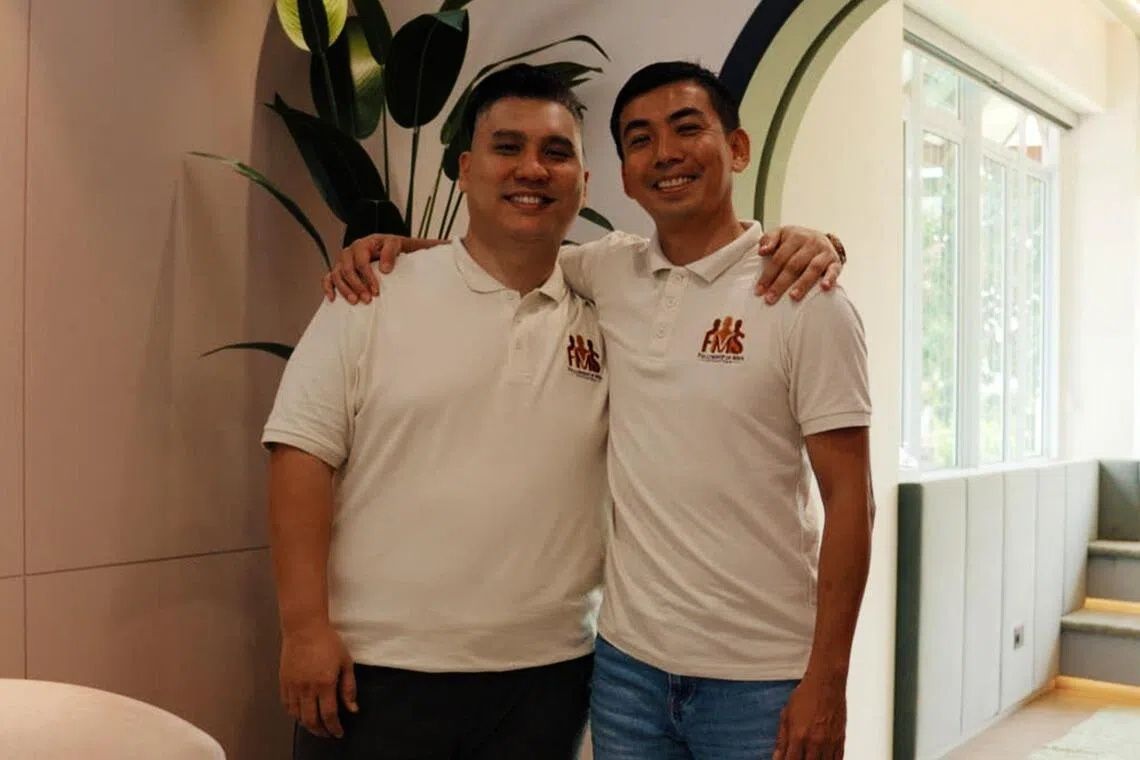
One compelling example of the fund's impact involves Fellows for Movement Singapore, a non-profit launched in January 2026 by Ben Ang, 45, and Ismail Didih Ibrahim, 41. The two men met five years earlier at a family service centre, where they observed that men struggling with violence and aggression often avoided seeking professional help. Rather than focusing on crisis intervention after harm occurred, they pivoted toward prevention through community engagement and mentoring. Ang previously directed the family service centre, while Didih had volunteered there while running Japanese and nasi padang food stalls. Their realisation that prevention supersedes crisis management prompted both to leave stable employment and formalise their vision.
Fellows for Movement Singapore operates through community engagement sessions, mentoring relationships, and group work that blends practical activities with structured conversations. The organisation targets men who might find formal therapy or counselling intimidating or culturally uncomfortable. By creating relatable entry points—such as cooking sessions that double as spaces for discussing masculinity, self-care, and emotional vulnerability—the initiative challenges narrow definitions of manhood that discourage help-seeking behaviour. With a S$5,000 seed grant, Ang and Didih hosted a three-hour engagement session at a professional culinary school in Geylang, involving 24 men alongside their wives and children. The event would have been impossible without external funding, as it previously relied on Ang's home kitchen and the founders' personal resources.
The ambitions of Ang and Didih extend beyond their initial seed grant success. They envision scaling Fellows for Movement Singapore into a broader social movement, with plans to pursue additional funding to reach more men and normalise help-seeking as a marker of strength rather than weakness. This trajectory illustrates how the SG Partnerships Fund operates not merely as a one-time disbursement mechanism but as a launch pad for sustainable social enterprises that can grow and evolve. For Malaysian observers, this model demonstrates how tiered funding structures can unlock entrepreneurial energy within communities, a lesson potentially relevant as Malaysia explores its own grassroots development agendas.
Another seed grant recipient exemplifies the fund's capacity to amplify youth-led innovation. Loke Wai Yee, a 21-year-old student at LASALLE College of the Arts, identified a gap in Singapore's annual angel tree programme, in which children from disadvantaged backgrounds hang Christmas wish lists on trees in shopping malls. Loke observed that the trees concentrated in certain affluent areas, effectively excluding many economically vulnerable children. Additionally, the programme's focus on expensive gifts deterred younger donors and those with limited disposable income from participating in gift-giving.
Loke partnered with twelve friends to establish Little Wishes, an online platform designed to democratise charitable giving. The S$5,000 seed grant enabled the team to hire a professional web developer, transforming what would have been an amateur, self-built site into a polished, user-friendly platform scheduled to launch in August 2026. Donors can select gifts within their chosen budget range from a curated collection, and the system matches their contributions to specific child beneficiaries. This innovation removes the psychological and logistical barriers that previously limited participation in charitable giving, making generosity accessible to students and others with modest financial resources.
The SGPO has deliberately positioned itself as more than a grant-dispensing bureaucracy. Beyond providing funding, the office facilitates network connections between grant recipients and established social service agencies, shares information about complementary funding sources, and offers ongoing mentorship. In the case of Little Wishes, this ecosystem support proved invaluable, helping the young founders navigate practical challenges and providing strategic guidance as they transformed a passion project into operational reality. Such holistic support mechanisms distinguish the SG Partnerships Fund from purely transactional funding models and reflect recognition that social innovation requires not just capital but also relational infrastructure.
For regional policymakers in Malaysia and across Southeast Asia, Singapore's experience with the SG Partnerships Fund offers instructive lessons about scaling citizen-driven development. The fund demonstrates that even wealthy, well-resourced governments can benefit from creating pathways for grassroots problem-solving, particularly on social issues that resist one-size-fits-all institutional solutions. The tiered grant structure removes intimidation factors that often prevent individuals with limited prior experience from accessing public resources, while the SGPO's accompanying support services ensure that funding translates into genuine community impact rather than becoming administratively burdensome.
The significance of attracting over 200 applications within months of launch suggests that appetite for grassroots funding exists widely among citizens, and that removing procedural barriers can unlock considerable creative energy. As Singapore's SG Partnerships Fund matures and distributes grants across its three tiers, outcomes will reveal whether this model effectively addresses community needs, nurtures sustainable social enterprises, and builds citizen agency. For Malaysia, where many communities face distinct social challenges—including male mental health and support for disadvantaged youth—studying how Singapore's approach succeeds or encounters obstacles could inform the design of complementary domestic initiatives, potentially unlocking similar grassroots innovation within Malaysian communities seeking to improve lives at the neighbourhood level.

