Security personnel and their families in Negeri Sembilan will head to the polls four days ahead of the general election day, with the Election Commission facilitating early voting for a combined force of military and police officers. A total of 16,884 military personnel and their spouses, alongside 5,455 police personnel and their spouses, have been registered to participate in advance voting tomorrow, bringing the overall tally to 22,339 eligible voters from the security sector. This early voting mechanism, a standard practice during state and general elections in Malaysia, allows uniformed personnel to discharge their civic duties without disrupting operational readiness across the state.
The Election Commission has strategically distributed 38 early polling stations throughout Negeri Sembilan, with all venues opening uniformly at 8 am to ensure accessibility and fairness across the voting exercise. Closing times will vary depending on each centre's location and operational requirements. Key facilities hosting the early voting include the Army Basic Training Centre at Port Dickson, the Negeri Sembilan Contingent Police Headquarters and Sendayan Air Base in Seremban, as well as the Nilai District Police Headquarters, covering major population centres and military installations across the state.
Weather conditions may pose some challenges for voters tomorrow morning. The Malaysian Meteorological Department has forecast mostly clear skies for most areas of Negeri Sembilan during early hours, though Port Dickson faces a significant risk of heavy rain and thunderstorms. The forecast deteriorates considerably in the afternoon, when heavy rainfall is anticipated to spread across nearly the entire state. Voters are advised to arrive at their designated centres early to avoid disruptions from the expected wet weather.
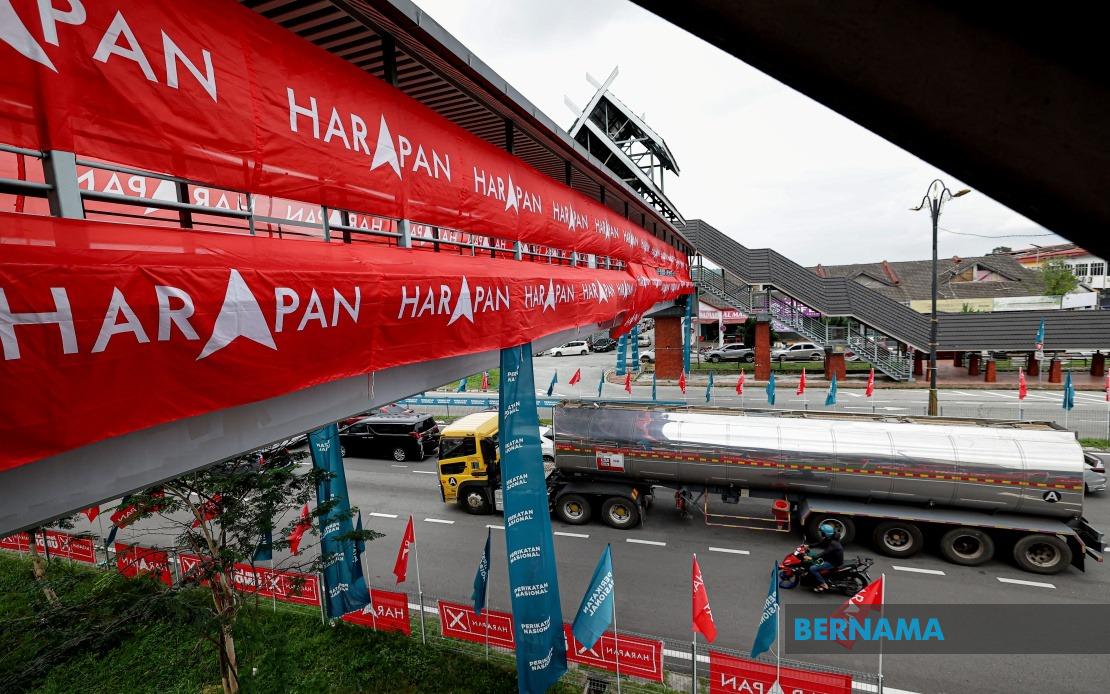
The August 1 general election in Negeri Sembilan represents a competitive three-cornered battle among the major political coalitions, with 103 candidates in total seeking the 36 available state assembly seats. Pakatan Harapan has mounted an across-the-board campaign, fielding candidates in every constituency with a composition of 16 from PKR, 11 from DAP, and nine from Amanah, reflecting the coalition's united approach to reclaiming ground in the state.
Barisan Nasional is adopting a more selective strategy, contesting 25 of the 36 seats through a coalition that includes 16 UMNO candidates, seven from MCA, and two from MIC. This measured approach suggests a consolidation of forces on battleground constituencies where BN calculations indicate competitive prospects. Meanwhile, Perikatan Nasional has fielded 11 candidates comprising five from PAS, four from Parti Wawasan Negara, and one each from Gerakan and the Malaysian Indian People Party, indicating a focused campaign strategy aimed at specific constituencies.
The political landscape has become increasingly fractionalised with the emergence of independent and smaller party candidacies. Bersatu, contesting independently following its departure from the Perikatan alignment in certain contexts, has fielded 24 candidates across the state, a significant presence that could fragment votes in multiple constituencies and potentially influence final outcomes. Parti Orang Asli Malaysia and Parti Sosialis Malaysia each have single candidate representation, while Parti Barisan Jemaah Islamiah Se-Malaysia has fielded seven candidates, reflecting the growing participation of niche political players in Malaysian electoral contests.
The dissolution of the Negeri Sembilan State Legislative Assembly on June 5 initiated the electoral calendar, with the Election Commission setting August 1 as polling day. This timeframe provides candidates and political parties approximately two months for campaigning and voter engagement, a period that has already witnessed intensive grassroots activities across all 36 constituencies. The concentration of electoral activity during the monsoon season presents logistical challenges for both election administrators and campaign teams.
For Malaysian observers and political analysts, the Negeri Sembilan election carries wider significance beyond state-level implications. The results will provide crucial indicators of voter sentiment in a strategically located state that borders both Kuala Lumpur and Selangor, serving as a bellwether for broader peninsular political trends. The performance of Pakatan Harapan, Barisan Nasional, and Perikatan Nasional in this contest may offer insights into voter preferences and coalition dynamics as the nation approaches future electoral cycles.
The early voting mechanism for security personnel reflects Malaysia's commitment to inclusive democratic participation while maintaining institutional readiness. By enabling military and police personnel to vote several days before the general election, authorities ensure that operational capacity remains uncompromised during the crucial election day itself. This arrangement has become standard practice across Malaysian elections and demonstrates the institutional maturity of the Election Commission in balancing democratic rights with administrative and security considerations.
The substantial number of security personnel registered for early voting—over 22,000 individuals—underscores the significant size of the military and police establishment in Negeri Sembilan, a state with important defence and security infrastructure including major military training facilities and police contingent operations. This demographic represents a meaningful proportion of the overall eligible voter population and, depending on partisan alignment, could influence final election outcomes in closely contested constituencies. Political parties have historically invested considerable effort in appealing to security sector voters, recognising both their numbers and the symbolic importance of military and police backing in Malaysian politics.

