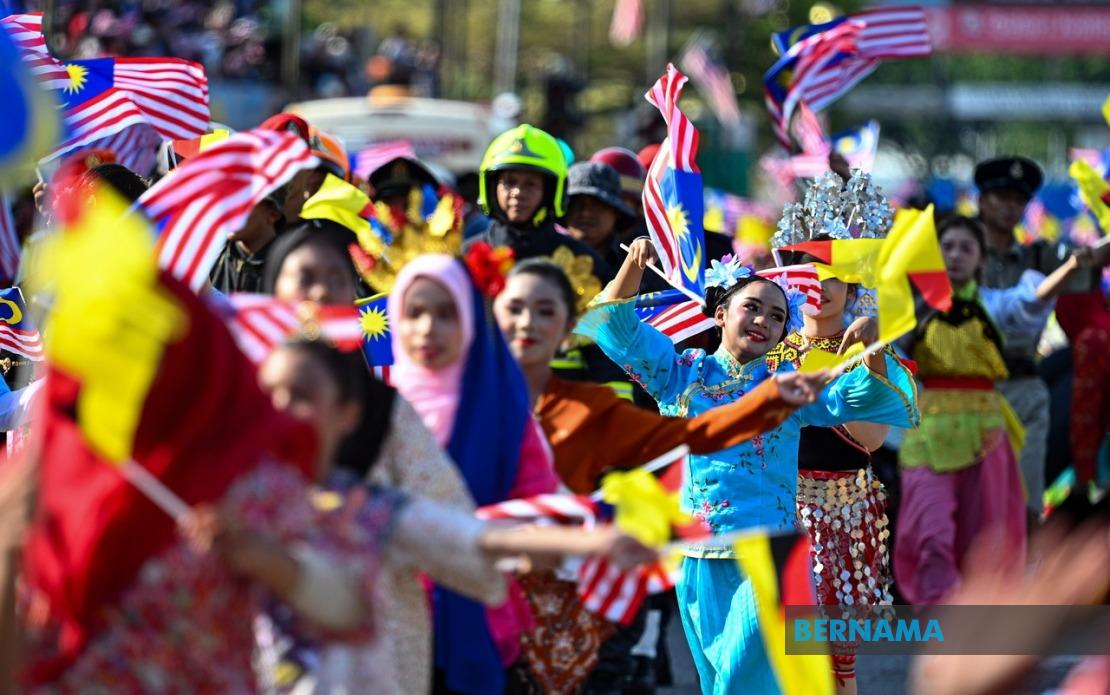
The Negeri Sembilan National Day celebration held in Seremban on August 31 drew a crowd of more than 30,000 people from diverse ethnic and social backgrounds, turning the Dataran Majlis Bandaraya Seremban into a sea of residents united in celebration. The impressive attendance, which began filling the venue before dawn, underscored the enduring appeal of Malaysia's independence commemoration as a moment for public gathering and shared national identity across the state's communities.
Menteri Besar Datuk Ismail Lasim attributed the strong turnout to genuine public enthusiasm for the occasion, noting that many visitors had arrived as early as 5.30 am to secure vantage points. This early surge reflects a consistent pattern observed during National Day events across Malaysia, where families prioritize attendance to participate in what remains one of the nation's most important civic celebrations. The visible commitment to being present—arriving hours before proceedings began—signals that the occasion continues to resonate emotionally with ordinary Malaysians seeking to reaffirm their connection to the nation's history and values.
While the 2026 event maintained the celebratory spirit characteristic of National Day, organizers made deliberate decisions about its scale that warrant consideration. The parade featured 82 contingents representing more than 4,000 participants drawn from government bodies, statutory agencies, district offices, non-governmental organizations, educational institutions, and private sector companies. Despite this substantial number, officials consciously reduced the number of military assets and parade elements compared to previous years, citing concerns about potential health impacts from regional haze conditions. This measured approach reflects growing awareness among Malaysian event organizers of climate and air quality challenges that increasingly shape planning decisions for large outdoor gatherings in Southeast Asia.
The ceremonial elements of the parade maintained traditional military grandeur, with the Main Guard of Honour drawn from the 15th Battalion Royal Malay Regiment stationed in Senawang. Led by Major Dr Muhammad Hazim Abdul Qhalib, the contingent comprised three officers and 103 other ranks, establishing the formal military presence essential to National Day pageantry. The combined brass band from the 24th Battalion and the Malaysian Army Basic Training Centre provided musical accompaniment, performing classical military marching pieces that have anchored such celebrations for decades.
Beyond conventional military parades, the celebration featured vehicles of historical significance and decorative displays that captured public attention throughout the event. Vintage motorcars and restored bicycles shared parade space with contemporary security and defence assets from the Malaysian Armed Forces, Royal Malaysia Police, Immigration Department, Fire and Rescue Department, Health Ministry, Malaysian Civil Defence Force, and the local Seremban City Council. This blending of historical and modern elements serves a dual purpose: honoring Malaysia's independence struggle while showcasing the contemporary institutions that sustain the nation.
The attendance of Tuanku Muhriz Tuanku Munawir, the Yang Dipertuan Besar of Negeri Sembilan, and Tunku Ampuan Besar Tuanku Aishah Rohani Tengku Besar Mahmud underscored the state-level significance of the event. Their arrival at approximately 8.20 am and reception by Ismail reinforced the constitutional importance accorded to National Day observances by Malaysia's hereditary rulers, connecting local celebrations to the broader national ceremonial framework. This institutional presence validates the occasion as more than casual festivity, positioning it as formal recognition of the nation's founding principles.
Among the tens of thousands of attendees were families who have established National Day participation as generational practice. Siti Ruayiza Rebin, a 42-year-old housewife, explained that she has consistently brought her three children, now aged 19, 15, and 12, to such celebrations since their infancy. For her, the practice serves an educational function, deliberately exposing younger Malaysians to independence commemorations to foster appreciation for historical struggles and earlier generations' sacrifices. This intergenerational transmission of patriotic observance represents how National Day operates beyond mere spectacle, functioning as mechanism through which families consciously impart national consciousness to children.
Another attendee, Mohd Khairul Azmi, a 45-year-old private sector employee, brought his young children specifically to witness military assets and vintage vehicles rarely displayed publicly. His family arrived at 6 am to secure optimal viewing positions, demonstrating the logistical commitment families invest in these celebrations. He articulated how such events serve pedagogical purposes, helping children understand historical context and appreciate institutional contributions to national development. For working parents navigating busy schedules, National Day celebrations represent designated occasions for bridging educational gaps and fostering children's connection to national narrative.
The diversity of participating organizations—spanning defence forces, health services, immigration authorities, and private companies—illustrates how National Day celebrations function as comprehensive showcases of Malaysian institutional life. This broad representation reinforces the concept that independence and national development are not solely military or government achievements, but rather collective undertakings spanning public and private sectors. For residents of smaller states like Negeri Sembilan, such inclusive participation demonstrates how national narrative operates through local implementation and community engagement.
Menteri Besar Ismail's comments regarding haze concerns and the decision to moderate parade elements reflect pragmatic recognition of environmental realities increasingly shaping event planning across Southeast Asia. As regional air quality fluctuates seasonally and climate patterns shift, Malaysian organizers must balance tradition with public health considerations. This adaptive approach, while reducing parade grandeur, demonstrates institutional responsiveness to contemporary challenges that previous generations did not face during earlier National Day celebrations.
The Negeri Sembilan event's success, measured through both attendance figures and community participation, suggests that National Day celebrations retain significant cultural resonance in Malaysian society despite social media proliferation and competing leisure options. For a state capital like Seremban, the occasion provides opportunity for civic leaders to reinforce local identity within national framework, for families to practice shared patriotic expression, and for institutions to demonstrate their service to communities. The 30,000-strong gathering ultimately reflects Malaysian society's continued investment in maintaining public ceremonies that commemorate collective national origin and shared identity across diverse populations.

