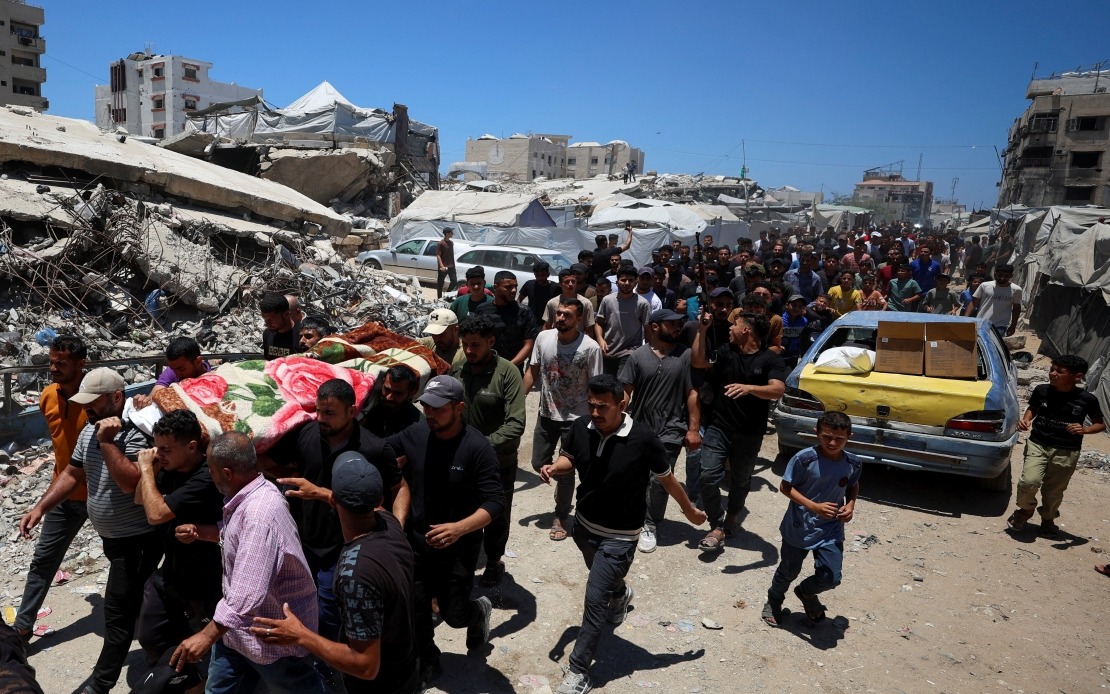
The humanitarian catastrophe unfolding in Gaza has reached unprecedented proportions, with the Palestinian Prime Minister's Office documenting 1,021 additional deaths since the ceasefire came into effect. This grim figure brings the cumulative death toll in the enclave to 73,032 since the conflict escalated in October 2023. The situation on the ground remains dire despite the nominal ceasefire arrangement, with Israeli military operations persisting through airstrikes and drone attacks, particularly targeting populated areas including Nuseirat, Al-Mawasi, Khan Younis and Gaza City.
The destruction of civilian infrastructure has created one of the world's most acute displacement crises. Nearly one million Palestinians are now sheltering in makeshift tent camps following the devastation of residential areas, with Israeli operations having destroyed or severely damaged approximately 76.6 per cent of Gaza's total housing stock. This massive loss of shelter compounds an already dire situation where survivors face acute shortages of essential resources. Access to clean drinking water remains severely restricted, leaving most residents dependent on whatever humanitarian assistance manages to reach them—itself increasingly limited by ongoing operational constraints.
Children have borne a disproportionate burden in this conflict. Data from UNICEF indicates that 265 Palestinian children have lost their lives since the ceasefire announcement, with more than 400 others sustaining injuries. These figures underscore the indiscriminate nature of the violence affecting all segments of Gaza's civilian population. The psychological and developmental impact on this generation of children will extend far beyond the immediate crisis, shaping long-term prospects for an entire cohort unable to access basic education or healthcare services.
Humanitarian organisations operating in the region have raised urgent alarms about systematic obstruction of aid delivery. Oxfam's testimony to the United Nations Security Council documented how Israeli restrictions continue to prevent life-saving assistance from reaching those most in need. The combination of movement restrictions, checkpoint systems, and operational military control effectively locks down the territory, creating a bottleneck that transforms a desperate humanitarian situation into an escalating emergency. International bodies monitoring these developments have repeatedly warned that such access restrictions violate international humanitarian law.
Beyond Gaza's borders, the occupied West Bank and East Jerusalem face intensifying pressures from displacement and security operations. The Office of the United Nations High Commissioner for Human Rights has documented a dramatic surge in forced displacements driven by settler violence, military home demolitions, movement restrictions and evictions. These interconnected mechanisms of displacement reflect a broader pattern affecting Palestinians across multiple territories simultaneously, stretching existing coping mechanisms and overwhelming local governance structures.
Agricultural devastation has compounded economic hardship across Palestinian territories. The Ministry of Agriculture has meticulously documented the destruction of 7,258 trees destroyed by Israeli settlers and occupation forces, including 1,270 irreplaceable olive trees that represent centuries of agricultural inheritance. The estimated financial losses from such destruction amount to approximately US$5.17 million, a figure that masks the deeper cultural and food security implications of destroying productive agricultural assets. Recent arson attacks targeting mosques in Jiljilya and Mazra' al-Nubani further demonstrate the escalating nature of communal tensions affecting civilian spaces.
Military operations concentrated in refugee camps have created secondary waves of displacement. Israeli operations since January 2025 in the camps of Jenin, Tulkarem and Nour Shams have forcibly displaced more than 33,000 Palestinians, many of whom had already been displaced in previous conflicts. This cyclical displacement pattern traps vulnerable populations in perpetual instability, making economic recovery and family stabilisation virtually impossible. The concentration of operations in refugee areas suggests systematic targeting of established Palestinian population centres.
Detention conditions have deteriorated substantially, according to Palestinian prisoners' institutions monitoring the situation. Overcrowding in Israeli detention facilities, combined with inadequate sanitation and medical care, has created environments conducive to disease transmission. These conditions raise serious concerns about compliance with international standards governing the treatment of detainees, particularly regarding vulnerable populations including minors and individuals with pre-existing medical conditions. The psychological toll of indefinite detention without clear legal frameworks compounds the broader security crisis.
Despite the overwhelming challenges surrounding them, Palestinian educational institutions have undertaken extraordinary efforts to maintain learning continuity. The Palestinian government has completed preparations for this year's General Secondary Education Examination, an undertaking involving approximately 91,000 students across Palestinian territories. Notably, around 37,000 students in Gaza are conducting examinations electronically for the third consecutive year, adapting to circumstances where traditional classroom learning remains impossible. This determination to preserve educational opportunity even amid conflict demonstrates resilience, though the interruption to normal schooling portends significant educational deficits affecting long-term human capital development.
The cascading crises across Gaza and Palestinian territories present a complex challenge for regional stability and international humanitarian frameworks. Malaysia, as a significant voice in the Organisation of Islamic Cooperation and a strong advocate for Palestinian rights in multilateral forums, faces ongoing pressure to articulate principled responses to documented violations. The situation underscores how unresolved territorial disputes directly translate into humanitarian emergencies affecting millions of civilians, with ripple effects extending throughout the region. Without sustainable political resolution, the humanitarian interventions currently attempted will remain perpetually inadequate to the scale of need.