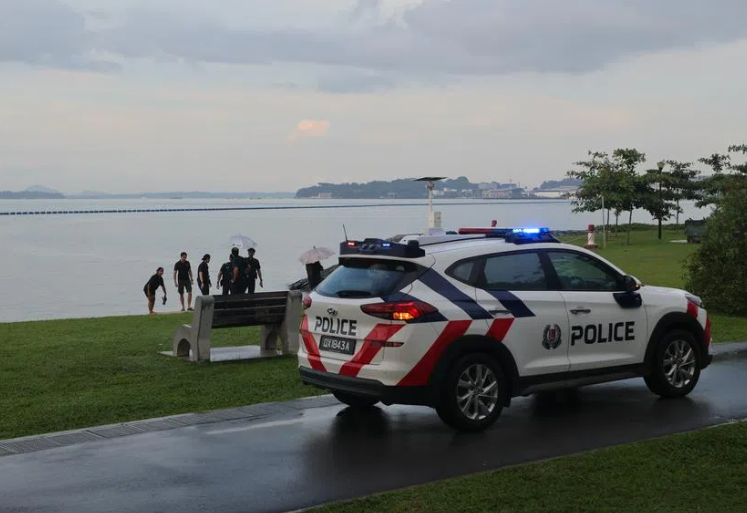
A recreational paddleboarder has died after being struck by lightning while in the water off Pasir Ris Beach in Singapore on Sunday, July 5, marking a tragic reminder of the dangers posed by electrical storms in the tropical region. The victim, a 24-year-old man, was unconscious when he was transported to hospital and subsequently succumbed to his injuries. Six other individuals ranging in age from 13 to 54 years old were also struck or affected by the electrical discharge and were conscious when taken to medical facilities, according to police statements released on July 6.
Emergency services responded to an alert received at approximately 4.50pm at 131 Pasir Ris Road on the day of the incident. The Singapore Civil Defence Force transported five people, including one who was unconscious, to Sengkang General Hospital, while two younger victims were admitted to KK Women's and Children's Hospital. The group had been engaged in kayaking and paddleboarding activities at the beach when the lightning struck, according to accounts from witnesses and reporting by Chinese-language media. Police investigators have found no evidence of criminal activity or foul play in connection with the deaths and injuries, with preliminary inquiries suggesting the incident was purely accidental.
Eyewitness accounts paint a vivid picture of how swiftly the disaster unfolded. Muhammad Fairuz, a 40-year-old delivery rider who was fishing nearby, observed that the paddleboarders and kayakers were approximately 100 metres from the shore shortly after 4pm when the lightning bolt struck the water. Despite clear skies in the immediate vicinity, the electrical discharge was sudden and powerful. Fairuz reported feeling the electrical current travel through his own fishing rod, underscoring the intensity of the strike and its radius of effect. He witnessed a member of the group lying unconscious on a paddleboard while his companions rapidly paddled their kayaks back towards shore in panic.
Rather than remaining a passive observer, Fairuz and another man on the beach took their own kayaks out into the water to mount an emergency rescue effort. They managed to retrieve the unconscious paddleboarder and bring him back to land, where emergency services personnel were already mobilising. Video footage captured around 5.10pm by an eyewitness shows Singapore Civil Defence Force officers performing chest compressions on the victim at a grassy area adjacent to the beach, with a Light Fire Attack Vehicle and ambulance positioned on a nearby pathway. Despite immediate resuscitation attempts, the man's injuries from the lightning strike proved fatal.
Lightning incidents, while relatively infrequent in absolute terms, represent an ongoing occupational and recreational hazard in Singapore and throughout Southeast Asia. The Meteorological Service Singapore's records indicate that the city-state experiences an average of 176 lightning days annually, defined as days when at least one lightning occurrence is detected at the Changi climate station. This figure underscores the regular threat posed by electrical storms in the tropical maritime environment, where atmospheric conditions frequently favour thunderstorm development, particularly during the monsoon seasons. The high humidity and warm sea temperatures characteristic of equatorial regions create ideal conditions for convective activity and associated lightning generation.
This fatality is not an isolated incident within Singapore's recent history. In May of this year, a fish farm worker died following a lightning strike at his workplace, demonstrating that vulnerability to such strikes extends across both recreational and occupational contexts. Additionally, three workers were hospitalised in December 2023 after lightning struck near their worksite, indicating multiple incidents within a relatively compact timeframe. These recurring incidents highlight the need for heightened awareness and precautionary measures among both workers and recreational users of outdoor spaces during weather conditions conducive to thunderstorm formation.
For Malaysian and Southeast Asian readers, this tragedy carries particular resonance given the region's exposure to similar meteorological hazards. The monsoon seasons bring regular thunderstorm activity across the Malay Peninsula, Borneo, and surrounding waters, creating comparable risks for swimmers, water sports enthusiasts, fishermen, and outdoor workers. The incident at Pasir Ris Beach serves as a cautionary tale about the lethal potential of lightning, which can strike with minimal warning even under seemingly clear conditions in localised areas. The rapid escalation from a routine recreational activity to a life-threatening emergency within minutes illustrates why public awareness and preparedness are critical.
Authorities in Singapore and throughout the region would benefit from renewed public education campaigns regarding lightning safety protocols. Swimmers, paddleboarders, kayakers, and fishermen should understand the warning signs of approaching thunderstorms and the appropriate response procedures, including prompt evacuation from water to sheltered areas. Coastal and water-based communities, in particular, face elevated risk due to the conductivity of saltwater and the exposure inherent in their activities. Weather monitoring systems and alert mechanisms require continuous improvement to provide timely warnings before dangerous electrical storms develop. Training in emergency response and first aid, as demonstrated by the quick actions of Fairuz and his companion, can mean the difference between survival and tragedy.
The investigation into the Pasir Ris Beach incident remains ongoing, though police have indicated that the primary cause appears to be accidental electrocution from a natural weather phenomenon rather than any criminal element. The survivors' recovery trajectories will be closely monitored, as lightning strike injuries can result in long-term neurological, cardiac, and musculoskeletal complications even among those who survive the initial discharge. The death of the 24-year-old victim represents a sobering conclusion to what began as an ordinary Sunday afternoon of outdoor recreation, serving as a stark reminder of the formidable power of natural forces and the importance of weather vigilance in tropical and subtropical environments.

