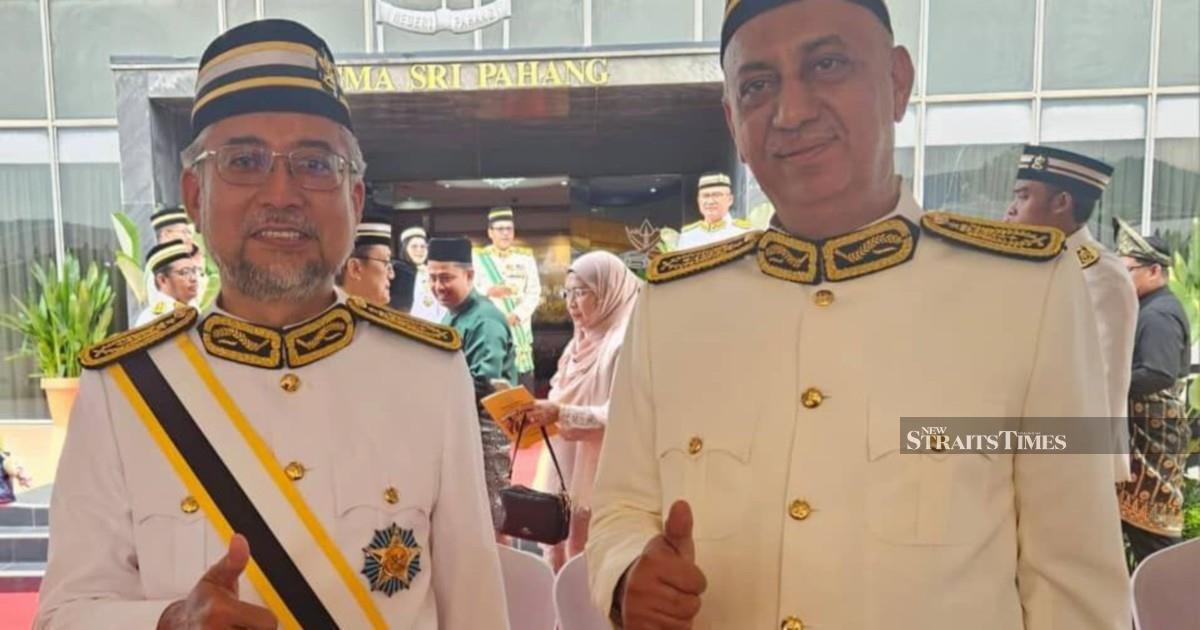
Two assemblymen from the Bersatu component in Pahang have publicly reaffirmed their commitment to Menteri Besar Datuk Seri Wan Rosdy Wan Ismail, signalling their intention to remain loyal to his leadership through the forthcoming 16th state election. The declaration, made in Kuantan, underscores the continued backing the state administration enjoys within its own coalition ranks, a development that carries implications for the stability of Pahang's political landscape as the state heads toward electoral contests.
The renewal of support from the two elected representatives adds weight to Wan Rosdy's hold over his administration at a time when coalition dynamics across Malaysia remain fluid. In the increasingly complex terrain of Malaysian state politics, such public endorsements serve multiple purposes: they reinforce internal party discipline, demonstrate unified messaging to constituents, and project an image of governmental continuity to investors and development partners. For Pahang specifically, this affirmation suggests the Bersatu faction intends to maintain its cohesion rather than fragment along the factional lines that have characterised Malaysian politics in recent years.
Wan Rosdy's tenure as Menteri Besar has navigated a series of political complexities inherent to Pahang's position as a strategically important state on Malaysia's east coast. The state economy depends significantly on agriculture, mining, and tourism, sectors that require sustained policy attention and inter-departmental coordination. Assemblymen pledging continuity of support effectively commit to backing infrastructure projects, rural development initiatives, and commercial policies that may span multiple legislative cycles. This long-term perspective is essential in a state where constituency development often requires phased implementation and sustained resource allocation.
Bersatu's political positioning within Pahang reflects broader national trends. The party has faced significant pressures since its founding, experiencing both internal schisms and external realignments that have tested member loyalty across various state administrations. Pahang remains one of the states where Bersatu maintains meaningful representation, making these declarations of support particularly noteworthy as indicators of the party's internal stability at the grassroots level. The assemblymen's pledge suggests confidence in current leadership rather than jostling for succession or repositioning that might otherwise characterise coalition dynamics.
The significance of this development extends beyond ceremonial party politics. In Malaysian state governments, menteri besar require consistent legislative support to pass budgets, enact laws, and implement policy initiatives. Even with nominal majority control, losing support from key assemblymen can complicate governance, delay projects, or force compromises on policy priorities. The explicit commitment from two Bersatu representatives removes potential uncertainty regarding Wan Rosdy's operational capacity to govern effectively. For Pahang residents, this translates to reduced risk of administrative paralysis or prolonged political uncertainty that could disrupt service delivery or economic development efforts.
The declaration arrives at a moment when Malaysian politics continues experiencing realignments and recalibrations following recent electoral cycles. State governments have become increasingly important as federal structures evolve, and menteri besar have gained prominence as key decision-makers in their respective spheres. Pahang, with its significant rural population and resource-based economy, requires steady governance frameworks to maintain investor confidence and execute development plans. Assemblymen publicly pledging support contribute to the stability signals that development-dependent states require to attract and retain economic activity.
For Malaysian readers, particularly those in Peninsular Malaysia, the stability of state governments directly impacts resource allocation for their constituencies. Menteri besar control significant budgets for rural roads, school facilities, agricultural development schemes, and social programmes. When assemblymen pledge support for a particular menteri besar, they implicitly commit to supporting spending priorities and policy frameworks that leader favours. In Pahang's context, where constituencies span urban Kuantan, rural interior regions, and agricultural zones, such commitments affect the distribution of development benefits across diverse communities.
The political calendar leading toward the 16th state election necessarily shapes current coalition behaviour. Parties and individual politicians must calibrate their positioning carefully, as premature power struggles or visible disloyalty can damage electoral prospects. Bersatu's two assemblymen, by publicly backing Wan Rosdy, position themselves as loyal coalition members likely to receive party support during future elections. Conversely, their pledge reinforces Wan Rosdy's electoral credibility, suggesting internal party confidence in his stewardship that voters might interpret positively. This interplay between electoral calculation and genuine administrative support characterises Malaysian state politics.
Moving forward, observers of Pahang politics will likely scrutinise whether this pledged support translates into cohesive legislative voting patterns and unified campaign efforts. The proximity of the 16th state election means these commitments will face practical testing through budget approvals, policy votes, and campaign coordination. Should the Bersatu assemblymen maintain consistent backing, Wan Rosdy's administration would enter electoral contests from a position of apparent internal strength. Conversely, any subsequent shift in these positions would signal underlying tensions requiring attention from party leadership. For now, however, the Kuantan declaration represents a stabilising moment in Pahang's political trajectory, offering temporary clarity regarding coalition alignment and administrative continuity through the next electoral cycle.

