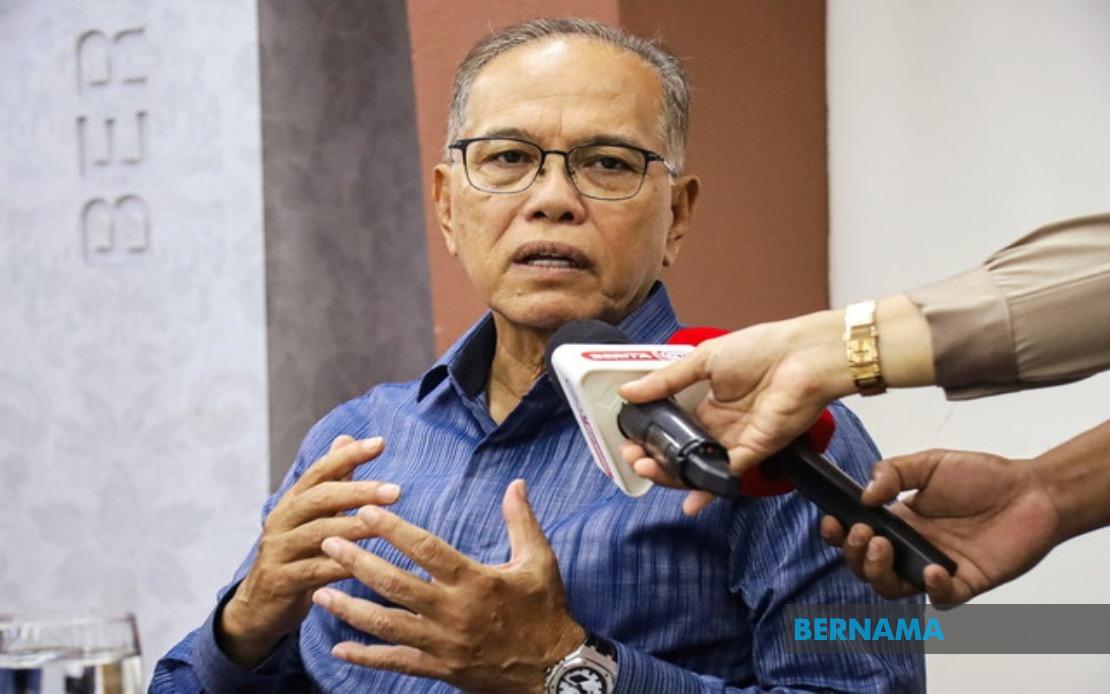
Datuk Seri Wan Rosdy Wan Ismail, chairman of Pahang's Barisan Nasional chapter and the state's Menteri Besar, has reaffirmed his administration's determination to preserve the power-sharing arrangement with Pakatan Harapan until the 16th General Election (GE16). Speaking in Kuantan, Wan Rosdy indicated that the coalition governing Pahang would maintain its current structure while continuing to prioritise public welfare and development initiatives across the state.
The commitment represents a significant statement in Malaysia's fractious political landscape, where coalitions at both federal and state levels have faced considerable strain in recent years. Pahang's Unity Government stands as a notable example of BN and PH collaboration, an arrangement that has evolved considerably since its inception. By publicly reiterating this commitment, Wan Rosdy is signalling stability to both his coalition partners and the electorate, suggesting that despite broader political volatility elsewhere in the country, Pahang's governing structure enjoys sufficient consensus to weather internal disagreements until voters next go to the polls.
The current Pahang configuration emerged following the 15th General Election (GE15), where neither major political force secured absolute control of the state legislature. Barisan Nasional and Perikatan Nasional each claimed 17 seats in the Pahang Legislative Assembly, whilst Pakatan Harapan secured eight of the chamber's 42 seats. This fractured outcome necessitated creative political architecture, leading the Regent, Tengku Hassanal Ibrahim Alam Shah Al-Sultan Abdullah Ri'ayatuddin Al-Mustafa Billah Shah, to consent to BN and PH forming a joint administration when Wan Rosdy was appointed as Chief Minister on 27 November 2022.
Wan Rosdy's statement appears carefully calibrated to address concerns within both partner parties about the coalition's longevity. The Menteri Besar explicitly indicated that discussions regarding the partnership's future would continue, though his hope that the Unity Government would remain intact until GE16 was unmistakable. This language suggests active ongoing negotiations within the coalition, reflecting the reality that such arrangements require constant attention to hold competing interests together. The willingness to discuss mechanisms for sustaining the partnership signals pragmatism on both sides, rather than rigid adherence to current arrangements.
Beyond the immediate question of coalition sustainability, Wan Rosdy indicated Pahang BN's openness to exploring additional partnerships as the state prepares for the next general election. This flexibility hints at strategic positioning for GE16, suggesting that whilst the current BN-PH arrangement may continue, the state leadership is not foreclosing possibilities for broader alliances. For Malaysian readers, this demonstrates how state-level politics often operate with greater fluidity than federal arrangements, where leaders must balance loyalty to national party positions with the pragmatic demands of maintaining governmental majorities in their own territories.
The Menteri Besar used the occasion of officiating the 2026 Makmur Pahang Initiative Presentation Ceremony to outline broader educational investment initiatives. The programme allocated RM118,000 to support 118 students from higher learning institutions preparing for further studies in Egypt and New Zealand during the month of the announcement. This initiative reflects the state government's emphasis on human capital development, positioning overseas educational opportunities as components of long-term state development strategy rather than discretionary amenities.
Beyond the scholarships for Egypt and New Zealand, Pahang's state government had channelled USD1,000 through Yayasan Pahang to students pursuing studies in Jordan and Morocco. This geographic diversity in educational destinations reflects both the availability of relevant programmes in these nations and deliberate efforts to cultivate networks across multiple regions. Wan Rosdy's remarks emphasised the importance of maintaining Pahang's reputation through academic excellence, while acknowledging that studying abroad presented substantial personal and psychological challenges requiring mental and physical resilience.
The Makmur Pahang Initiative represents a substantive investment in educational accessibility, with Wan Rosdy indicating intentions to expand and enhance the programme to meet evolving student needs. Consideration of course curricula formed a deliberate component of the selection process, with particular attention to programmes incorporating Islamic elements alongside fields of study deemed strategically relevant to the state's developmental priorities. This approach illustrates how state governments in Malaysia increasingly align educational patronage with cultural and developmental objectives, rather than treating scholarships as purely altruistic ventures.
The timing and content of Wan Rosdy's remarks carry implications extending beyond Pahang's immediate political circumstances. As Malaysia anticipates GE16, state-level political arrangements increasingly influence calculations at the federal level, with governing coalitions in individual states serving as laboratories for different inter-party cooperation models. Pahang's BN-PH arrangement demonstrates one pathway for traditional rivals to govern jointly, a model that observers across Southeast Asia monitor for insights into managing political pluralism within constitutional frameworks. For Malaysian readers particularly engaged with state governance, the Menteri Besar's commitment to sustaining the current coalition until the next general election suggests that despite inevitable tensions, the partnership possesses sufficient institutional stability to complete its current term.

