Pahang's approach to removing land from its Permanent Forest Reserves operates within a framework of established safeguards and procedural requirements, according to Menteri Besar Datuk Seri Wan Rosdy Wan Ismail, who addressed concerns about the state's degazettement practices during a press engagement in Kuantan last month.
The MB clarified that Pahang's process for degazetting Permanent Forest Reserves (HSK) is neither ad hoc nor lacking in oversight. Rather, the state administration has implemented what it characterises as strict controls and specific conditions that govern each degazettement decision. This assertion comes amid scrutiny of Pahang's decision to forgo the public inquiry requirement when removing forest reserves from protected status, a safeguard introduced in the National Forestry Act (Amendment) 2022.
Wan Rosdy grounded his explanation in constitutional principles, pointing to Pahang's inherent jurisdiction over land and forest management within its boundaries. This jurisdictional argument underpins the state government's rationale for exercising discretion in determining which procedural elements to adopt from federal forestry legislation. The MB indicated that this approach reflects how state governments generally interpret their powers to manage natural resources, rather than representing an isolated stance unique to Pahang.
Importantly, the Menteri Besar noted that Pahang is not alone in declining to implement certain provisions of the amended National Forestry Act. He referenced other states that have similarly chosen not to adopt the public inquiry and replacement land requirements, suggesting this represents a broader pattern among state administrations rather than exceptional non-compliance. However, this assertion raises questions about the uniformity of forest protection standards across Malaysia and whether federal legislation achieves its intended national scope when states selectively implement its provisions.
The issue gains particular significance given Malaysia's international commitments on forest conservation and biodiversity protection. State-level variations in implementing federal forestry safeguards create a patchwork of environmental governance that potentially weakens overall protections. For Malaysian environmental advocates and international observers, this highlights the tension between federalism and the need for coherent national environmental standards.
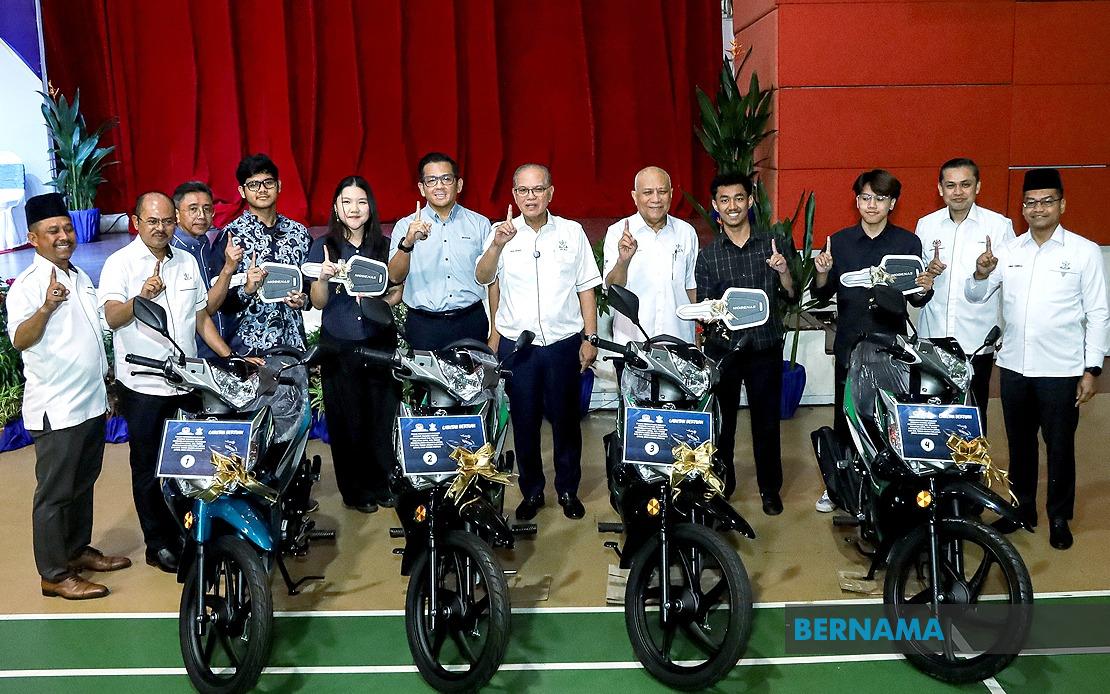
Beyond the forest reserve controversy, Wan Rosdy unveiled a fresh policy initiative targeting youth economic participation. The Pahang government will introduce an interest-free loan scheme specifically designed to enable young people to purchase motorcycles, a vehicle type critical to transportation patterns in the state and broader Southeast Asian mobility contexts. The programme deliberately focuses on youths aged 18 to 21 who are enrolled at both public and private tertiary institutions, encompassing IPTA (public universities) and IPTS (private institutions).
This youth-oriented motorcycle financing programme reflects a deliberate policy choice to support a demographic cohort during their formative educational years. Interest-free lending removes a significant financial barrier for young people from lower-income backgrounds, potentially broadening access to personal mobility at a life stage when such access can influence academic outcomes and employment prospects. The initiative taps into a recognised need in Malaysian society, where motorcycles serve as the primary personal transport option for many tertiary students, particularly in areas lacking robust public transportation infrastructure.
The scheme will be formally tabled for approval during the upcoming Pahang State Legislative Assembly sitting and incorporated into the 2027 Pahang Budget. This budgetary timeline suggests the government has allocated preliminary funding and parliamentary procedures are being prepared to legalise and operationalise the initiative. The specific targeting of higher education students indicates the programme's designers view tertiary education as a critical development phase warranting state investment in accessibility and student welfare.
Concurrently, Pahang recognised academic achievement across the secondary and pre-university spectrum. More than 2,000 high-performing students who attained excellent results in the 2025 Sijil Pelajaran Malaysia (SPM), Sijil Tinggi Agama Malaysia (STAM), and Sijil Tinggi Persekolahan Malaysia (STPM) examinations received state-sponsored incentives. The government allocated RM2.4 million for these recognition awards, demonstrating commitment to celebrating educational excellence and providing tangible rewards to top-achieving cohorts.
These scholastic awards extend across Malaysia's three principal examination pathways: the SPM (general secondary certificate), the STAM (advanced Islamic studies certificate), and the STPM (pre-university qualification). This inclusive approach acknowledges diverse educational trajectories and validates achievement across secular and religious academic streams. For high-performing students, such recognition often carries psychological and practical value beyond the monetary component, affirming societal investment in educational excellence.
The convergence of Pahang's environmental governance decisions and educational support initiatives reveals competing policy priorities within state administration. While the state advances youth welfare and educational achievement through substantial financial commitments, its position on forest reserve degazettement procedures suggests a willingness to prioritise development or resource-extraction interests that might conflict with environmental conservation. Whether Pahang's youth-focused investments can be reconciled with robust environmental protection remains an ongoing question for the state's medium-term governance trajectory.

