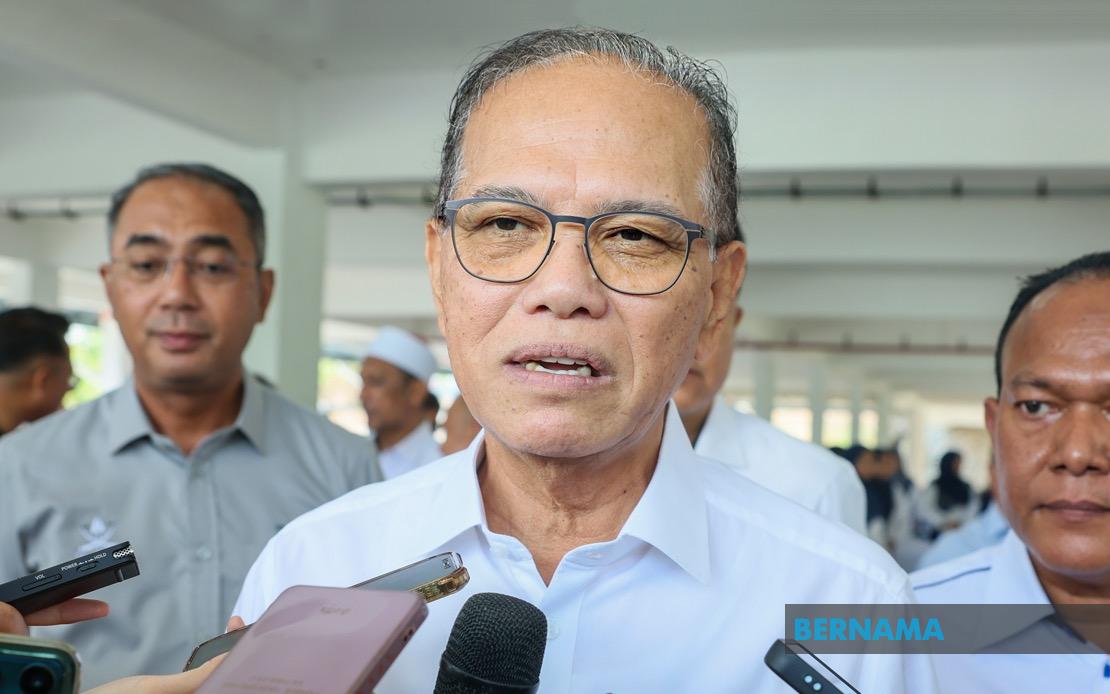
The Pahang state government has announced a significant financial commitment to elevate three key sports disciplines, reflecting ambitions to establish the state as a competitive force in Malaysia's national sporting landscape. The RM3.5 million allocation, unveiled by Menteri Besar Datuk Seri Wan Rosdy Wan Ismail at the close of the Pahang 1st Netball League Championship at the Pahang Sports Complex on July 5, represents a strategic investment in human capital and institutional development across grassroots and competitive tiers.
The funding distribution targets specific sports with differentiated allocations: football receives the largest share at RM2 million, followed by netball at RM1 million and sepak takraw at RM500,000. This tiered approach suggests a deliberate prioritisation strategy, with football's dominance reflecting both its mass appeal and existing infrastructure within the state. The decision to invest substantially in netball and sepak takraw indicates Pahang's determination to develop traditionally underrepresented disciplines and diversify its competitive portfolio beyond conventional sports hierarchies.
Wan Rosdy articulated the underlying philosophy driving this initiative, emphasising that success requires unwavering commitment rather than superficial engagement. His remarks underscore growing recognition among state leadership that sporadic funding cycles and half-hearted programmes cannot generate the sustained excellence necessary to compete with established powerhouses. The rhetoric signals a shift toward treating sports development as a serious governance priority equivalent to economic or educational initiatives, rather than a peripheral policy area subject to budgetary convenience.
The grassroots component merits particular attention for regional observers assessing talent development models across Southeast Asia. By explicitly targeting identification and nurturing of emerging athletes at foundational levels, Pahang is adopting a long-term talent pipeline approach rather than pursuing quick wins through recruitment of established performers. This philosophy aligns with international best practice in sports development, though implementation rigour remains a critical variable determining outcomes.
Recognition of sports as a unifying social platform reflects increasingly sophisticated understanding of athletics beyond medal counts. By framing sports development as a vehicle for fostering unity, cooperation and discipline across diverse communities, Pahang positions investment as serving dual purposes: competitive achievement and social cohesion. This narrative proves particularly relevant in Malaysia's multicultural context, where shared sporting endeavours can transcend demographic divides and reinforce national identity.
The netball sector deserves specific examination, given the additional commitment announced. The state government has agreed to increase netball's allocation by RM500,000 in the following financial year, elevating total funding to RM1.5 million. This trajectory suggests netball as an emerging priority, possibly reflecting strong performance trajectories or untapped potential within existing participant bases. The Pahang 1st Netball League Championship, drawing forty-two teams with Semambu capturing the title and RM10,000 prize purse, demonstrates thriving grassroots participation that justifies enhanced state backing.
For Malaysian sports policy observers, Pahang's approach raises questions about resource distribution across the country's thirteen states. While Pahang commits to football, netball and sepak takraw, other states pursue divergent sporting emphases. This decentralised approach allows for specialisation reflecting local demographics and existing competitive traditions, yet may inadvertently create hierarchies where certain states dominate specific disciplines. Understanding these provincial strategies becomes essential for Malaysian Olympic Committee planning and national team selection processes that draw from state-level pipelines.
The sepak takraw allocation, though modest at RM500,000, warrants attention as an indigenous Southeast Asian sport where Malaysia maintains historically competitive standing. Investment in this discipline supports both regional sporting identity and preservation of traditional athletic practices increasingly marginalised by globalised sports emphasis on football and basketball. Pahang's commitment here, however incremental the funding appears, sustains institutional infrastructure necessary for continued Malaysian competitiveness in Southeast Asian Games and World Championships.
Sepak takraw's inclusion alongside football and netball also reflects pragmatic recognition that state governments must distribute development resources across sports serving distinct demographic constituencies. Football appeals to mass audiences and commands substantial participation; netball engages predominantly female athletes and expands gender representation in state sporting programmes; sepak takraw maintains traditional sporting heritage while creating employment and development pathways for athletes less suited to modern globalised sports systems dominated by intensive commercialisation and foreign competition.
The budgetary allocation, whilst significant in state government terms, remains modest relative to development requirements in competitive Asian contexts. RM3.5 million distributed across three sports and multiple competitive tiers equates to substantial but non-transformative per-sport investment. Comparative analysis with neighbouring states or international jurisdictions with similar populations would illuminate whether funding levels suffice for genuinely competitive development or represent symbolic commitment requiring supplementation through private sponsorship, institutional resources and community contributions.
Implementation mechanisms remain conspicuously absent from public announcements, raising practical questions about allocation management, performance metrics and accountability mechanisms. How will Pahang distribute funds between grassroots development, competitive team support and institutional capacity building? Which governing bodies will administer disbursements and against what criteria? Without transparent frameworks specifying expected outcomes and monitoring procedures, allocations risk inefficient deployment or political manipulation prioritising short-term visibility over sustained development.
For Malaysian sports administrators and state government officials elsewhere, Pahang's initiative offers both inspiration and cautionary lessons. The explicit commitment to grassroots development and talent identification reflects sound strategic thinking, yet success ultimately depends on execution quality, sustained political commitment across electoral cycles and integration with national sporting governance frameworks. The announcement signals seriousness that warrants monitoring, as outcomes will provide instructive data regarding effectiveness of state-level investment strategies in producing nationally competitive athletes and strengthening Malaysia's sporting infrastructure.

