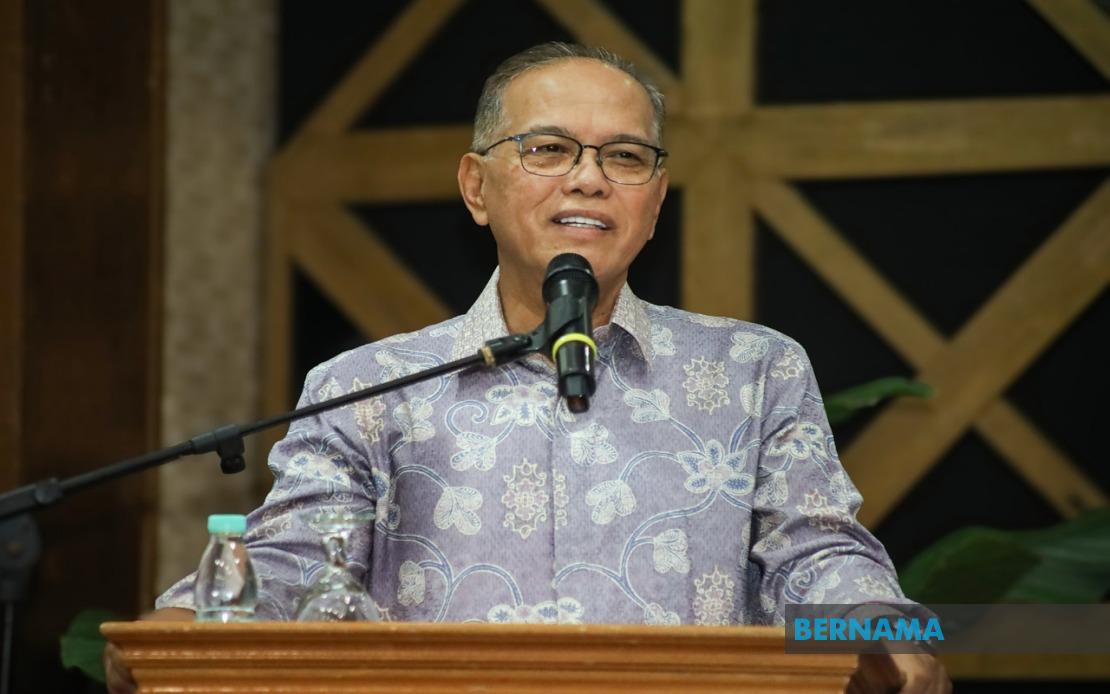
Pahang's state government has earmarked more than RM5 million in funding during 2024 to enhance its Technical and Vocational Education and Training sector, addressing the critical need for a pipeline of skilled workers ready to meet future employer demands. Menteri Besar Datuk Seri Wan Rosdy Wan Ismail made the announcement during his address at the 50th anniversary celebration of Politeknik Sultan Haji Ahmad Shah (POLISAS) in Kuantan, underscoring the state's determination to position itself competitively in Malaysia's evolving economic landscape.
The substantial allocation targets multiple strategic initiatives aimed at building institutional capacity and workforce readiness across Pahang. Funds are being directed toward physical infrastructure improvements and the expansion of training facilities under the Pahang Skills programme, while simultaneously supporting the TVET Pahang Talent Development scheme. A particularly notable investment involves the development of the Pahang Rail Academy, reflecting the state's anticipation of rail-related economic opportunities and its intent to ensure local residents possess the qualifications to benefit from such ventures.
Wan Rosdy articulated a forward-looking philosophy that distinguishes Pahang's approach from more reactive strategies. Rather than waiting passively for multinational corporations and industrial ventures to announce their arrival before scrambling to source trained personnel, the state government believes in proactively cultivating human capital. This perspective recognises that attracting and retaining quality investments depends significantly on the availability of a competent local workforce, a factor that increasingly influences corporate location decisions in Southeast Asia's competitive investment environment.
The Menteri Besar outlined how this preventative talent development strategy creates a virtuous cycle for the state's economy. When investors eventually identify Pahang as a suitable location for manufacturing, services, or logistics operations, and job creation accelerates, the state's youth will already possess the technical qualifications and practical skills required. This alignment between labour supply and employer demand reduces hiring friction and training costs for businesses, making Pahang a more attractive destination than competing regions that lack comparable workforce preparation initiatives.
POLISAS, celebrating five decades of operations since its establishment in 1976, stands as a cornerstone institution in Pahang's TVET ecosystem. The polytechnic has already graduated approximately 60,000 students who have dispersed into the workforce across multiple sectors and geographies. Recognising this institutional legacy and capability, Wan Rosdy expressed confidence that POLISAS would remain a strategic partner as the state government implements its expanded skills development agenda, leveraging the institution's extensive experience, industry connections, and proven curriculum development capacity.
Beyond infrastructure and institutional partnerships, Wan Rosdy emphasised the critical importance of strengthening links between educational providers and employers. Classroom instruction must translate into immediately applicable skills that employers value when graduates enter work environments. This concern reflects a persistent challenge across Malaysian TVET systems, where graduates sometimes find that theoretical knowledge gained in polytechnics or vocational centres does not precisely match industry expectations or technological realities. Bridging this gap requires ongoing dialogue between educators and business leaders, regular curriculum updates, and work-integrated learning opportunities such as internships and apprenticeships.
During subsequent remarks to journalists, Wan Rosdy extended his state-level advocacy to the federal level, specifically requesting that Pahang receive special consideration in the forthcoming Budget 2027. The Menteri Besar's pitch rests on geographical and developmental logic: Pahang's considerable land area and relatively dispersed population create heightened infrastructure and service delivery challenges compared to more compact, densely populated states. Development funding must therefore be calibrated to reflect these realities rather than applied uniformly across all states.
Wan Rosdy argued that federal budget allocations should encompass not merely traditional infrastructure categories such as roads and hospital facilities, but should recognise the full spectrum of state development priorities including education, economic development initiatives, social welfare programmes, and religious institutional support. This broader framing reflects recognition that competitive state development requires investment across multiple interconnected domains simultaneously, and that neglecting any single category constrains overall progress.
Regarding Pahang's own budgeting exercise for the upcoming fiscal period, the Menteri Besar signalled that education, economic stimulus, social protection, infrastructure development, and Islamic institutional promotion represent his administration's priority allocation categories. This multi-dimensional budgetary approach mirrors broader state development strategy and suggests that TVET investment should be understood within a larger ecosystem of state-directed development spending designed to improve residents' life prospects across employment, income security, and social infrastructure dimensions.
Wan Rosdy's commitment to tabling an enhanced state budget during the November State Legislative Assembly sitting carries significance beyond budgetary mechanics. His assertion that allocations "will be channelled back to the people" and that "our budget must be better than before" suggests electoral and governance responsiveness, with the Menteri Besar positioning fiscal management as a performance metric for state government effectiveness. In Malaysia's competitive political environment, where voters increasingly evaluate state governments based on service delivery and development outcomes, budget size and composition serve as tangible indicators of political commitment to constituent welfare.
The RM5 million TVET commitment must be contextualised within Pahang's broader economic positioning challenge. As a resource-rich state with significant mining and forestry heritage, Pahang faces pressure to diversify its economic base beyond extractive industries while simultaneously managing environmental concerns. Developing a skilled workforce across technical fields positions the state to attract higher-value-added manufacturing and services operations, potentially altering its economic trajectory from resource dependency toward knowledge-intensive sectors. This strategic reorientation cannot succeed without substantial human capital investment, making the TVET allocation a foundational economic policy element rather than merely an educational expenditure.
From a regional Southeast Asian perspective, Pahang's deliberate TVET investment strategy reflects broader trends across ASEAN economies grappling with workforce transitions driven by technological change, automation, and the migration of manufacturing supply chains. States and provinces that proactively invest in skills development and TVET ecosystem strengthening position themselves to capture a disproportionate share of relocating manufacturing and to retain existing industries facing global competition. Pahang's approach thus represents engagement with transnational economic pressures, translating global trends into localised policy responses designed to secure employment and income opportunities for state residents.

