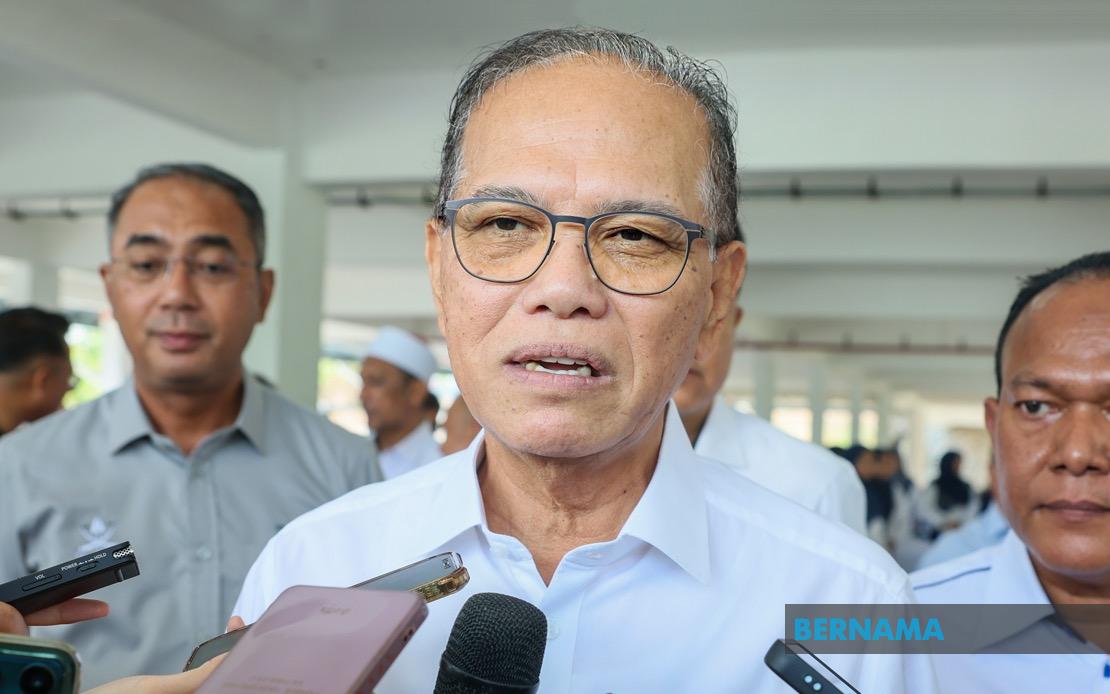
Pahang Menteri Besar Datuk Seri Wan Rosdy Wan Ismail has called on Orang Asli youths across the state to pursue vocational and technical qualifications, viewing such pathways as critical to breaking cycles of educational underattainment that have long plagued Malaysia's indigenous communities. Speaking at a convocation ceremony in Kuantan, Wan Rosdy framed skills-based training not as a fallback option but as a legitimate and economically viable alternative to conventional university degrees, reflecting shifting labour market realities across Southeast Asia.
The Menteri Besar's intervention underscores the persistent challenge facing Pahang's estimated 90,000-strong Orang Asli population, where school completion rates remain substantially below national averages. Early departure from formal education has historically constrained employment opportunities and perpetuated intergenerational poverty within these communities. By deliberately promoting Technical and Vocational Education and Training (TVET) initiatives, state leadership is attempting to address a demographic reality that has resisted conventional policy remedies for decades.
Wan Rosdy's remarks came during the YP Advanced Skills Malaysian Skills Certificate and Diploma Convocation Ceremony at the Sultan Haji Ahmad Shah Silver Jubilee Hall, where 388 graduates were recognised across multiple vocational programmes. The Menteri Besar specifically highlighted the potential of these graduates to function as community ambassadors, returning to their villages to demonstrate tangible career success and thereby normalising educational aspiration among peers and younger relatives.
The emphasis on role modelling reflects a sophisticated understanding of how educational behaviour spreads through communities. Indigenous populations across Southeast Asia frequently experience educational disengagement not through lack of ability but through absence of visible proof that qualifications translate into meaningful economic advancement. By celebrating Orang Asli TVET graduates publicly and encouraging their return to communities, policymakers hope to combat the fatalism that sometimes accompanies historically low educational completion rates.
Wan Rosdy praised YP Advanced Skills for developing graduates who combined technical competence with strong interpersonal attributes. This combination of hard and soft skills has become increasingly valued by employers across Malaysia's manufacturing, hospitality, and service sectors. The Menteri Besar noted that skills-certified individuals enjoy genuine flexibility in labour market participation, capable of pursuing either self-employment or wage employment depending on personal circumstances and market conditions.
The dual pathway argument carries particular weight in Malaysia's current economic context. As automation and digitalisation reshape traditional employment sectors, vocational qualifications increasingly offer sustainable income prospects. Unlike degree-holders who may face credential inflation and competitive pressure, technical specialists often encounter stable or growing demand, particularly in regional economies experiencing infrastructure expansion and manufacturing growth.
Wan Rosdy encouraged graduates to pursue further study whenever feasible, framing continuous upskilling as essential to long-term career progression. This stance reflects recognition that initial TVET certification represents a foundation rather than a ceiling. Many Southeast Asian economies now offer progression pathways enabling vocational graduates to advance toward diploma-level and even degree-level qualifications through part-time or work-integrated models, creating genuine social mobility opportunities.
The intervention by Pahang's state government addresses a critical gap in Malaysia's educational equity architecture. While national policies increasingly promote TVET participation, indigenous communities sometimes encounter particular barriers including geographic isolation, limited local programme availability, and economic constraints forcing youth into early employment. Targeted messaging from senior political figures helps legitimise vocational pathways within communities where traditional cultural attitudes may privilege university degrees or white-collar employment.
For Malaysian policymakers monitoring educational outcomes across diverse populations, the Pahang initiative illustrates how administrative leadership can shift community perceptions of credible career trajectories. The Menteri Besar's framing of skills training as modern and genuinely advantageous, rather than remedial or inferior, counters narratives that have historically limited indigenous youths' educational aspirations. This psychological dimension often proves as important as programme availability when addressing persistent educational disparities.
The broader regional context matters significantly. Across ASEAN, countries face parallel challenges engaging indigenous and minority populations in quality education. Malaysia's Orang Asli communities share certain characteristics with indigenous groups in Indonesia, Thailand, and the Philippines, including geographic remoteness, economic marginalisation, and cultural factors influencing educational engagement. Solutions emerging from Pahang's experience may generate insights relevant to broader Southeast Asian policy conversations.
Looking forward, the effectiveness of this push toward TVET participation will depend on sustained labour market demand for graduates, quality and relevance of training programmes, and genuine removal of structural barriers limiting indigenous youths' access to vocational education. Convocation ceremonies and political advocacy matter, but employment outcomes ultimately determine whether communities view TVET as genuinely transformative or merely cosmetic policy activity. The next crucial phase involves tracking whether Pahang's Orang Asli TVET graduates actually achieve the employment and entrepreneurial success Wan Rosdy promised, thereby justifying his call for community engagement with vocational pathways.

