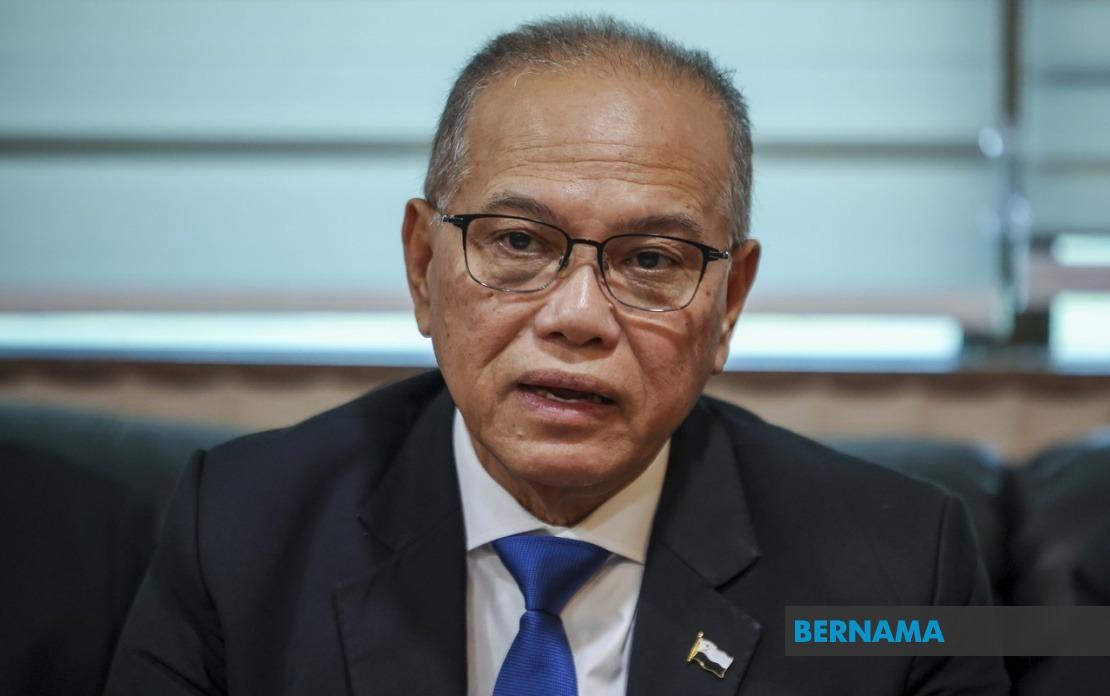
Pahang appears positioned to exceed its revenue collection expectations this year, with state coffers accumulating RM921.72 million by late August. Menteri Besar Datuk Seri Wan Rosdy Wan Ismail disclosed the figures during the Pahang State Legislative Assembly sitting at Wisma Sri Pahang, offering lawmakers an update on the state's fiscal performance midway through the final quarter.
The accumulated sum represents three-quarters of the state government's total revenue goal of RM1.279 billion for the year, suggesting momentum toward the full-year target remains solid. With four months remaining on the calendar, the trajectory indicates the state administration is managing its financial affairs efficiently and collecting dues from various revenue streams with consistency. This pace provides the Menteri Besar with confidence that the administration will realise its annual ambitions without significant shortfall.
Beyond immediate revenue collection, Pahang's underlying economic fundamentals continue strengthening, reinforcing the optimistic fiscal outlook. The state's Gross Domestic Product expanded to RM71 billion in 2025 from RM68.8 billion the previous year, underscoring sustained economic expansion across sectors. This growth trajectory matters for Southeast Asian policymakers watching regional performance, as Pahang represents a substantial economic contributor within Malaysia's broader development matrix. Stronger state economies support federal fiscal capacity and regional competitiveness.
Investment inflows into Pahang have similarly gained momentum, with the state government recording RM11.47 billion in committed investments as of August 2026. Of this substantial pipeline, RM1.044 billion has already materialised into realised investments on the ground, suggesting that announced projects are genuinely translating into capital deployment and economic activity. The distinction between committed and realised investment matters considerably, as it demonstrates that Pahang is not merely attracting pledges but converting them into tangible infrastructure, manufacturing capacity, or service infrastructure that generates employment and tax revenue.
The state government has strategically deployed enhanced financial capacity toward social programmes designed to ensure residents benefit directly from economic advancement. The Makmur Pahang Initiative, launched to distribute prosperity across communities, has received escalating funding commitments reflecting the administration's prioritisation of inclusive growth. Between 2024 and 2026, the initiative has absorbed RM173.93 million in allocations, with spending acceleration evident in recent years. The 2024 budget of RM38.8 million grew to RM50.54 million the following year before jumping significantly to RM84.59 million in 2026, demonstrating that as state finances strengthen, social investment increases proportionally.
This allocation pattern signals political intent to ensure that revenue growth translates into household benefits rather than remaining confined to government coffers or infrastructure projects with longer implementation timelines. Social initiatives typically yield faster visible returns, helping administrations demonstrate tangible progress to constituents. For Malaysian voters increasingly conscious of development outcomes in their daily lives, such programmes represent concrete evidence of governance competence.
Looking forward, the Pahang administration intends to amplify the Makmur Pahang Initiative further through the upcoming state budget deliberations. Wan Rosdy's indication that allocations will increase beyond 2026 levels suggests the government anticipates sustained financial health and wishes to deepen its commitment to direct benefit distribution. This forward-looking commitment provides a roadmap for fiscal planning while signalling that the government views its current trajectory as durable and reliable.
The financial performance outlined reflects broader trends in Malaysian state governance, where administrations increasingly must demonstrate fiscal prudence alongside social responsiveness. Pahang's approach—combining revenue discipline with strategic investment in economic drivers and social programmes—represents a balanced formula that Malaysian observers across the political spectrum might evaluate. The state's ability to simultaneously collect revenues on schedule, attract foreign and domestic investment, and expand social spending without apparent fiscal stress suggests competent financial management.
For regional investors and policymakers, Pahang's economic expansion and investment climate carry implications beyond state borders. As a significant component of Malaysia's economic geography, Pahang's momentum influences national growth rates, tax contributions to federal coffers, and employment figures that shape migration patterns and labour market dynamics across Southeast Asia. Investors considering presence in Malaysia often evaluate state-level fundamentals alongside national indicators, making Pahang's demonstrated financial discipline and growth trajectory relevant to broader regional business confidence.
The response came during legislative proceedings addressing a substantive question about economic performance under the administration's overarching policy framework. Such parliamentary accountability mechanisms, wherein legislators can interrogate government officials regarding specific achievements and financial metrics, form essential components of democratic governance. The Menteri Besar's detailed responses to questions from both government and opposition benches—demonstrating transparency regarding collected revenues and expenditure plans—illustrate institutional functioning within Malaysia's constitutional framework.
Pahang's revenue collection success also carries implications for intergovernmental fiscal relationships within Malaysia's federalist system. States that generate robust own-source revenues maintain greater autonomy in development planning and policy implementation, reducing dependence on federal allocations and grants. Enhanced financial independence enables states to pursue distinctive policy preferences and developmental priorities aligned with local conditions and constituent preferences, potentially fostering healthy competition in governance quality and innovation across Malaysian territories.

